🥳 Skip the subscription. Pay $299 once for lifetime access— See lifetime plans
🥳 Skip the subscription. Pay $299 once for lifetime access—

10 MIN READ
Discovery
Discovery
How to Find Influencers on Instagram: 8 Methods for Brands
How to Find Influencers on Instagram: 8 Methods for Brands
How to Find Influencers on Instagram: 8 Methods for Brands
How to Find Influencers on Instagram: 8 Methods for Brands

Rashmi Singh
Rashmi Singh
Rashmi Singh
Content Marketer @impulze.ai

Sections
Build your first creator list on Solo, $29 a month.

Blog in Short ⏱️
Blog in Short ⏱️
A quick glance at the highlights—perfect for when you're short on time.
A quick glance at the highlights—perfect for when you're short on time.
How to find influencers on Instagram, in short:
Free methods first: keyword and location search, a few specific hashtags, Explore, brand tags and suggested accounts.
Meta’s creator marketplace: open to brands worldwide since January 2026, best for partnership ads.
Discovery tools: the fastest way to filter many creators by audience, location and engagement.
Vet before outreach: audience location, engagement, fake followers and past sponsored posts.
Short answer: To find influencers on Instagram, search keywords and a few niche hashtags, browse Explore and Reels after engaging with your category, check who already tags your brand and your competitors, follow Instagram’s suggested accounts, and use Meta’s creator marketplace or a discovery tool to filter by audience, location and engagement. Then vet every creator before you reach out.
This guide walks brand marketers through each method step by step, shows which one suits which situation, and explains how to check a creator before you spend money. Platform details link to Instagram’s or Meta’s own pages, all checked on 15 November 2026. For TikTok and YouTube as well, see our main guide on how to find influencers.
What should you decide before you search Instagram?
Searching without a brief wastes hours. Write down four things first, because they become your search filters:
Audience: who you want to reach, where they live and roughly how old they are.
Goal: awareness, content you can reuse in ads, or sales through a code or affiliate link.
Creator size: nano (under 10K followers), micro (10K to 100K), macro or celebrity. Smaller creators are easier to brief and cheaper; our guide to finding micro-influencers on Instagram covers that tier in depth.
Budget and offer: free product, a flat fee, commission, or a mix.
What are the best ways to find influencers on Instagram?
Here are eight methods, from free and manual to paid and fast. Most brands combine two or three.
Method | Cost | Best for | Main limitation |
Keyword and location search | Free | Niche or local creators | Slow; no audience data |
Hashtags | Free | Seeing who posts about a topic | Big tags are crowded with brands |
Explore and Reels | Free | Spotting rising creators | Takes days to tune your feed |
Brand and competitor tags | Free | Creators who already like your category | Only shows public tags |
Suggested accounts | Free | Expanding from one good creator | Suggestions can drift off-niche |
Google search | Free | Finding creators by keyword outside the app | Results are patchy |
Meta’s creator marketplace | Free to use | Creators open to partnership ads | Only creators who opted in |
Influencer discovery tool | Free plan or paid | Filtering many creators by audience | Paid plans for full data |
1. Search Instagram by keyword and location
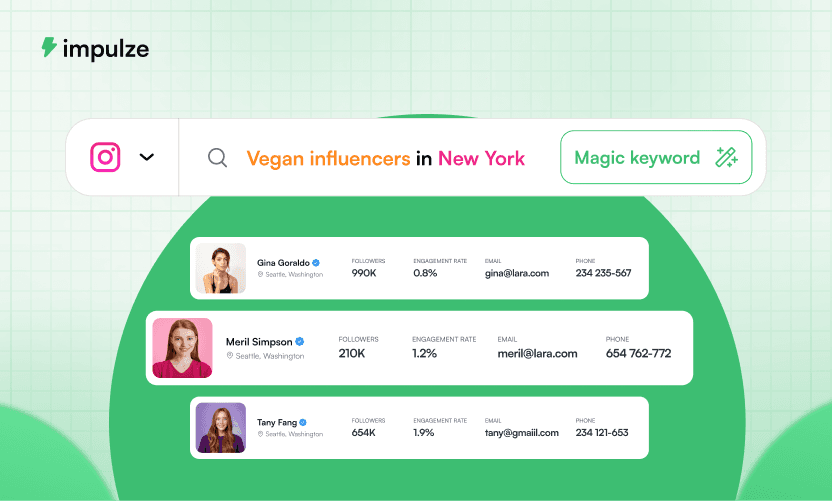
Instagram search works with plain keywords, not just handles. Type what your customer would search, such as “vegan meal prep”, “Austin coffee” or “skincare for dry skin”, then open the Accounts and Reels tabs. Creators who use the keyword in their name, bio or captions tend to show up near the top. Add a city to find creators near your store or event, and open location tags to see who posts from a specific place.
Save every promising account to a collection or a spreadsheet as you go, with the handle, follower count and why they fit. You will need that list when you vet.
2. Use a few specific hashtags
Hashtags still help you see who posts about a topic, but they matter less than they did. In December 2025 Instagram limited posts and Reels to five hashtags, and head of Instagram Adam Mosseri said hashtags help with search but don’t increase reach (The Verge). Skip huge tags like #fashion or #fitness, which are full of brands and giveaway accounts. Use narrower tags your buyers actually use, such as #capsulewardrobe or #homebarista, and look at the Recent tab to find creators who are active now.
3. Train Explore and Reels on your niche
Like, save and comment on posts in your category for a few days, and Explore and Reels will start recommending similar creators. You can speed this up with Your Algorithm, which shows the topics shaping your recommendations and lets you add or remove topics. Since June 2026 a change there applies across Feed, Reels and Explore (About Instagram). Use a separate work account so your personal feed doesn’t skew the results.
4. Check who tags your brand and your competitors
Open the tagged tab on your own profile and search your brand name and handle. Creators who already post about you without being paid are the easiest yes. Then do the same on two or three competitor and adjacent brands. Posts labelled “Paid partnership” show who is already doing sponsored work in your category and is likely open to an offer, but check that they aren’t tied to a direct competitor.
5. Follow Instagram’s suggested accounts
When you follow a creator, Instagram usually shows a row of similar accounts. Tap through from one creator who fits perfectly and you can build a list of 20 or 30 in an afternoon. Stop when the suggestions start drifting away from your niche or your audience’s location.
6. Search Google for Instagram creators
Since July 2025, Instagram has allowed Google and Bing to index photos and videos from public posts and Reels by professional accounts owned by people over 18 (Instagram Help Center). That makes searches like site:instagram.com “meal prep” “Chicago” more useful than before. Google also surfaces blog lists of top creators by niche and city, which make a good starting point.
7. Use Meta’s creator marketplace
Meta’s creator marketplace lets brands search creators who have opted in to brand partnerships and send proposals from Meta Business Suite. On 30 January 2026 Meta opened brand access globally (it had been limited to 19 countries), added a badge for creators predicted to drive strong ad performance, and added a “similar creators” search by name or handle (Meta for Business). Creators listed there must be at least 18, have a public professional account and at least 1,000 followers (Instagram Help Center).
It is free to use and strong if you plan to run partnership ads. The catch is coverage: creators who never opted in won’t appear, and the data focuses on Meta’s own view of performance.
8. Use an influencer discovery tool
Discovery tools index public Instagram profiles and let you filter by niche, location, follower range, engagement rate and audience demographics in one search. They are the fastest option when you need many creators, audience data you can’t see in the app, or a repeatable process. Most offer a free plan or trial, so test two or three with the same search and compare the results.
Which method should you start with?
It depends on how many creators you need and how much time you have:
A handful of local or niche creators: keyword search, location tags and brand tags are enough.
Partnership ads on Meta: start in Meta’s creator marketplace, then widen the list with a tool.
Dozens of creators or several markets: use a discovery tool and keep manual search for spot checks.
Gifting at scale: tags and mentions find warm creators; a tool finds lookalikes of your best performers.
How do you vet an Instagram influencer before reaching out?
Finding names is the easy part. Run every creator on your shortlist through these checks:
Audience location and age. Ask for an Insights screenshot or use a tool that estimates audience demographics. A great creator with a mostly overseas audience won’t help a US-only brand.
Engagement rate. Divide average likes and comments on recent posts by followers, and compare it with creators of a similar size rather than with a single benchmark. Our free Instagram engagement rate calculator does the maths.
Fake followers. Watch for sudden follower spikes, generic comments such as “nice pic”, and followers with no posts or profile photo. Here is how to find fake followers step by step.
Reels views. Compare recent Reels views with follower count. Consistently low views can mean an inactive or bought audience.
Content and brand safety. Scroll back at least three months. Check tone, values, image quality and how they write captions.
Past sponsored posts. See how paid posts perform next to organic ones and whether the creator discloses clearly.
How do you contact influencers on Instagram?
Use the email button or the business email in the bio where there is one, and keep DMs for smaller creators, since message requests from accounts they don’t follow are easy to miss. If there is no email, our guide to finding the email behind an Instagram account lists legitimate ways to find it.
Keep the first message short: mention a specific post you liked, say why your product suits their audience, and state the offer plainly (product, fee, deliverables, timeline and whether you want to reuse the content in ads). In the US, sponsored posts must be clearly disclosed, so share the FTC’s Disclosures 101 for Social Media Influencers and ask creators to use Instagram’s Paid partnership label.
How do agencies find Instagram influencers for several clients?
The methods are the same, but agencies need structure. Keep a separate list and brief per client, save searches so you can rerun them each month, record why each creator was approved or rejected, and share reports in a format clients can read without logging in to your tools.
How does impulze.ai help you find influencers on Instagram?
impulze.ai is an influencer marketing platform for agencies and brands to find, vet and track creators on Instagram, TikTok and YouTube. You can search more than 400 million creator profiles and filter by niche, location, follower range, engagement and audience, then open reports with audience details, a credibility score, sponsored content and similar influencers. The SocialiQ Chrome extension lets you qualify a creator while you’re on their Instagram profile.
There is a free plan, and paid plans start at $29 a month (checked 15 November 2026). The Professional plan adds campaign tracking, shareable lists, white-labeling for client work and up to three team members.
Key takeaways
Write a short brief first: audience, goal, creator size and offer.
Start with free methods: keywords, a few specific hashtags, Explore, brand tags and suggested accounts.
Use Meta’s creator marketplace if you plan partnership ads, and a discovery tool when you need volume or audience data.
Vet audience location, engagement, fake followers and past sponsored posts before outreach.
Reach out by email with a specific, clear offer, and make disclosure part of the brief.
Sources, checked 15 November 2026: The Verge on the five-hashtag limit, About Instagram on Your Algorithm, Instagram Help Center on search engine indexing, Meta for Business on creator marketplace updates, Instagram Help Center on creator marketplace eligibility and FTC Disclosures 101.
Frequently Asked Questions
What is the easiest way to find influencers on Instagram?

What is the easiest way to find influencers on Instagram?
What is the easiest way to find influencers on Instagram?
How do I find influencers on Instagram for free?
How do I find influencers on Instagram for free?
How do I find influencers on Instagram for free?
How do I find local influencers on Instagram?
How do I find local influencers on Instagram?
How do I find local influencers on Instagram?
Can brands use Instagram's creator marketplace?
Can brands use Instagram's creator marketplace?
Can brands use Instagram's creator marketplace?
How many followers does an Instagram influencer need?
How many followers does an Instagram influencer need?
How many followers does an Instagram influencer need?
How do I know if an Instagram influencer is legit?
How do I know if an Instagram influencer is legit?
How do I know if an Instagram influencer is legit?
Author Bio
Author Bio
Rashmi Singh
Rashmi Singh
We Also Recommend To Read