🥳 Skip the subscription. Pay $299 once for lifetime access— See lifetime plans
🥳 Skip the subscription. Pay $299 once for lifetime access—

7 MIN READ
Discovery
Discovery
How to Find Affiliate Creators for Your Shopify Store
How to Find Affiliate Creators for Your Shopify Store
How to Find Affiliate Creators for Your Shopify Store

Rashmi Singh
Rashmi Singh
Rashmi Singh
Content Marketer @impulze.ai
Sections
Build your first creator list on Solo, $29 a month.

Blog in Short ⏱️
Blog in Short ⏱️
A quick glance at the highlights—perfect for when you're short on time.
A quick glance at the highlights—perfect for when you're short on time.
Affiliate creators help Shopify brands drive sales through links, codes, and commission based partnerships. But the hard part is not setting up tracking. It is finding creators whose audience actually wants your product.
Start with existing customers, then look for niche micro creators, competitor collaborators, and creators who already make strong product recommendation content.
Before reaching out, check:
• Audience fit
• Engagement quality
• Sponsored content performance
• Buying intent in comments
• Fake follower signals
• Posting consistency
The goal is not to recruit hundreds of creators. It is to find creators who can influence real purchases
Your best affiliate creators may not be the influencers you cold pitch first.
They might already be in your customer list, tagging your brand, leaving detailed reviews, or recommending your product to friends without being asked. For Shopify brands, these warm creators are often more valuable than big influencers because they already know the product and can talk about it naturally.
Before building a huge affiliate program, start by finding the people who already believe in what you sell. Let’s learn how to do that.
1. Start With Customers Who Already Love You
The best place to find affiliate creators is usually not an influencer database. It is your own customer base.
People who already buy from you have something a cold creator does not: real product experience. They know what your product feels like, how it solves the problem, and why they chose it in the first place. That makes their content easier to believe.
Start by looking for customers who are already showing public enthusiasm. You may find them in tagged posts, Instagram Stories, TikTok mentions, product reviews, email replies, or even customer support messages. Pay special attention to people who explain why they like the product, not just people who say “love this.”
A few signals are worth watching:
• Customers who tag your brand without being asked
• People who leave detailed reviews with specific product feedback
• Buyers who post unboxing videos or routine content
• Followers who reply to your Stories or launch emails
• Customers who have small but active social followings
Do not ignore someone just because they only have 2,000 or 3,000 followers. For an affiliate program, genuine product love can matter more than audience size. A customer who talks about your product naturally may drive better sales than a larger creator who needs to fake enthusiasm.
Your outreach can be simple and personal. Mention that you noticed they have shared or reviewed the product before, then invite them to join a small creator affiliate program with a custom links, commission, and early access to future launches. Since the relationship already exists, the message feels warmer than a cold pitch.
2. Search for Micro-creators in Very Specific Niches
After your customer base, the next best place to look is niche micro creators.
Micro-influencers usually have smaller audiences, but those audiences are often more focused. That is exactly what affiliate programs need. You are not looking for the most people. You are looking for the right people.
The mistake most brands make is searching too broadly. A skincare brand searches for “beauty influencers.” A fitness brand searches for “fitness creators.” A pet brand searches for “dog influencers.”
Those searches are not wrong, but they are too wide.
Get more specific. For instance, if you are a skincare brand, you may want acne prone skincare creators, Korean skincare reviewers, creators focused on sensitive skin, or clean beauty educators.
The more specific your search, the easier it becomes to find audiences with real buying intent.
A broad lifestyle creator may be able to mention your product. A niche creator can make your product feel like a natural part of the conversation they are already having with their audience. That is the difference.
3. Use Competitor Collaborations as a Shortcut
Competitor research is one of the fastest ways to find affiliate creators who are already active in your category.
If a creator has promoted a similar product before and their audience responded well, that gives you a useful signal. It does not mean you should copy the competitor’s exact creator list, but it does show you who already has category credibility.
Look through competitor tagged posts, creator captions, TikTok searches, YouTube reviews, and discount code mentions. Search for phrases like “use my code,” “partnered with,” “gifted by,” or the competitor’s brand name.
The goal is to understand patterns. Which creators keep appearing in your category? Which ones get real questions in the comments? Which posts create buying intent instead of passive likes?
A creator whose audience asks, “Does this code still work?” or “Which shade did you use?” is showing a different level of intent than one whose comments are mostly emojis.
Past collaborations also tell you how naturally a creator handles sponsored content. If the brand mention feels smooth, useful, and relevant, that creator may be a strong affiliate fit. If every sponsored post feels like a hard interruption, be careful.
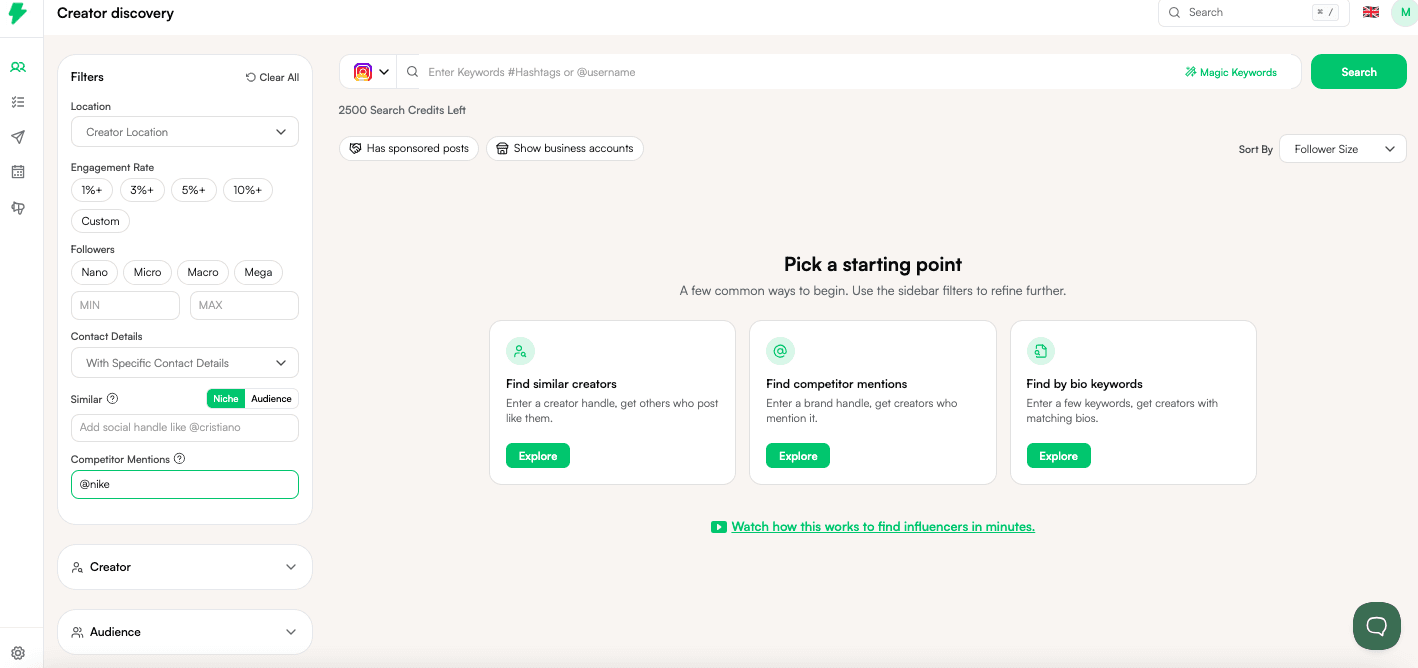
To find creators your competitors have worked with, you can also just go to impulze.ai and type in your competitor’s social media profile handle to instantly get a list of influencers who have worked with them.
Here’s how:
Step 1: Visit impulze.ai’s search dashboard and enter the brand’s social media profile handle in the filter section on the left side.
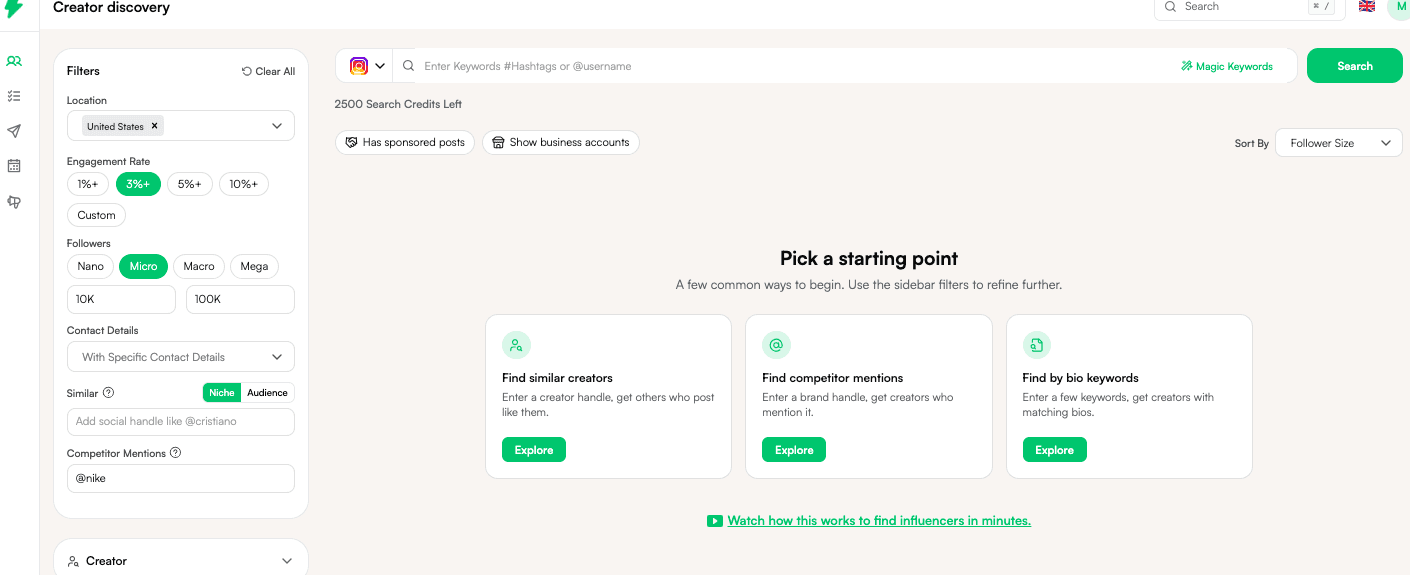
Step 2: Add any other filter you want such as location like United States, engagement rate, follower size, etc., and hit “Search”.
Step 3: Get an instant list of creators!
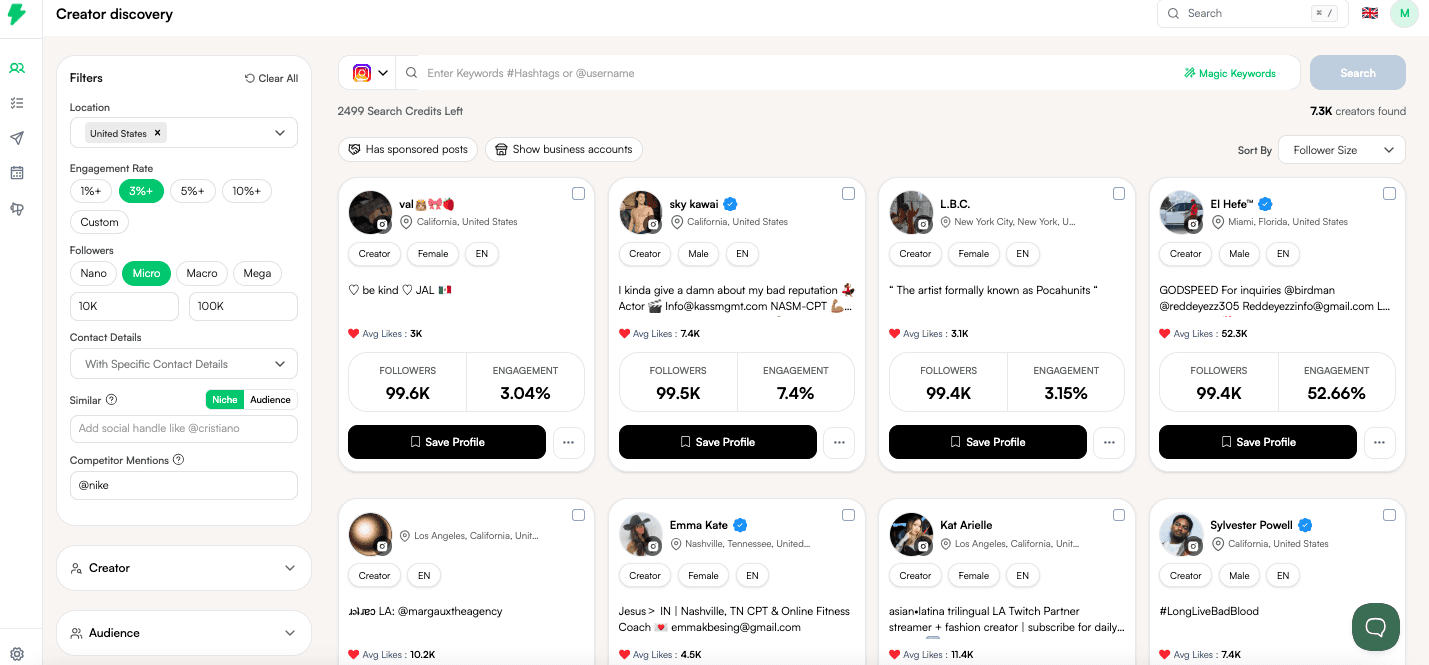
You can do the same process for other competitors and get a detailed profile report to review the creator.
4. Look for Buying Intent, Not Just Good Content
Beautiful content is useful, but affiliate creators need something more. They need an audience that takes action. A creator can have a polished feed, strong lighting, and perfect product shots, but still drive very few sales. That often happens when the audience enjoys the content but does not see the creator as someone they buy from.
Buying intent shows up in small details. People ask where to buy the product.
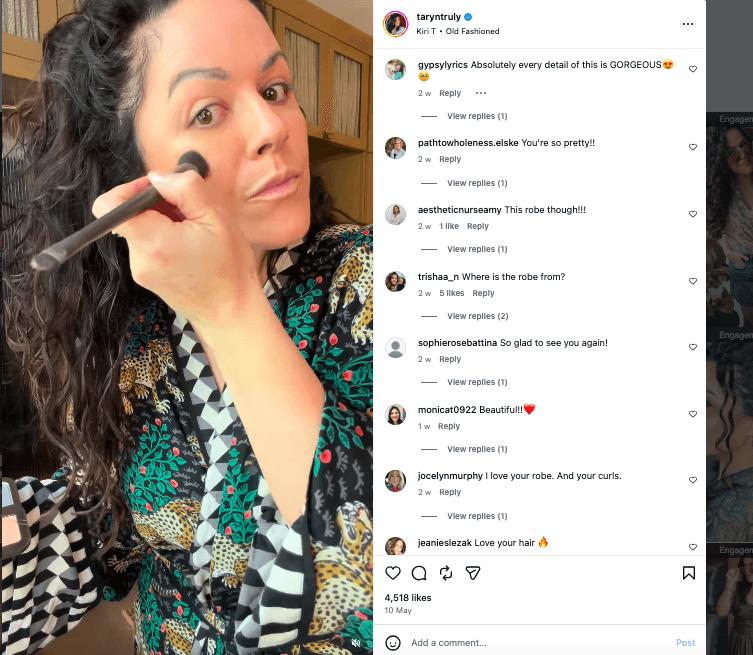
They ask about price, sizing, ingredients, shipping, or how it compares to another option. They save tutorials. They comment with specific use cases. They come back to ask follow up questions after the creator shares a recommendation.
Those signals matter because affiliate marketing depends on trust and timing. Someone has to see the product, understand why it matters, and feel confident enough to click.
Creators who explain products well usually perform better than creators who only display them. Reviews, routines, tutorials, comparisons, before and after content, and “how I use this” videos are especially useful for Shopify brands because they connect the product to a real situation.
If a creator already helps their audience make buying decisions, they are more likely to work as an affiliate partner.
5. Check Audience Fit Before You Reach Out
A creator can look perfect on the surface and still be wrong for your Shopify store.
Audience fit is where many brands waste money. They fall in love with the creator’s content, then later discover that the audience does not match their buyer.
Start with geography. If your store only ships to the US and Canada, a creator with most of their audience elsewhere may bring engagement but not many sales. If you sell premium products, check whether the creator’s audience seems aligned with that price point. If your product is made for a specific age group, make sure the audience is not wildly different.
You do not need to overcomplicate this, but you should review the basics:
• Audience location
• Age range
• Gender split, if relevant
• Language and market fit
• Engagement quality
• Fake follower signals
Audience fit is the difference between traffic and qualified traffic. An affiliate creator should not just send visitors to your Shopify store. They should send people who are likely to buy.
Read More: How to Analyze Influencer Audience in Five Steps
6. Review Sponsored Content Before Making an Offer
The best predictor of future sponsored performance is often past sponsored performance.
Do not just check whether a creator has worked with brands before. Look at how the audience responded. Some creators get strong engagement on personal content but weak responses when they post an ad. Others can introduce a product naturally and still get real questions, saves, and comments.
That second group is what you want.
Review a few past brand posts and ask whether the product mention feels natural. Does the audience seem interested? Are people asking useful questions? Does the sponsored content perform close to their normal posts, or does engagement drop sharply?
Also, look at how often they promote products. A creator who works with too many unrelated brands can lose trust quickly. One week it is skincare, then a meal replacement shake, then crypto, then pet food. At some point, the audience stops believing the recommendations.
That does not mean creators cannot do frequent partnerships. Many professional creators do. The issue is whether the partnerships make sense for their niche and whether followers still engage with them seriously.
For affiliate creators, believability is everything.
7. Prioritize Creators Who Can Explain the Product
Affiliate sales rarely come from a product just appearing on screen. They come from the creator, making the product easy to understand.
This is especially true for products with a specific use case, premium pricing, ingredients, features, or a strong before-and-after story. If people need a little education before buying, the creator has to be able to explain the product clearly.
Some content formats are naturally strong for this:
• “Why I switched to this”
• “How I use this in my routine”
• “My honest review after 30 days”
• “Before and after using this product”
• “Things I wish I knew before buying”
• “Gift ideas for people who love this category”
These formats work because they do not feel like random promotion. They feel useful. The creator is helping the viewer understand whether the product fits their life. That kind of content is much more valuable than a pretty product photo with a code in the caption.
Build a Focused Shortlist Before Outreach
Once you start searching, it is easy to collect too many names.
Avoid that.
A strong affiliate program does not begin with hundreds of random creators. It begins with a focused shortlist of people who have a real chance of driving sales.
Look for creators who meet several conditions at once. They create content in your exact niche. Their audience matches your buyer. Their engagement looks real. Their previous sponsored content feels believable. Their content can show your product naturally.
Start with the strongest fits first. Existing customers come first because the relationship is warm. Then move to niche creators with clear buying intent. After that, test creators who have worked with competitors or adjacent brands.
A smaller, cleaner shortlist will outperform a huge spreadsheet full of weak matches.
For most Shopify brands, 20 strong creators are more useful than 200 names you barely trust.
From Finding Creators to Tracking Sales: Do It All Inside Impulze.ai
Finding the right affiliate creators is only half the job. Once they start posting, you need to know who is actually driving sales. That is where Impulze.ai can help you connect the full workflow in one place.
Instead of using one tool for discovery, another for outreach, a spreadsheet for creator status, and Shopify for sales tracking, you can manage the entire affiliate creator process inside Impulze.ai.
Here’s what that looks like:
• Search for creators
Find affiliate creators across Instagram, TikTok, and YouTube using filters like niche, location, audience demographics, engagement rate, and follower size.
• Vet their audience before reaching out
Check audience quality, fake follower signals, engagement rate, location match, and content fit so you are not inviting creators who only look good on the surface.
• Build and manage your shortlist
Save potential affiliate creators into lists, organize them by campaign, and keep track of who is worth reaching out to.
• Run outreach from one place
Contact creators, manage replies, and track where each creator stands in your pipeline without jumping between Gmail, DMs, and spreadsheets.
• Track Shopify sales from creator campaigns
With Impulze’s Shopify integration, you can see which creators are driving orders, revenue, and real sales through their affiliate links or codes.
This makes your affiliate creator program easier to manage because you are not just tracking vanity metrics like likes and comments. You can see which creators are actually bringing buyers to your Shopify store. That means better decisions, cleaner reporting, and a much easier way to scale the creators who are already working.
Your best affiliate creators may not be the influencers you cold pitch first.
They might already be in your customer list, tagging your brand, leaving detailed reviews, or recommending your product to friends without being asked. For Shopify brands, these warm creators are often more valuable than big influencers because they already know the product and can talk about it naturally.
Before building a huge affiliate program, start by finding the people who already believe in what you sell. Let’s learn how to do that.
1. Start With Customers Who Already Love You
The best place to find affiliate creators is usually not an influencer database. It is your own customer base.
People who already buy from you have something a cold creator does not: real product experience. They know what your product feels like, how it solves the problem, and why they chose it in the first place. That makes their content easier to believe.
Start by looking for customers who are already showing public enthusiasm. You may find them in tagged posts, Instagram Stories, TikTok mentions, product reviews, email replies, or even customer support messages. Pay special attention to people who explain why they like the product, not just people who say “love this.”
A few signals are worth watching:
• Customers who tag your brand without being asked
• People who leave detailed reviews with specific product feedback
• Buyers who post unboxing videos or routine content
• Followers who reply to your Stories or launch emails
• Customers who have small but active social followings
Do not ignore someone just because they only have 2,000 or 3,000 followers. For an affiliate program, genuine product love can matter more than audience size. A customer who talks about your product naturally may drive better sales than a larger creator who needs to fake enthusiasm.
Your outreach can be simple and personal. Mention that you noticed they have shared or reviewed the product before, then invite them to join a small creator affiliate program with a custom links, commission, and early access to future launches. Since the relationship already exists, the message feels warmer than a cold pitch.
2. Search for Micro-creators in Very Specific Niches
After your customer base, the next best place to look is niche micro creators.
Micro-influencers usually have smaller audiences, but those audiences are often more focused. That is exactly what affiliate programs need. You are not looking for the most people. You are looking for the right people.
The mistake most brands make is searching too broadly. A skincare brand searches for “beauty influencers.” A fitness brand searches for “fitness creators.” A pet brand searches for “dog influencers.”
Those searches are not wrong, but they are too wide.
Get more specific. For instance, if you are a skincare brand, you may want acne prone skincare creators, Korean skincare reviewers, creators focused on sensitive skin, or clean beauty educators.
The more specific your search, the easier it becomes to find audiences with real buying intent.
A broad lifestyle creator may be able to mention your product. A niche creator can make your product feel like a natural part of the conversation they are already having with their audience. That is the difference.
3. Use Competitor Collaborations as a Shortcut
Competitor research is one of the fastest ways to find affiliate creators who are already active in your category.
If a creator has promoted a similar product before and their audience responded well, that gives you a useful signal. It does not mean you should copy the competitor’s exact creator list, but it does show you who already has category credibility.
Look through competitor tagged posts, creator captions, TikTok searches, YouTube reviews, and discount code mentions. Search for phrases like “use my code,” “partnered with,” “gifted by,” or the competitor’s brand name.
The goal is to understand patterns. Which creators keep appearing in your category? Which ones get real questions in the comments? Which posts create buying intent instead of passive likes?
A creator whose audience asks, “Does this code still work?” or “Which shade did you use?” is showing a different level of intent than one whose comments are mostly emojis.
Past collaborations also tell you how naturally a creator handles sponsored content. If the brand mention feels smooth, useful, and relevant, that creator may be a strong affiliate fit. If every sponsored post feels like a hard interruption, be careful.
To find creators your competitors have worked with, you can also just go to impulze.ai and type in your competitor’s social media profile handle to instantly get a list of influencers who have worked with them.
Here’s how:
Step 1: Visit impulze.ai’s search dashboard and enter the brand’s social media profile handle in the filter section on the left side.
Step 2: Add any other filter you want such as location like United States, engagement rate, follower size, etc., and hit “Search”.
Step 3: Get an instant list of creators!
You can do the same process for other competitors and get a detailed profile report to review the creator.
4. Look for Buying Intent, Not Just Good Content
Beautiful content is useful, but affiliate creators need something more. They need an audience that takes action. A creator can have a polished feed, strong lighting, and perfect product shots, but still drive very few sales. That often happens when the audience enjoys the content but does not see the creator as someone they buy from.
Buying intent shows up in small details. People ask where to buy the product.
They ask about price, sizing, ingredients, shipping, or how it compares to another option. They save tutorials. They comment with specific use cases. They come back to ask follow up questions after the creator shares a recommendation.
Those signals matter because affiliate marketing depends on trust and timing. Someone has to see the product, understand why it matters, and feel confident enough to click.
Creators who explain products well usually perform better than creators who only display them. Reviews, routines, tutorials, comparisons, before and after content, and “how I use this” videos are especially useful for Shopify brands because they connect the product to a real situation.
If a creator already helps their audience make buying decisions, they are more likely to work as an affiliate partner.
5. Check Audience Fit Before You Reach Out
A creator can look perfect on the surface and still be wrong for your Shopify store.
Audience fit is where many brands waste money. They fall in love with the creator’s content, then later discover that the audience does not match their buyer.
Start with geography. If your store only ships to the US and Canada, a creator with most of their audience elsewhere may bring engagement but not many sales. If you sell premium products, check whether the creator’s audience seems aligned with that price point. If your product is made for a specific age group, make sure the audience is not wildly different.
You do not need to overcomplicate this, but you should review the basics:
• Audience location
• Age range
• Gender split, if relevant
• Language and market fit
• Engagement quality
• Fake follower signals
Audience fit is the difference between traffic and qualified traffic. An affiliate creator should not just send visitors to your Shopify store. They should send people who are likely to buy.
Read More: How to Analyze Influencer Audience in Five Steps
6. Review Sponsored Content Before Making an Offer
The best predictor of future sponsored performance is often past sponsored performance.
Do not just check whether a creator has worked with brands before. Look at how the audience responded. Some creators get strong engagement on personal content but weak responses when they post an ad. Others can introduce a product naturally and still get real questions, saves, and comments.
That second group is what you want.
Review a few past brand posts and ask whether the product mention feels natural. Does the audience seem interested? Are people asking useful questions? Does the sponsored content perform close to their normal posts, or does engagement drop sharply?
Also, look at how often they promote products. A creator who works with too many unrelated brands can lose trust quickly. One week it is skincare, then a meal replacement shake, then crypto, then pet food. At some point, the audience stops believing the recommendations.
That does not mean creators cannot do frequent partnerships. Many professional creators do. The issue is whether the partnerships make sense for their niche and whether followers still engage with them seriously.
For affiliate creators, believability is everything.
7. Prioritize Creators Who Can Explain the Product
Affiliate sales rarely come from a product just appearing on screen. They come from the creator, making the product easy to understand.
This is especially true for products with a specific use case, premium pricing, ingredients, features, or a strong before-and-after story. If people need a little education before buying, the creator has to be able to explain the product clearly.
Some content formats are naturally strong for this:
• “Why I switched to this”
• “How I use this in my routine”
• “My honest review after 30 days”
• “Before and after using this product”
• “Things I wish I knew before buying”
• “Gift ideas for people who love this category”
These formats work because they do not feel like random promotion. They feel useful. The creator is helping the viewer understand whether the product fits their life. That kind of content is much more valuable than a pretty product photo with a code in the caption.
Build a Focused Shortlist Before Outreach
Once you start searching, it is easy to collect too many names.
Avoid that.
A strong affiliate program does not begin with hundreds of random creators. It begins with a focused shortlist of people who have a real chance of driving sales.
Look for creators who meet several conditions at once. They create content in your exact niche. Their audience matches your buyer. Their engagement looks real. Their previous sponsored content feels believable. Their content can show your product naturally.
Start with the strongest fits first. Existing customers come first because the relationship is warm. Then move to niche creators with clear buying intent. After that, test creators who have worked with competitors or adjacent brands.
A smaller, cleaner shortlist will outperform a huge spreadsheet full of weak matches.
For most Shopify brands, 20 strong creators are more useful than 200 names you barely trust.
From Finding Creators to Tracking Sales: Do It All Inside Impulze.ai
Finding the right affiliate creators is only half the job. Once they start posting, you need to know who is actually driving sales. That is where Impulze.ai can help you connect the full workflow in one place.
Instead of using one tool for discovery, another for outreach, a spreadsheet for creator status, and Shopify for sales tracking, you can manage the entire affiliate creator process inside Impulze.ai.
Here’s what that looks like:
• Search for creators
Find affiliate creators across Instagram, TikTok, and YouTube using filters like niche, location, audience demographics, engagement rate, and follower size.
• Vet their audience before reaching out
Check audience quality, fake follower signals, engagement rate, location match, and content fit so you are not inviting creators who only look good on the surface.
• Build and manage your shortlist
Save potential affiliate creators into lists, organize them by campaign, and keep track of who is worth reaching out to.
• Run outreach from one place
Contact creators, manage replies, and track where each creator stands in your pipeline without jumping between Gmail, DMs, and spreadsheets.
• Track Shopify sales from creator campaigns
With Impulze’s Shopify integration, you can see which creators are driving orders, revenue, and real sales through their affiliate links or codes.
This makes your affiliate creator program easier to manage because you are not just tracking vanity metrics like likes and comments. You can see which creators are actually bringing buyers to your Shopify store. That means better decisions, cleaner reporting, and a much easier way to scale the creators who are already working.
Frequently Asked Questions
What is an affiliate creator?

What is an affiliate creator?
How do I find affiliate creators for my Shopify store?
How do I find affiliate creators for my Shopify store?
Are micro influencers good for Shopify affiliate programs?
Are micro influencers good for Shopify affiliate programs?
What should I offer affiliate creators?
What should I offer affiliate creators?
How do I track affiliate creator sales in Shopify?
How do I track affiliate creator sales in Shopify?
Should affiliate creators be paid upfront?
Should affiliate creators be paid upfront?
What makes a good affiliate creator?
What makes a good affiliate creator?
Author Bio
Author Bio
Rashmi Singh
Rashmi Singh
Rashmi Singh is a writer and strategist with more than 7 years of experience. When not writing, she is either spending time with her friends or planning her next trip. You can learn more about her here.
Rashmi Singh is a writer and strategist with more than 7 years of experience. When not writing, she is either spending time with her friends or planning her next trip. You can learn more about her here.
We Also Recommend To Read