🥳 Skip the subscription. Pay $299 once for lifetime access— See lifetime plans
🥳 Skip the subscription. Pay $299 once for lifetime access—

7 MIN READ
Learning Basics
Learning Basics
The $30,000 Influencer Mistake (and the 10-Second Check That Prevents It)
The $30,000 Influencer Mistake (and the 10-Second Check That Prevents It)
The $30,000 Influencer Mistake (and the 10-Second Check That Prevents It)
Sections
Build your first creator list on Solo, $29 a month.

Blog in Short ⏱️
Blog in Short ⏱️
A quick glance at the highlights—perfect for when you're short on time.
A quick glance at the highlights—perfect for when you're short on time.
Influencer fraud doesn't usually look like fraud. The follower count is real-ish. The engagement looks healthy. The fraud is hiding in the composition of the audience — and every Impulze Influencer Report splits that composition into 4 buckets so you can see exactly what's broken in 10 seconds.
Here are the key takeaways:
Influencer fraud costs the global ad industry over $1.3B/year — mostly in partial fraud, not obvious bots
Every Impulze report splits a creator's audience into Real / Influencers / Mass / Suspicious
Hard rule: Suspicious under 12%. Above 20% means bought followers
Soft rule: Mass Followers under 25% — real humans, but unreachable in cluttered feeds
Read the breakdown alongside Credibility Score and Sponsored Performance % — those three numbers tell you everything before sending a DM
Clean a 20-creator shortlist for fraud in under 20 minutes
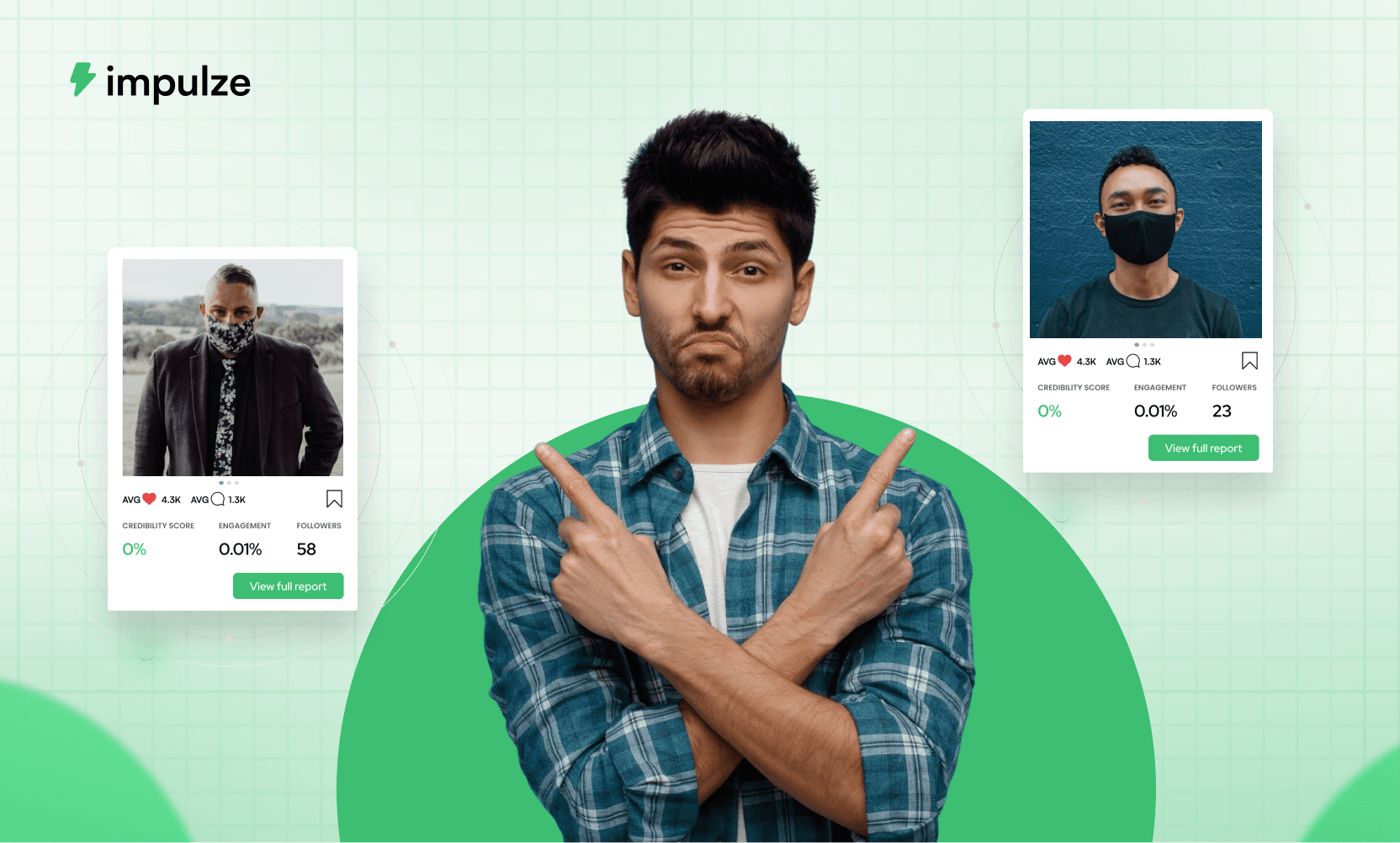
A brand marketer scrolls Instagram and finds the perfect partner. 4M followers. Beautiful feed. Engagement rate listed at 3.2%. Audience age matches the brand's customer. The pitch goes out. The deal closes at $30,000 for a launch campaign.
The Reel goes live. 128,000 likes in 48 hours. Looks great on paper.
Three weeks later the brand pulls the attribution numbers. The campaign generated 41 actual customers. Not 4,100. Not 410. Forty-one.
What happened: that creator's 4M followers were 71% non-human or non-reachable. The 128K likes were real, but they came from accounts that don't buy anything. The follower count was technically accurate. The campaign was technically delivered. And it was technically a $30,000 waste.
This is what influencer fraud actually looks like in 2026 — not obvious bot accounts, but partial fraud hiding inside seemingly healthy profiles. And every Influencer Report inside Impulze splits the audience into 4 segments that show you exactly what's broken — in 10 seconds, before you wire a deposit.
Pull your first free Influencer Report inside Impulze →
Why the headline metrics can't catch this
Most marketers vet creators using three numbers: followers, engagement rate, bio. All three are easy to fake.
Followers can be bought in bulk. $200 buys 50,000 followers and the count goes up. The partial-fraud is invisible from the outside.
Engagement rate can be propped up with bot likes or one viral post pulling the average.
Bio is whatever the creator types into the box.
None of these tell you what the audience is actually made of. To get that read, you have to break the audience itself into segments and look at the composition.
The 4-type audience breakdown
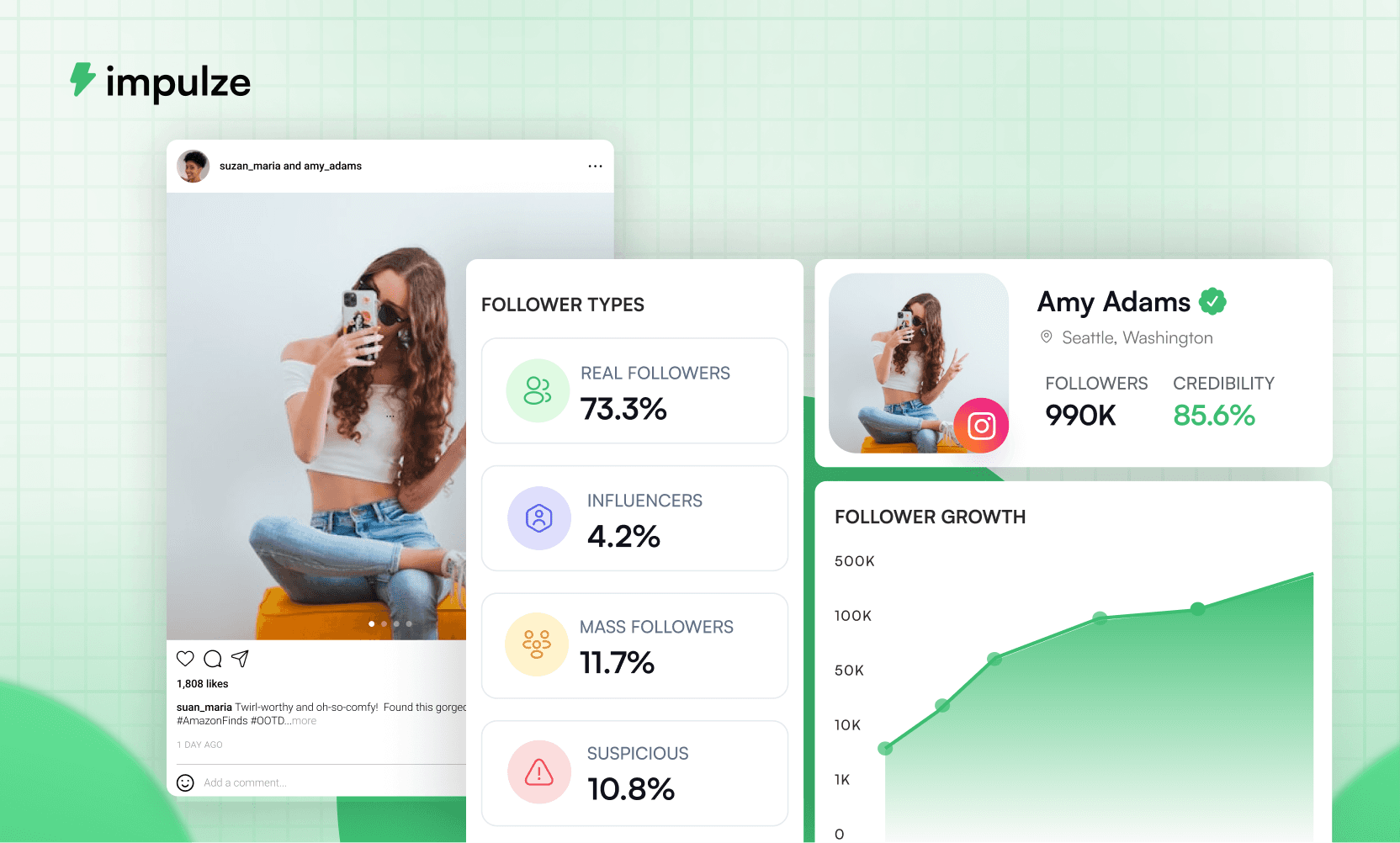
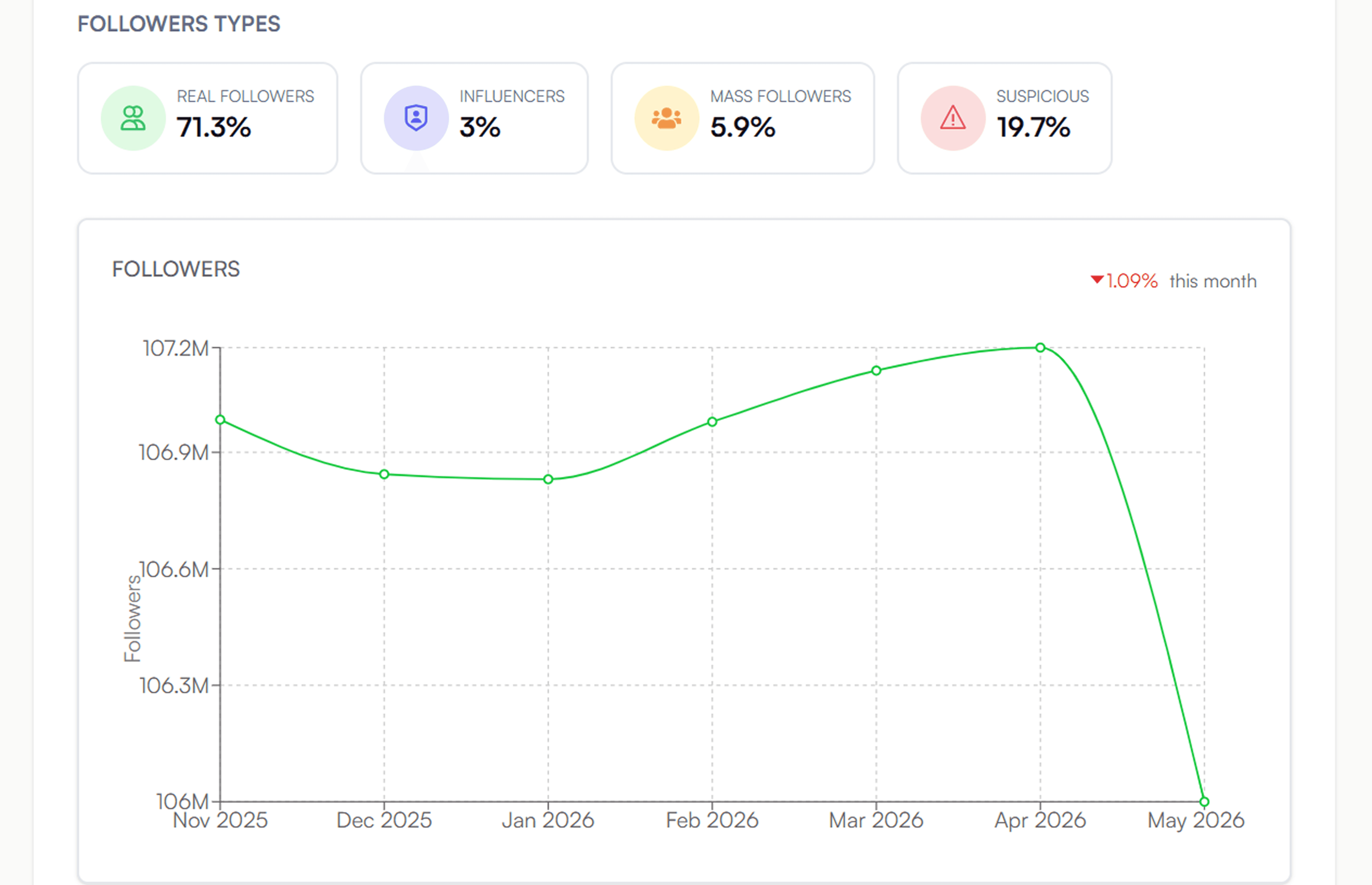
Inside every Impulze Influencer Report, the Audience Details → Followers Types section splits the creator's audience into four segments that always add up to 100%.
1. Real Followers
Genuine humans with normal account behavior. Profile picture, posts, normal follower-to-following ratio, regular activity. This is the only segment that converts.
Healthy target: 65% or above. Below 60% means the creator has either bought followers or accumulated low-quality follows over time.
2. Influencers
Other creators following them — usually because the creator engages back, posts in the right communities, or appeared in the same campaigns. Useful for reach inside the creator economy, but these accounts don't buy products.
Healthy band: 5–15%. Above 20% means the creator is mostly visible to other influencers — fine for B2B-to-creators content, but won't move your DTC brand.
3. Mass Followers
Real humans, but their accounts follow thousands of other accounts. Their feed is so cluttered your post barely shows up. They're not fake — they're just unreachable.
Healthy band: under 25%. The lower this number, the higher the share of audience that will actually see and remember your sponsored content.
4. Suspicious
Bot-like patterns — incomplete profiles, follower-to-following ratios that don't make sense, growth spikes that align with paid-follower platforms. Zero conversion value, plus FTC risk for high-bot creators.
Hard rule: Suspicious under 12%. Acceptable up to 15% if everything else looks healthy. Above 20% means the creator has bought followers in the last 24 months. Above 25% means active fraud.
A read-out across 3 creators
Here's how the breakdown looks across three creators a typical DTC brand might be considering side-by-side.
Creator A — 500K followers, listed ER 12%
Real: 41% · Influencers: 7% · Mass: 28% · Suspicious: 24%
Verdict: Pass. A quarter of the audience is bot-like. The 12% engagement is partly bot-driven. Real reach on a $5K campaign will be closer to 200K humans than 500K.
Creator B — 120K followers, listed ER 4.8%
Real: 72% · Influencers: 9% · Mass: 14% · Suspicious: 5%
Verdict: Strong. Audience is mostly real, Suspicious well under the 12% line, Influencer % healthy. Expect the campaign to perform close to the headline numbers.
Creator C — 2.1M followers, listed ER 1.8%
Real: 58% · Influencers: 14% · Mass: 21% · Suspicious: 7%
Verdict: Conditional. Suspicious is fine, but Real is below 65% and Mass is creeping. Run a small test before committing big budget. The 1.8% ER might actually understate real audience response because so many followers are unreachable.
Also read: The Engagement Rate Lie: What Your Credibility Score Actually Tells You
The 10-second vetting protocol
This is the workflow every marketing team should run on every creator before outreach. Total time: about 10 seconds once the report is generated.
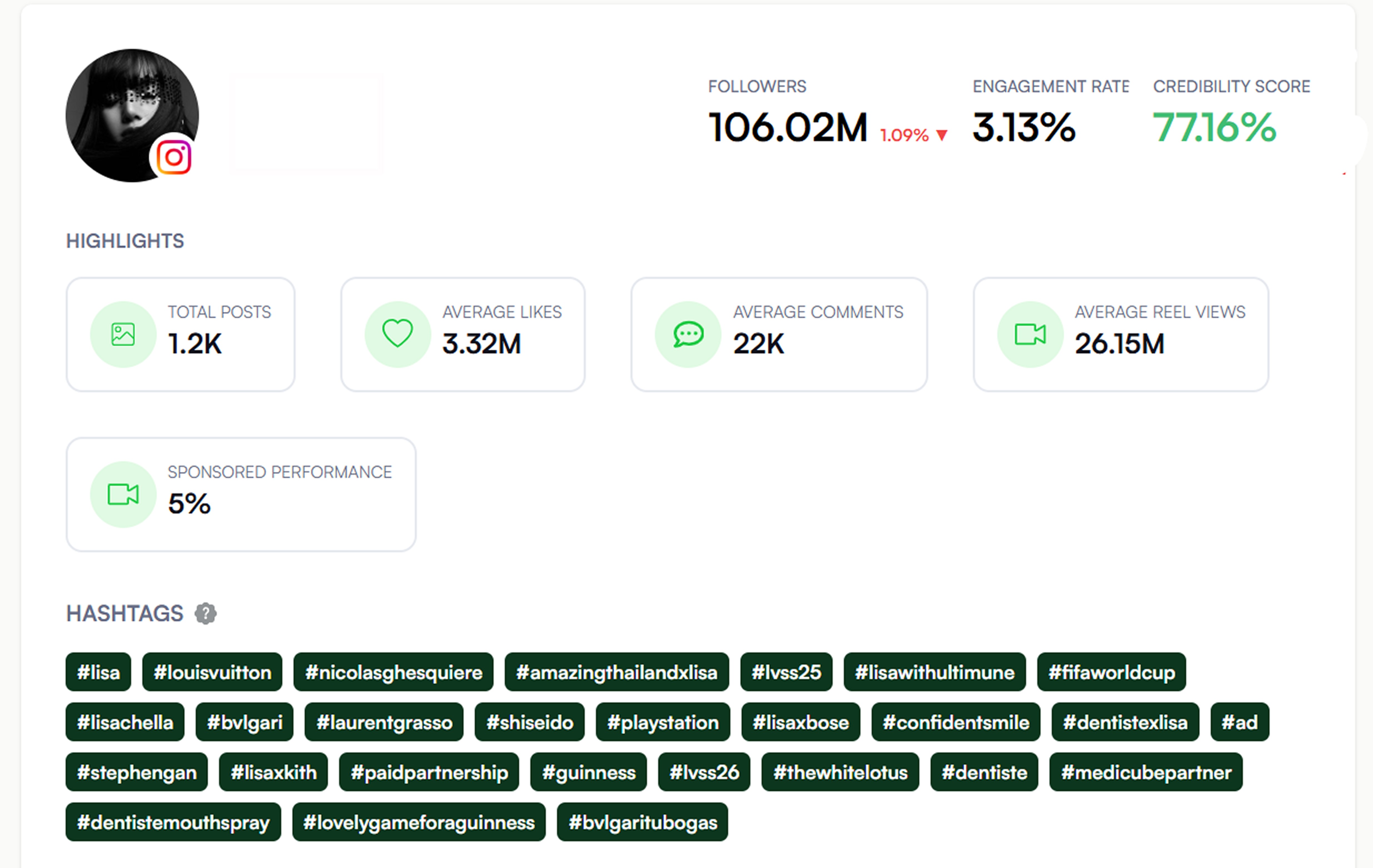
Glance at the Credibility Score at the top of the report. Green (80%+) → continue. Yellow (70-80%) → continue cautiously. Red (under 70%) → pass.
Scroll to Followers Types. Read Suspicious first. Over 15% → pass. Over 20% → hard pass.
Read Real Followers %. Under 60% → run a small paid test before committing budget.
Cross-check Sponsored Performance % in the Highlights row. Over 3% means their sponsored content actually performs. Under 1% means even a real audience doesn't convert.
Four checks. Ten seconds per creator. A 20-creator shortlist gets cleaned in under 20 minutes.

What you can't catch from the breakdown alone
The Followers Types breakdown is one signal — not the whole picture. Three things it doesn't tell you:
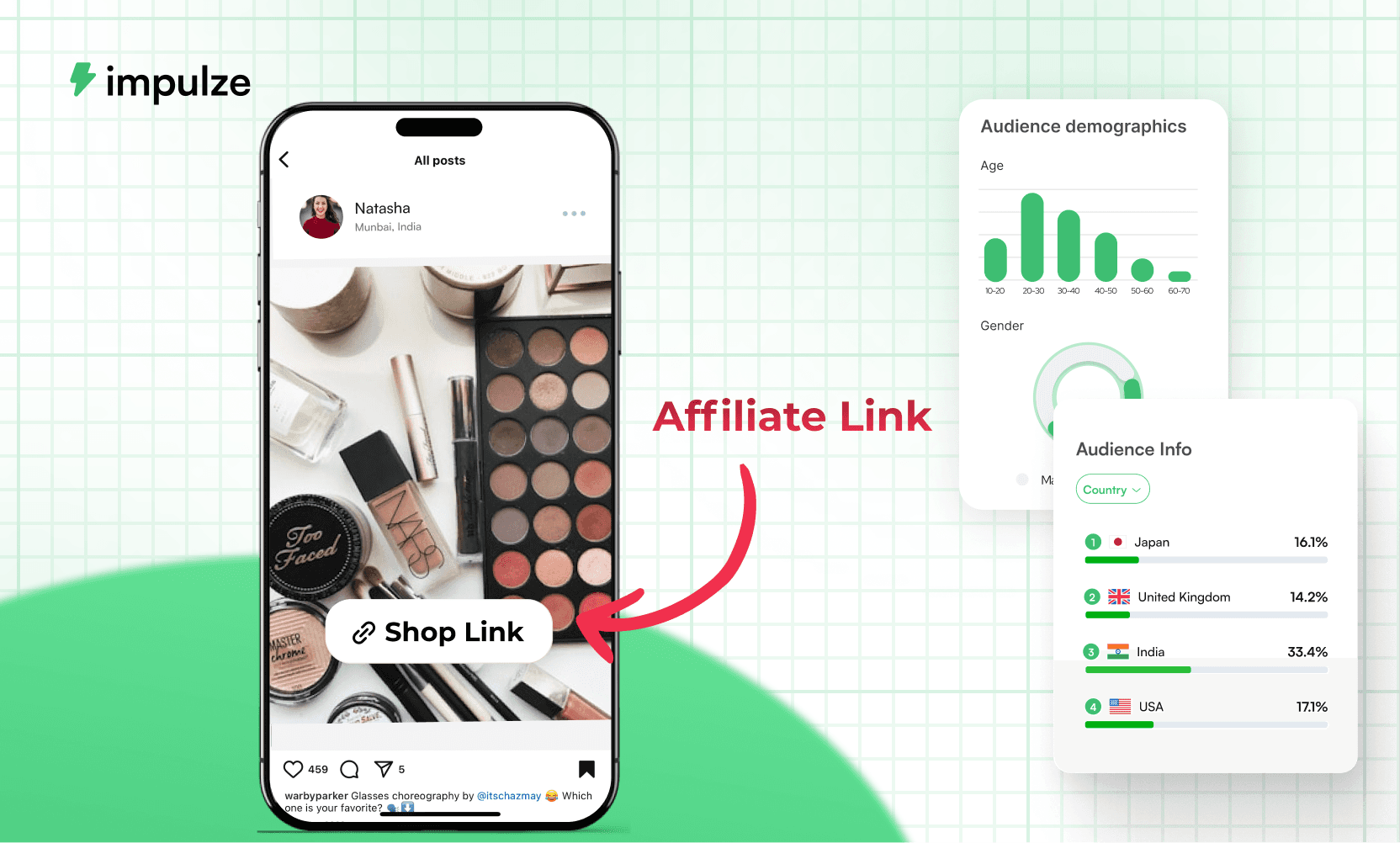
Audience-to-brand fit. A creator can have 90% Real Followers and still be wrong if the audience demographics (age, country, income, interests) don't match your customer. Read the Audience Details — Age/Gender, Locations, Top Interests, Brand Affinities — alongside Followers Types.
Content quality and brand safety. The numbers don't care if the creator's content is on-brand. Click through to their actual posts before signing.
Reply rate and response cadence. Audience might be real, but if the creator never replies to comments, a high-touch ambassador relationship won't work.
The Followers Types breakdown is the fastest fraud check. The full audience breakdown, plus a manual content review, is the full vet.
Try it on a creator you're about to pitch
You don't need to read another article. Open Impulze, paste the handle of the next creator on your shortlist, and pull the Influencer Report.
Inside the report, you'll get:
Credibility Score at the top — color-coded green/yellow/red so the verdict is visible at a glance
Followers Types breakdown — Real / Influencers / Mass / Suspicious split, every report
Sponsored Performance % — the metric most tools don't expose
Full audience demographics — Age, Gender, Ethnicities, Locations, Top Interests, Brand Affinities
Lookalikes section — if a creator fails the check, the report surfaces 10+ similar creators to vet instead
One report. Ten seconds. The $30K mistake doesn't get made.
A brand marketer scrolls Instagram and finds the perfect partner. 4M followers. Beautiful feed. Engagement rate listed at 3.2%. Audience age matches the brand's customer. The pitch goes out. The deal closes at $30,000 for a launch campaign.
The Reel goes live. 128,000 likes in 48 hours. Looks great on paper.
Three weeks later the brand pulls the attribution numbers. The campaign generated 41 actual customers. Not 4,100. Not 410. Forty-one.
What happened: that creator's 4M followers were 71% non-human or non-reachable. The 128K likes were real, but they came from accounts that don't buy anything. The follower count was technically accurate. The campaign was technically delivered. And it was technically a $30,000 waste.
This is what influencer fraud actually looks like in 2026 — not obvious bot accounts, but partial fraud hiding inside seemingly healthy profiles. And every Influencer Report inside Impulze splits the audience into 4 segments that show you exactly what's broken — in 10 seconds, before you wire a deposit.
Pull your first free Influencer Report inside Impulze →
Why the headline metrics can't catch this
Most marketers vet creators using three numbers: followers, engagement rate, bio. All three are easy to fake.
Followers can be bought in bulk. $200 buys 50,000 followers and the count goes up. The partial-fraud is invisible from the outside.
Engagement rate can be propped up with bot likes or one viral post pulling the average.
Bio is whatever the creator types into the box.
None of these tell you what the audience is actually made of. To get that read, you have to break the audience itself into segments and look at the composition.
The 4-type audience breakdown
Inside every Impulze Influencer Report, the Audience Details → Followers Types section splits the creator's audience into four segments that always add up to 100%.
1. Real Followers
Genuine humans with normal account behavior. Profile picture, posts, normal follower-to-following ratio, regular activity. This is the only segment that converts.
Healthy target: 65% or above. Below 60% means the creator has either bought followers or accumulated low-quality follows over time.
2. Influencers
Other creators following them — usually because the creator engages back, posts in the right communities, or appeared in the same campaigns. Useful for reach inside the creator economy, but these accounts don't buy products.
Healthy band: 5–15%. Above 20% means the creator is mostly visible to other influencers — fine for B2B-to-creators content, but won't move your DTC brand.
3. Mass Followers
Real humans, but their accounts follow thousands of other accounts. Their feed is so cluttered your post barely shows up. They're not fake — they're just unreachable.
Healthy band: under 25%. The lower this number, the higher the share of audience that will actually see and remember your sponsored content.
4. Suspicious
Bot-like patterns — incomplete profiles, follower-to-following ratios that don't make sense, growth spikes that align with paid-follower platforms. Zero conversion value, plus FTC risk for high-bot creators.
Hard rule: Suspicious under 12%. Acceptable up to 15% if everything else looks healthy. Above 20% means the creator has bought followers in the last 24 months. Above 25% means active fraud.
A read-out across 3 creators
Here's how the breakdown looks across three creators a typical DTC brand might be considering side-by-side.
Creator A — 500K followers, listed ER 12%
Real: 41% · Influencers: 7% · Mass: 28% · Suspicious: 24%
Verdict: Pass. A quarter of the audience is bot-like. The 12% engagement is partly bot-driven. Real reach on a $5K campaign will be closer to 200K humans than 500K.
Creator B — 120K followers, listed ER 4.8%
Real: 72% · Influencers: 9% · Mass: 14% · Suspicious: 5%
Verdict: Strong. Audience is mostly real, Suspicious well under the 12% line, Influencer % healthy. Expect the campaign to perform close to the headline numbers.
Creator C — 2.1M followers, listed ER 1.8%
Real: 58% · Influencers: 14% · Mass: 21% · Suspicious: 7%
Verdict: Conditional. Suspicious is fine, but Real is below 65% and Mass is creeping. Run a small test before committing big budget. The 1.8% ER might actually understate real audience response because so many followers are unreachable.
Also read: The Engagement Rate Lie: What Your Credibility Score Actually Tells You
The 10-second vetting protocol
This is the workflow every marketing team should run on every creator before outreach. Total time: about 10 seconds once the report is generated.
Glance at the Credibility Score at the top of the report. Green (80%+) → continue. Yellow (70-80%) → continue cautiously. Red (under 70%) → pass.
Scroll to Followers Types. Read Suspicious first. Over 15% → pass. Over 20% → hard pass.
Read Real Followers %. Under 60% → run a small paid test before committing budget.
Cross-check Sponsored Performance % in the Highlights row. Over 3% means their sponsored content actually performs. Under 1% means even a real audience doesn't convert.
Four checks. Ten seconds per creator. A 20-creator shortlist gets cleaned in under 20 minutes.
What you can't catch from the breakdown alone
The Followers Types breakdown is one signal — not the whole picture. Three things it doesn't tell you:
Audience-to-brand fit. A creator can have 90% Real Followers and still be wrong if the audience demographics (age, country, income, interests) don't match your customer. Read the Audience Details — Age/Gender, Locations, Top Interests, Brand Affinities — alongside Followers Types.
Content quality and brand safety. The numbers don't care if the creator's content is on-brand. Click through to their actual posts before signing.
Reply rate and response cadence. Audience might be real, but if the creator never replies to comments, a high-touch ambassador relationship won't work.
The Followers Types breakdown is the fastest fraud check. The full audience breakdown, plus a manual content review, is the full vet.
Try it on a creator you're about to pitch
You don't need to read another article. Open Impulze, paste the handle of the next creator on your shortlist, and pull the Influencer Report.
Inside the report, you'll get:
Credibility Score at the top — color-coded green/yellow/red so the verdict is visible at a glance
Followers Types breakdown — Real / Influencers / Mass / Suspicious split, every report
Sponsored Performance % — the metric most tools don't expose
Full audience demographics — Age, Gender, Ethnicities, Locations, Top Interests, Brand Affinities
Lookalikes section — if a creator fails the check, the report surfaces 10+ similar creators to vet instead
One report. Ten seconds. The $30K mistake doesn't get made.
Frequently Asked Questions
What's a reasonable Suspicious % threshold?

What's a reasonable Suspicious % threshold?
Can a creator be flagged Suspicious without having bought followers?
Can a creator be flagged Suspicious without having bought followers?
What's the difference between Mass Followers and Suspicious?
What's the difference between Mass Followers and Suspicious?
Should I drop a creator just because Suspicious is at 18%?
Should I drop a creator just because Suspicious is at 18%?
How does Impulze detect Suspicious accounts?
How does Impulze detect Suspicious accounts?
We Also Recommend To Read