🥳 Skip the subscription. Pay $299 once for lifetime access— See lifetime plans
🥳 Skip the subscription. Pay $299 once for lifetime access—

8 MIN READ
Learning Basics
Learning Basics
How to Create Affiliate Links for Influencers in 2026?
How to Create Affiliate Links for Influencers in 2026?
How to Create Affiliate Links for Influencers in 2026?
Sections
Build your first creator list on Solo, $29 a month.

Blog in Short ⏱️
Blog in Short ⏱️
A quick glance at the highlights—perfect for when you're short on time.
A quick glance at the highlights—perfect for when you're short on time.
Affiliate links are trackable URLs that show which creator drove a sale.
They work through cookies, tracking windows, and automatic attribution.
Creators earn commissions per sale, while brands pay only for results.
You can create affiliate links through Shopify plugins, affiliate networks, influencer platforms, or manual codes.
Clean links, clear commission rules, mobile optimization, and transparent dashboards improve conversions.
Scaling requires automated tracking, predictable payouts, creator onboarding, and ambassador programs.
Affiliate links help brands measure ROI and help creators build long-term income. Impulze will soon support link creation and tracking.
Everyone talks about “monetizing through affiliate links,” but very few explain what actually happens behind the scenes. How is the link created? How does tracking work? How do you know which creator drove the sale? And most importantly, how do you get paid accurately and on time?
If you’re a brand setting up your first affiliate program, all of this can feel technical and confusing. If you’re a creator trying to build a sustainable income, it can feel risky without proper clarity and trust. That’s exactly why this guide exists.
In this step-by-step walkthrough, you’ll learn how affiliate links really work, how to create them the right way, and how to scale affiliate marketing with influencers.
What Is an Affiliate Link? (In Simple Terms)
An affiliate link is simply a special tracking link that tells a brand exactly who sent the customer. It looks like a normal product link, but hidden inside it is an ID connected to a specific creator or partner. When someone clicks that link and makes a purchase, the brand knows which influencer or affiliate deserves the commission.
What an Affiliate Link Actually is
At its core, an affiliate link is just a regular product URL with a tracking code attached.
For example, instead of:brand.com/productAn affiliate link might look like:brand.com/product?ref=creator123
That small code at the end is what tracks the creator’s performance.
How Affiliate Tracking Works Behind the Scenes
When a user clicks an affiliate link, three things happen instantly:
A cookie is dropped in the user’s browser
The system records the source of the click
The brand’s platform waits for a purchase event
If a sale happens within the tracking window, the system automatically attributes that sale to the creator and calculates their commission. No manual work is needed.
Basics Explained: Cookies, Tracking Windows, and Attribution
A cookie is a small file placed on the user’s device that remembers the affiliate source.
A tracking window is the time period during which a creator can still earn commission after the click. This could be 24 hours, 7 days, 30 days, or even longer.
Attribution decides who gets credit for the sale. Most programs use “last-click attribution,” meaning the last affiliate link clicked before purchase earns the commission.
How Brands Make Money vs How Creators Earn
Brands benefit because they only pay after a sale happens. There is no upfront ad spend risk. Creators earn a percentage of each confirmed sale, which means their income grows directly with performance, not just views.
Simple Real-life Example
Let’s say a skincare brand gives a creator an affiliate link for a ₹1,000 face serum with a 15% commission.
The creator shares the link in an Instagram Story
A follower clicks the link today
The follower buys the serum two days later
Because the tracking window is 7 days, the system still credits the creator
The creator earns ₹150 from that one sale
Scale that to 100 sales, and the creator earns ₹15,000—without holding inventory or handling customer support.
In short, affiliate links create a performance-based partnership where brands only pay for results, and creators earn based on actual impact, not just reach.
How Affiliate Links Work for Influencers (Flow Explained)
Affiliate marketing may sound technical, but from an influencer’s point of view, the flow is actually very simple. It’s a clean, trackable journey from sharing a link → driving a sale → earning a commission.
Once you understand this flow, it becomes much easier to use affiliate links strategically instead of randomly dropping them.
Step-by-step User Journey (from Post to Payment)
Here’s what really happens behind the scenes when an influencer promotes an affiliate product:
1. Influencer shares a unique affiliate link
The brand or affiliate platform gives the creator a personalized tracking link. The influencer shares it on Instagram Stories, bio, YouTube description, blog, WhatsApp broadcast, or any other platform.
2. Follower clicks the link
A user taps the link out of curiosity, interest, or trust in the creator’s recommendation. At this moment, a tracking cookie is placed in the user’s browser.
3. Purchase happens (now or later)
The user might buy instantly, or they might return after a few hours or days. As long as the purchase happens within the tracking window, the system still remembers which influencer sent the user.
4. Commission is recorded automatically
Once the order is completed, the affiliate system logs the sale and assigns the commission to the creator’s dashboard. No manual reporting is needed.
5. Payout is released after validation
After a return/refund period (usually 15–45 days), the brand releases the commission via bank transfer, PayPal, or platform wallet.
One-time vs Recurring Commissions
Not all affiliate earnings are one-and-done.
One-time commissions: The creator earns once per sale. This is common for beauty, fashion, electronics, and DTC products.
Recurring commissions: The creator earns every month as long as the customer stays subscribed. This is common in SaaS tools, apps, memberships, and digital platforms.
For influencers, recurring commissions are powerful because a single post can generate income for months or even years.
Typical Commission Structures by Industry
Commission rates vary widely by niche. Here’s a realistic snapshot:
Beauty & skincare: 10%–25% per sale
Fashion & accessories: 8%–20% per sale
Fitness & wellness: 10%–30% per sale
Digital products & courses: 30%–70% per sale
SaaS & tools: 20%–50% recurring
Marketplaces (Amazon, Flipkart): 1%–10% depending on category
Electronics: 1-3% per sale
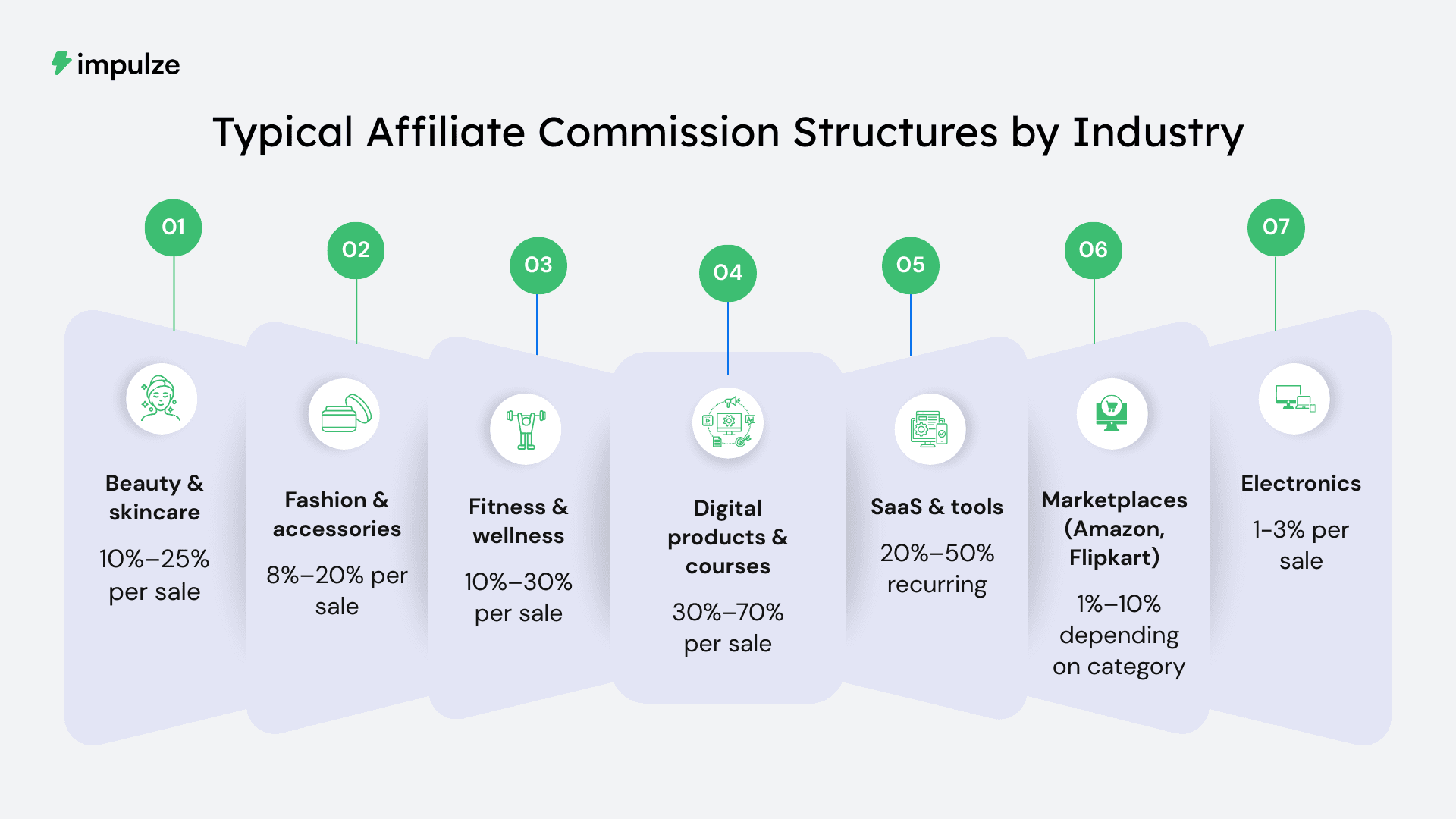
Higher margins usually mean higher commissions, which is why many creators shift toward digital products and software over time.
Why this model works so well for both sides
For influencers, affiliate links turn content into a long-term income stream, not just one-off payments. For brands, it’s one of the lowest-risk marketing models because they only pay for confirmed sales.
That’s why affiliate marketing has become the backbone of modern creator-brand partnerships and why tools that simplify link creation, tracking, and payouts are becoming essential for scaling these programs.
Different Ways to Create Affiliate Links
There isn’t just one way to create affiliate links. Brands can choose different setups based on their budget, scale, tech stack, and how many creators they plan to work with. Each method has its own pros, limitations, and ideal use cases.
1. Using eCommerce Platforms (Shopify, WooCommerce, etc.)
Many brands create affiliate links directly inside their eCommerce platform using built-in features or plugins.
How it works:
You install an affiliate app or plugin (on Shopify, WooCommerce, etc.)
You create a creator account inside the system
A unique tracking link or discount code is generated
Sales are tracked directly inside your store dashboard
Best for:
DTC brands
Small to mid-size online stores
Brands wanting full control over payments and data
Use case example: A skincare brand on Shopify creates affiliate links for 20 beauty creators. Every sale from their links gets tracked inside the store backend with automatic payouts every month.
Pros:
Full ownership of data
No third-party network dependency
Easier profit tracking
Limitations:
Requires technical setup
Creator discovery and outreach must be done separately
2. Using Affiliate Networks (Awin, CJ, Impact, etc.)
Affiliate networks act as a marketplace between brands and creators.
How it works:
Brands list their affiliate program on the network
Creators apply to join the program
The platform generates tracked affiliate links
The network handles reporting and payouts
Best for:
Brands that want quick creator access
Global affiliate programs
Brands that don’t want to handle payouts manually
Use case example: A fashion brand lists its program on Awin. Hundreds of bloggers and Instagram creators join and start promoting products using automatically generated links.
Pros:
Instant access to large creator pools
Built-in fraud detection
Automated tracking and payouts
Limitations:
Platform fees and commissions
Less control over creator quality
Limited relationship-building
3. Using Influencer Marketing Platforms
Modern influencer platforms now allow brands to create, distribute, and track affiliate links in one place.
How it works:
Brands onboard creators inside the platform
Unique affiliate links are generated per creator
Clicks, conversions, and revenue are tracked in real time
Creators see their earnings in a shared dashboard
Best for:
Brands running ongoing influencer programs
Performance-based influencer campaigns
Teams managing many creators at once
Use case example: A SaaS company partners with 50 creators globally. Each creator gets a personal affiliate link, and the brand tracks recurring commissions and ROI from a single dashboard.
Pros:
Discovery + tracking in one tool
Clean performance attribution
Easy scaling of campaigns
Strong creator relationship management
Limitations:
Requires a platform subscription
Slight learning curve for teams
🔜 impulze update: You’ll soon be able to create and track affiliate links directly inside impulze so you can manage creators, links, performance, and commissions from one single workspace.
4. Manual Tracking vs Automated Tracking
Some brands still try to track affiliate sales manually, while others rely fully on automation. Let’s learn about both:
A: Manual Tracking
How it works:
Creators share custom discount codes
Brands match orders with codes manually
Commissions are calculated in spreadsheets
Best for:
Very small campaigns
Local or offline-heavy brands
Use case example: A local fitness coach gives each influencer a unique coupon code and manually tracks purchases at checkout.
Risks:
Human errors
Missed conversions
Payment disputes
No real-time performance visibility
B: Automated Tracking
How it works:
Tracking links and cookies handle attribution automatically
Every click, sale, and commission is logged in real-time
Payouts are calculated by the system
Best for:
Scaling programs
Long-term influencer partnerships
Affiliate-heavy brands
Use case example: A subscription-based app uses automated tracking to pay creators monthly recurring commissions without manual calculations.
Advantages:
Accurate attribution
Zero manual errors
Transparent reporting
Easier creator trust and scalability
Which Method Should You Choose?
Early-stage DTC brand: eCommerce platform setup
Global product brand: Affiliate networks
Scaling creator partnerships: Influencer marketing platforms
Small local campaigns: Manual tracking (short-term only)
Performance-driven brands: Fully automated systems
Choosing the right method early saves months of operational chaos later and directly impacts how trustworthy and scalable your affiliate program becomes.
Things to Keep in Mind While Creating Affiliate Links
Creating affiliate links is technically easy. But creating links that actually convert, keep creators motivated, and don’t create disputes later takes a little planning. Think of this like laying the foundation before you scale. Here’s what you should always keep in mind:
1. Define a Clear Commission Structure
Before you send out even one affiliate link, be very clear about how creators will earn. For example, are you offering:
10% per sale?
$15 per signup?
Or recurring commission every month?
If this isn’t clear from day one, confusion starts later. A creator might expect lifetime commission, while you only planned one-time payouts. That mismatch is one of the biggest reasons affiliate programs break down. Write it clearly, explain it simply, and repeat it in your onboarding message.
2. Set the Right Cookie Duration
The cookie decides how long after a click a creator will still get paid.
Let’s say a creator shares your link today, but the customer comes back after 10 days and buys. Will the creator still get the commission? That depends on your cookie window.
24 hours = very strict
7–14 days = fair
30 days = creator-friendly
Short cookie windows often demotivate creators because many users don’t buy instantly. Longer cookies usually mean better promotion from creators and higher overall sales for brands.
3. Use Clean, Trackable Links
If your affiliate link looks broken, too long, or redirects five times, people hesitate to click.
For example:
A clean link like:
brand.com/creatornameVersus a messy one with random codes and symbols
Also, always test links yourself before sharing. One broken link can mean lost sales and very awkward conversations with creators later. Simple, reliable links build trust instantly.
4. Ensure Mobile Optimization
Most users will click affiliate links from Instagram, YouTube, or WhatsApp — all on mobile.
If your landing page loads slowly, has broken buttons or doesn’t display properly on small screens, people will drop off instantly.
Even if the creator did a perfect job promoting, bad mobile experience will kill conversions. Before launching any affiliate program, open your link on your own phone and check the full purchase flow.
5. Enable Real-Time Tracking & Transparency
Creators don’t like guessing if their efforts worked. They want to see:
How many clicks happened
How many sales were made
How much commission they earned
When creators have real-time dashboards, they promote more consistently and confidently. If they have to “wait till the end of the month and just trust you,” motivation gradually drops. Transparency always leads to better long-term partnerships.
6. Clarify Where the Links Can Be Used
Never assume creators know your rules. Always clearly mention where affiliate links are allowed. For example, can they use links in:
Instagram bio?
Stories with swipe-up?
YouTube descriptions?
Paid ads?
Email newsletters?
If a creator runs paid ads using your affiliate link without permission, it can mess up your bidding strategy or violate ad policies. Clear rules up front save a lot of trouble later.
7. Align Links With the Creator’s Content Style
Not every link works the same way with every format. For example:
A skincare creator doing a nighttime routine works better with a tutorial link
A deal page works better for giveaway or discount content
A detailed product breakdown fits well with YouTube descriptions
When links match the content style naturally, conversions feel organic instead of forced.
8. Protect Against Fraud & Fake Traffic
Sometimes you’ll see huge clicks and very low or zero sales. This usually means bot traffic, incentivized clicks, or low-quality promotion. Monitoring this early helps you:
Pause suspicious creators
Prevent fake payouts
Protect your real affiliates from unfair competition
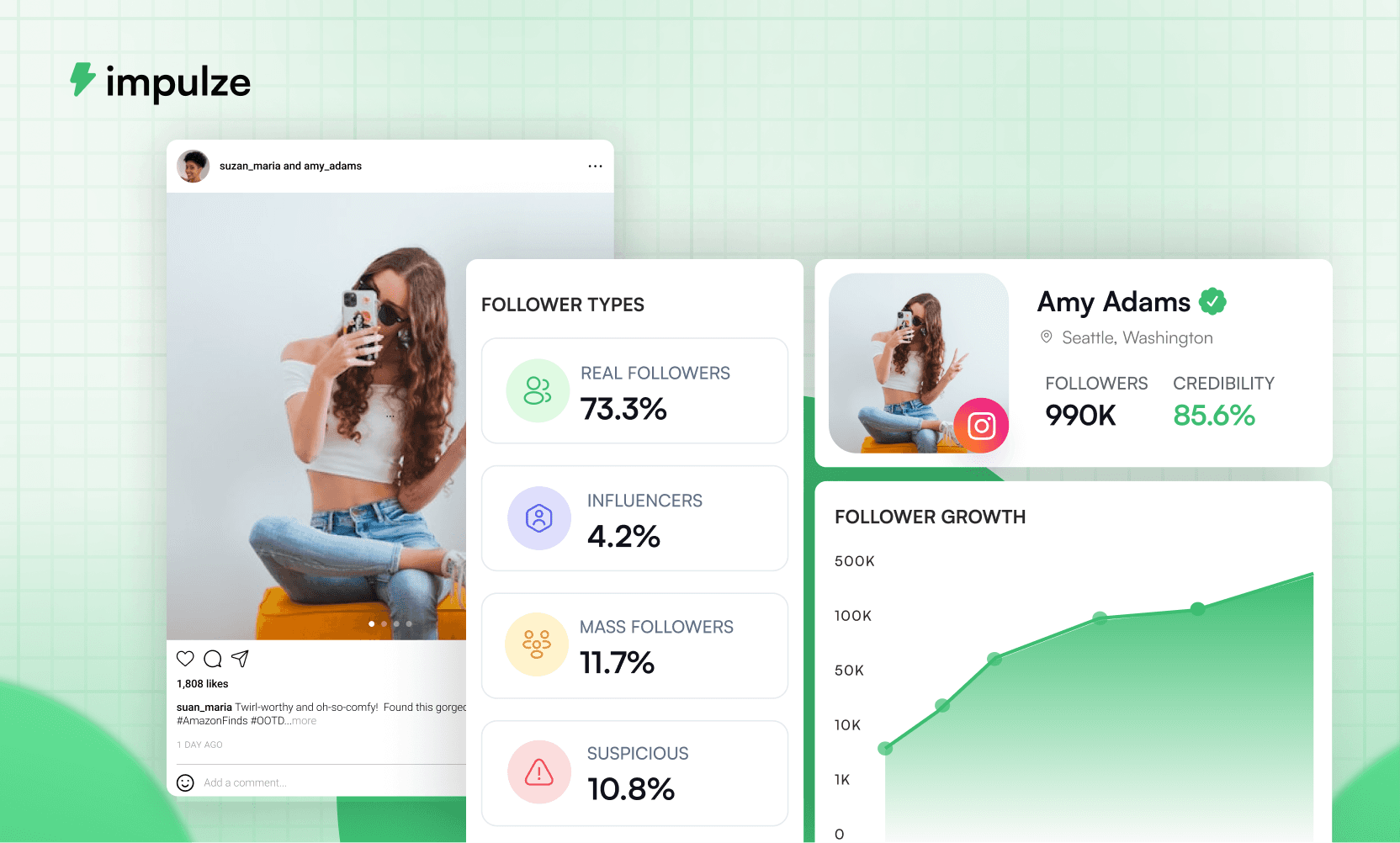
Basic fraud checks can save you a lot of money long-term. For this, you can use impulze.ai’s profile report analysis that shows if an influencer has any suspicious growth or mass followers.
9. Have a Clear Payout Policy
Creators care deeply about when and how they get paid. Always communicate:
When payouts happen (weekly, monthly, 45-day cycle)
Minimum payout threshold (for example, minimum $50)
Payment method (bank transfer, PayPal, Stripe, etc.)
If creators don’t know when they’ll get paid, they won’t promote with confidence. Clear payout rules = higher creator trust.
10. Make the Creator’s Job Easy
The easier your system is, the more consistently creators will promote. If creators have to email you for links, track sales manually, and wait weeks for basic updates, they’ll slowly lose interest. But if they can simply log in, copy links, and track performance instantly, they’ll promote you more naturally and more often.
11. Plan for Scale From Day One
Even if you’re starting with just 5 creators, think like you’ll have 500 one day. Ask yourself:
Will my tracking still work at scale?
Will payouts become messy?
Will I lose data in spreadsheets?
Many brands start manually and then struggle to scale. Setting up proper systems early saves massive time and operational stress later.
✅ Pro tip (brand-side):
We at impulze.ai (coming soon) will let you create, assign, and track affiliate links while also managing creators, performance, and payouts from one dashboard. This removes almost all the manual headache and makes scaling much smoother.
How Brands Can Scale Affiliate Programs with Influencers
Running affiliate links with a few creators is manageable. But once you move from 3 creators to 30… and then 300… things can spiral very quickly if you don’t build systems early. Scaling is not just about adding more links, it’s about adding creators without losing control, trust, or profitability.
Here’s how brands actually scale affiliate programs the smart way:
1. Recruiting at Scale (Without Manually DMing Everyone)
In the beginning, brands usually start by manually DMing creators: “Hey, want to promote our product?” That works for the first 5–10 creators. But after that, it becomes exhausting and inconsistent.
To scale properly, brands switch to:
Open affiliate sign-up pages
Automated creator onboarding forms
Influencer discovery tools to filter creators by niche, location, and engagement
For example, instead of chasing every fitness influencer manually, a supplement brand can open a public affiliate application where creators apply on their own. You then approve only those who match your audience. This flips the effort — creators come to you, not the other way around.
2. Automating Tracking (So You’re Not Living in Spreadsheets)
Manual tracking works only at a very small level. Once multiple creators start driving daily traffic, spreadsheets become risky:
Links get mixed up
Sales attribution gets messy
Disputes start happening
Automation solves this. With automated affiliate tracking:
Each creator gets a unique link
Every click and sale is logged automatically
Commissions are calculated in real-time
For example, instead of asking creators to send screenshots of their sales, your system should already show:
“This creator generated 184 clicks, 12 sales, $1,240 revenue.” This transparency builds trust and saves your team hours every week.
3. Setting Up Monthly (or Auto) Payouts
This is where many brands lose creators, not because of low commission, but because of delayed or confusing payments.
To scale safely, you need:
Fixed payout cycles (monthly, bi-weekly, or 45-day cycles)
Automated payout calculations
Clear minimum payout thresholds
For example, if creators know: “Payments are processed on the 5th of every month for last month’s sales.”
They stop chasing you in DMs. Predictability builds long-term loyalty. When creators trust your payout system, they promote harder and more consistently.
4. Building Ambassador Models (Beyond One-Time Affiliates)
One of the best ways to scale profitably is by converting top-performing affiliates into brand ambassadors.
Instead of transactional, one-off promotions, you build:
Long-term creator partnerships
Monthly retainers + affiliate commissions
Exclusive content collaborations
Early product access + higher commission tiers
For example, a beauty brand might identify its top 10 affiliate creators and upgrade them into ambassadors with a fixed monthly fee, higher commissions, priority launches, and behind-the-scenes access. These creators stop acting like advertisers and start acting like insiders. Their audience feels that authenticity and conversions go up significantly.
5. Using Performance-Based Bonuses to Drive Momentum
Flat commission motivates creators to start. Bonuses motivate creators to scale harder. You can add:
Bonus for crossing 50 sales in a month
Extra commission for top-performing creators
Seasonal performance rewards (New Year, Black Friday, festive sales)
For example:
Base commission = 10%
Bonus kicks in at 15% after 30 sales
Extra $500 bonus for the top creator of the month
This turns your affiliate program into a friendly competition and creators naturally start pushing more creative content, more consistently.
The Real Secret to Scaling Smoothly
Scaling affiliate programs is not about “adding more links.” It’s about building systems, transparency, trust, predictable payouts and long-term creator relationships. This is where impulze.ai is set to play a big role — helping brands:
Recruit creators faster
Assign and track affiliate links automatically
Monitor real-time performance
Track payments without chaos
Turn top affiliates into long-term ambassadors
Stay tuned to get more updates on this new feature launch!
Affiliate Links Are the Future of Influencer ROI
Affiliate links are quickly becoming the smartest way to run influencer marketing. Brands get clear, trackable ROI. Creators build long-term, compounding income. It’s a win for both sides.
Very soon, you’ll be able to create and track affiliate and Shopify links directly inside impulze.ai—all in one place, without messy spreadsheets or guesswork.
👉 Create a free Impulze account today, and we’ll notify you as soon as affiliate tracking is officially launched so you can start scaling with confidence.
Everyone talks about “monetizing through affiliate links,” but very few explain what actually happens behind the scenes. How is the link created? How does tracking work? How do you know which creator drove the sale? And most importantly, how do you get paid accurately and on time?
If you’re a brand setting up your first affiliate program, all of this can feel technical and confusing. If you’re a creator trying to build a sustainable income, it can feel risky without proper clarity and trust. That’s exactly why this guide exists.
In this step-by-step walkthrough, you’ll learn how affiliate links really work, how to create them the right way, and how to scale affiliate marketing with influencers.
What Is an Affiliate Link? (In Simple Terms)
An affiliate link is simply a special tracking link that tells a brand exactly who sent the customer. It looks like a normal product link, but hidden inside it is an ID connected to a specific creator or partner. When someone clicks that link and makes a purchase, the brand knows which influencer or affiliate deserves the commission.
What an Affiliate Link Actually is
At its core, an affiliate link is just a regular product URL with a tracking code attached.
For example, instead of:brand.com/productAn affiliate link might look like:brand.com/product?ref=creator123
That small code at the end is what tracks the creator’s performance.
How Affiliate Tracking Works Behind the Scenes
When a user clicks an affiliate link, three things happen instantly:
A cookie is dropped in the user’s browser
The system records the source of the click
The brand’s platform waits for a purchase event
If a sale happens within the tracking window, the system automatically attributes that sale to the creator and calculates their commission. No manual work is needed.
Basics Explained: Cookies, Tracking Windows, and Attribution
A cookie is a small file placed on the user’s device that remembers the affiliate source.
A tracking window is the time period during which a creator can still earn commission after the click. This could be 24 hours, 7 days, 30 days, or even longer.
Attribution decides who gets credit for the sale. Most programs use “last-click attribution,” meaning the last affiliate link clicked before purchase earns the commission.
How Brands Make Money vs How Creators Earn
Brands benefit because they only pay after a sale happens. There is no upfront ad spend risk. Creators earn a percentage of each confirmed sale, which means their income grows directly with performance, not just views.
Simple Real-life Example
Let’s say a skincare brand gives a creator an affiliate link for a ₹1,000 face serum with a 15% commission.
The creator shares the link in an Instagram Story
A follower clicks the link today
The follower buys the serum two days later
Because the tracking window is 7 days, the system still credits the creator
The creator earns ₹150 from that one sale
Scale that to 100 sales, and the creator earns ₹15,000—without holding inventory or handling customer support.
In short, affiliate links create a performance-based partnership where brands only pay for results, and creators earn based on actual impact, not just reach.
How Affiliate Links Work for Influencers (Flow Explained)
Affiliate marketing may sound technical, but from an influencer’s point of view, the flow is actually very simple. It’s a clean, trackable journey from sharing a link → driving a sale → earning a commission.
Once you understand this flow, it becomes much easier to use affiliate links strategically instead of randomly dropping them.
Step-by-step User Journey (from Post to Payment)
Here’s what really happens behind the scenes when an influencer promotes an affiliate product:
1. Influencer shares a unique affiliate link
The brand or affiliate platform gives the creator a personalized tracking link. The influencer shares it on Instagram Stories, bio, YouTube description, blog, WhatsApp broadcast, or any other platform.
2. Follower clicks the link
A user taps the link out of curiosity, interest, or trust in the creator’s recommendation. At this moment, a tracking cookie is placed in the user’s browser.
3. Purchase happens (now or later)
The user might buy instantly, or they might return after a few hours or days. As long as the purchase happens within the tracking window, the system still remembers which influencer sent the user.
4. Commission is recorded automatically
Once the order is completed, the affiliate system logs the sale and assigns the commission to the creator’s dashboard. No manual reporting is needed.
5. Payout is released after validation
After a return/refund period (usually 15–45 days), the brand releases the commission via bank transfer, PayPal, or platform wallet.
One-time vs Recurring Commissions
Not all affiliate earnings are one-and-done.
One-time commissions: The creator earns once per sale. This is common for beauty, fashion, electronics, and DTC products.
Recurring commissions: The creator earns every month as long as the customer stays subscribed. This is common in SaaS tools, apps, memberships, and digital platforms.
For influencers, recurring commissions are powerful because a single post can generate income for months or even years.
Typical Commission Structures by Industry
Commission rates vary widely by niche. Here’s a realistic snapshot:
Beauty & skincare: 10%–25% per sale
Fashion & accessories: 8%–20% per sale
Fitness & wellness: 10%–30% per sale
Digital products & courses: 30%–70% per sale
SaaS & tools: 20%–50% recurring
Marketplaces (Amazon, Flipkart): 1%–10% depending on category
Electronics: 1-3% per sale
Higher margins usually mean higher commissions, which is why many creators shift toward digital products and software over time.
Why this model works so well for both sides
For influencers, affiliate links turn content into a long-term income stream, not just one-off payments. For brands, it’s one of the lowest-risk marketing models because they only pay for confirmed sales.
That’s why affiliate marketing has become the backbone of modern creator-brand partnerships and why tools that simplify link creation, tracking, and payouts are becoming essential for scaling these programs.
Different Ways to Create Affiliate Links
There isn’t just one way to create affiliate links. Brands can choose different setups based on their budget, scale, tech stack, and how many creators they plan to work with. Each method has its own pros, limitations, and ideal use cases.
1. Using eCommerce Platforms (Shopify, WooCommerce, etc.)
Many brands create affiliate links directly inside their eCommerce platform using built-in features or plugins.
How it works:
You install an affiliate app or plugin (on Shopify, WooCommerce, etc.)
You create a creator account inside the system
A unique tracking link or discount code is generated
Sales are tracked directly inside your store dashboard
Best for:
DTC brands
Small to mid-size online stores
Brands wanting full control over payments and data
Use case example: A skincare brand on Shopify creates affiliate links for 20 beauty creators. Every sale from their links gets tracked inside the store backend with automatic payouts every month.
Pros:
Full ownership of data
No third-party network dependency
Easier profit tracking
Limitations:
Requires technical setup
Creator discovery and outreach must be done separately
2. Using Affiliate Networks (Awin, CJ, Impact, etc.)
Affiliate networks act as a marketplace between brands and creators.
How it works:
Brands list their affiliate program on the network
Creators apply to join the program
The platform generates tracked affiliate links
The network handles reporting and payouts
Best for:
Brands that want quick creator access
Global affiliate programs
Brands that don’t want to handle payouts manually
Use case example: A fashion brand lists its program on Awin. Hundreds of bloggers and Instagram creators join and start promoting products using automatically generated links.
Pros:
Instant access to large creator pools
Built-in fraud detection
Automated tracking and payouts
Limitations:
Platform fees and commissions
Less control over creator quality
Limited relationship-building
3. Using Influencer Marketing Platforms
Modern influencer platforms now allow brands to create, distribute, and track affiliate links in one place.
How it works:
Brands onboard creators inside the platform
Unique affiliate links are generated per creator
Clicks, conversions, and revenue are tracked in real time
Creators see their earnings in a shared dashboard
Best for:
Brands running ongoing influencer programs
Performance-based influencer campaigns
Teams managing many creators at once
Use case example: A SaaS company partners with 50 creators globally. Each creator gets a personal affiliate link, and the brand tracks recurring commissions and ROI from a single dashboard.
Pros:
Discovery + tracking in one tool
Clean performance attribution
Easy scaling of campaigns
Strong creator relationship management
Limitations:
Requires a platform subscription
Slight learning curve for teams
🔜 impulze update: You’ll soon be able to create and track affiliate links directly inside impulze so you can manage creators, links, performance, and commissions from one single workspace.
4. Manual Tracking vs Automated Tracking
Some brands still try to track affiliate sales manually, while others rely fully on automation. Let’s learn about both:
A: Manual Tracking
How it works:
Creators share custom discount codes
Brands match orders with codes manually
Commissions are calculated in spreadsheets
Best for:
Very small campaigns
Local or offline-heavy brands
Use case example: A local fitness coach gives each influencer a unique coupon code and manually tracks purchases at checkout.
Risks:
Human errors
Missed conversions
Payment disputes
No real-time performance visibility
B: Automated Tracking
How it works:
Tracking links and cookies handle attribution automatically
Every click, sale, and commission is logged in real-time
Payouts are calculated by the system
Best for:
Scaling programs
Long-term influencer partnerships
Affiliate-heavy brands
Use case example: A subscription-based app uses automated tracking to pay creators monthly recurring commissions without manual calculations.
Advantages:
Accurate attribution
Zero manual errors
Transparent reporting
Easier creator trust and scalability
Which Method Should You Choose?
Early-stage DTC brand: eCommerce platform setup
Global product brand: Affiliate networks
Scaling creator partnerships: Influencer marketing platforms
Small local campaigns: Manual tracking (short-term only)
Performance-driven brands: Fully automated systems
Choosing the right method early saves months of operational chaos later and directly impacts how trustworthy and scalable your affiliate program becomes.
Things to Keep in Mind While Creating Affiliate Links
Creating affiliate links is technically easy. But creating links that actually convert, keep creators motivated, and don’t create disputes later takes a little planning. Think of this like laying the foundation before you scale. Here’s what you should always keep in mind:
1. Define a Clear Commission Structure
Before you send out even one affiliate link, be very clear about how creators will earn. For example, are you offering:
10% per sale?
$15 per signup?
Or recurring commission every month?
If this isn’t clear from day one, confusion starts later. A creator might expect lifetime commission, while you only planned one-time payouts. That mismatch is one of the biggest reasons affiliate programs break down. Write it clearly, explain it simply, and repeat it in your onboarding message.
2. Set the Right Cookie Duration
The cookie decides how long after a click a creator will still get paid.
Let’s say a creator shares your link today, but the customer comes back after 10 days and buys. Will the creator still get the commission? That depends on your cookie window.
24 hours = very strict
7–14 days = fair
30 days = creator-friendly
Short cookie windows often demotivate creators because many users don’t buy instantly. Longer cookies usually mean better promotion from creators and higher overall sales for brands.
3. Use Clean, Trackable Links
If your affiliate link looks broken, too long, or redirects five times, people hesitate to click.
For example:
A clean link like:
brand.com/creatornameVersus a messy one with random codes and symbols
Also, always test links yourself before sharing. One broken link can mean lost sales and very awkward conversations with creators later. Simple, reliable links build trust instantly.
4. Ensure Mobile Optimization
Most users will click affiliate links from Instagram, YouTube, or WhatsApp — all on mobile.
If your landing page loads slowly, has broken buttons or doesn’t display properly on small screens, people will drop off instantly.
Even if the creator did a perfect job promoting, bad mobile experience will kill conversions. Before launching any affiliate program, open your link on your own phone and check the full purchase flow.
5. Enable Real-Time Tracking & Transparency
Creators don’t like guessing if their efforts worked. They want to see:
How many clicks happened
How many sales were made
How much commission they earned
When creators have real-time dashboards, they promote more consistently and confidently. If they have to “wait till the end of the month and just trust you,” motivation gradually drops. Transparency always leads to better long-term partnerships.
6. Clarify Where the Links Can Be Used
Never assume creators know your rules. Always clearly mention where affiliate links are allowed. For example, can they use links in:
Instagram bio?
Stories with swipe-up?
YouTube descriptions?
Paid ads?
Email newsletters?
If a creator runs paid ads using your affiliate link without permission, it can mess up your bidding strategy or violate ad policies. Clear rules up front save a lot of trouble later.
7. Align Links With the Creator’s Content Style
Not every link works the same way with every format. For example:
A skincare creator doing a nighttime routine works better with a tutorial link
A deal page works better for giveaway or discount content
A detailed product breakdown fits well with YouTube descriptions
When links match the content style naturally, conversions feel organic instead of forced.
8. Protect Against Fraud & Fake Traffic
Sometimes you’ll see huge clicks and very low or zero sales. This usually means bot traffic, incentivized clicks, or low-quality promotion. Monitoring this early helps you:
Pause suspicious creators
Prevent fake payouts
Protect your real affiliates from unfair competition
Basic fraud checks can save you a lot of money long-term. For this, you can use impulze.ai’s profile report analysis that shows if an influencer has any suspicious growth or mass followers.
9. Have a Clear Payout Policy
Creators care deeply about when and how they get paid. Always communicate:
When payouts happen (weekly, monthly, 45-day cycle)
Minimum payout threshold (for example, minimum $50)
Payment method (bank transfer, PayPal, Stripe, etc.)
If creators don’t know when they’ll get paid, they won’t promote with confidence. Clear payout rules = higher creator trust.
10. Make the Creator’s Job Easy
The easier your system is, the more consistently creators will promote. If creators have to email you for links, track sales manually, and wait weeks for basic updates, they’ll slowly lose interest. But if they can simply log in, copy links, and track performance instantly, they’ll promote you more naturally and more often.
11. Plan for Scale From Day One
Even if you’re starting with just 5 creators, think like you’ll have 500 one day. Ask yourself:
Will my tracking still work at scale?
Will payouts become messy?
Will I lose data in spreadsheets?
Many brands start manually and then struggle to scale. Setting up proper systems early saves massive time and operational stress later.
✅ Pro tip (brand-side):
We at impulze.ai (coming soon) will let you create, assign, and track affiliate links while also managing creators, performance, and payouts from one dashboard. This removes almost all the manual headache and makes scaling much smoother.
How Brands Can Scale Affiliate Programs with Influencers
Running affiliate links with a few creators is manageable. But once you move from 3 creators to 30… and then 300… things can spiral very quickly if you don’t build systems early. Scaling is not just about adding more links, it’s about adding creators without losing control, trust, or profitability.
Here’s how brands actually scale affiliate programs the smart way:
1. Recruiting at Scale (Without Manually DMing Everyone)
In the beginning, brands usually start by manually DMing creators: “Hey, want to promote our product?” That works for the first 5–10 creators. But after that, it becomes exhausting and inconsistent.
To scale properly, brands switch to:
Open affiliate sign-up pages
Automated creator onboarding forms
Influencer discovery tools to filter creators by niche, location, and engagement
For example, instead of chasing every fitness influencer manually, a supplement brand can open a public affiliate application where creators apply on their own. You then approve only those who match your audience. This flips the effort — creators come to you, not the other way around.
2. Automating Tracking (So You’re Not Living in Spreadsheets)
Manual tracking works only at a very small level. Once multiple creators start driving daily traffic, spreadsheets become risky:
Links get mixed up
Sales attribution gets messy
Disputes start happening
Automation solves this. With automated affiliate tracking:
Each creator gets a unique link
Every click and sale is logged automatically
Commissions are calculated in real-time
For example, instead of asking creators to send screenshots of their sales, your system should already show:
“This creator generated 184 clicks, 12 sales, $1,240 revenue.” This transparency builds trust and saves your team hours every week.
3. Setting Up Monthly (or Auto) Payouts
This is where many brands lose creators, not because of low commission, but because of delayed or confusing payments.
To scale safely, you need:
Fixed payout cycles (monthly, bi-weekly, or 45-day cycles)
Automated payout calculations
Clear minimum payout thresholds
For example, if creators know: “Payments are processed on the 5th of every month for last month’s sales.”
They stop chasing you in DMs. Predictability builds long-term loyalty. When creators trust your payout system, they promote harder and more consistently.
4. Building Ambassador Models (Beyond One-Time Affiliates)
One of the best ways to scale profitably is by converting top-performing affiliates into brand ambassadors.
Instead of transactional, one-off promotions, you build:
Long-term creator partnerships
Monthly retainers + affiliate commissions
Exclusive content collaborations
Early product access + higher commission tiers
For example, a beauty brand might identify its top 10 affiliate creators and upgrade them into ambassadors with a fixed monthly fee, higher commissions, priority launches, and behind-the-scenes access. These creators stop acting like advertisers and start acting like insiders. Their audience feels that authenticity and conversions go up significantly.
5. Using Performance-Based Bonuses to Drive Momentum
Flat commission motivates creators to start. Bonuses motivate creators to scale harder. You can add:
Bonus for crossing 50 sales in a month
Extra commission for top-performing creators
Seasonal performance rewards (New Year, Black Friday, festive sales)
For example:
Base commission = 10%
Bonus kicks in at 15% after 30 sales
Extra $500 bonus for the top creator of the month
This turns your affiliate program into a friendly competition and creators naturally start pushing more creative content, more consistently.
The Real Secret to Scaling Smoothly
Scaling affiliate programs is not about “adding more links.” It’s about building systems, transparency, trust, predictable payouts and long-term creator relationships. This is where impulze.ai is set to play a big role — helping brands:
Recruit creators faster
Assign and track affiliate links automatically
Monitor real-time performance
Track payments without chaos
Turn top affiliates into long-term ambassadors
Stay tuned to get more updates on this new feature launch!
Affiliate Links Are the Future of Influencer ROI
Affiliate links are quickly becoming the smartest way to run influencer marketing. Brands get clear, trackable ROI. Creators build long-term, compounding income. It’s a win for both sides.
Very soon, you’ll be able to create and track affiliate and Shopify links directly inside impulze.ai—all in one place, without messy spreadsheets or guesswork.
👉 Create a free Impulze account today, and we’ll notify you as soon as affiliate tracking is officially launched so you can start scaling with confidence.
Frequently Asked Questions
What is an affiliate link?

What is an affiliate link?
How much commission do influencers earn?
How much commission do influencers earn?
Do affiliate links work on Instagram?
Do affiliate links work on Instagram?
Can small influencers use affiliate links?
Can small influencers use affiliate links?
Are affiliate links better than discount codes?
Are affiliate links better than discount codes?
How long does affiliate tracking last?
How long does affiliate tracking last?
Is affiliate marketing legal in all countries?
Is affiliate marketing legal in all countries?
We Also Recommend To Read