🥳 Skip the subscription. Pay $299 once for lifetime access— See lifetime plans
🥳 Skip the subscription. Pay $299 once for lifetime access—

8 MIN READ
Learning Basics
Learning Basics
The Complete Influencer Vetting Checklist: Things to Check Before You Partner
The Complete Influencer Vetting Checklist: Things to Check Before You Partner
The Complete Influencer Vetting Checklist: Things to Check Before You Partner
Sections
Build your first creator list on Solo, $29 a month.

Blog in Short ⏱️
Blog in Short ⏱️
A quick glance at the highlights—perfect for when you're short on time.
A quick glance at the highlights—perfect for when you're short on time.
This influencer vetting checklist helps you spot red flags before you spend your budget:
Check follower authenticity instead of trusting surface-level numbers
Evaluate engagement quality, not just likes and comments
Verify audience fit across location, age, and interests
Review past content and brand collaborations for consistency and safety
Analyze platform-specific metrics like watch time and completion rates
Assess professionalism through responsiveness and past performance data
Trust the final gut check to ensure the partnership feels natural
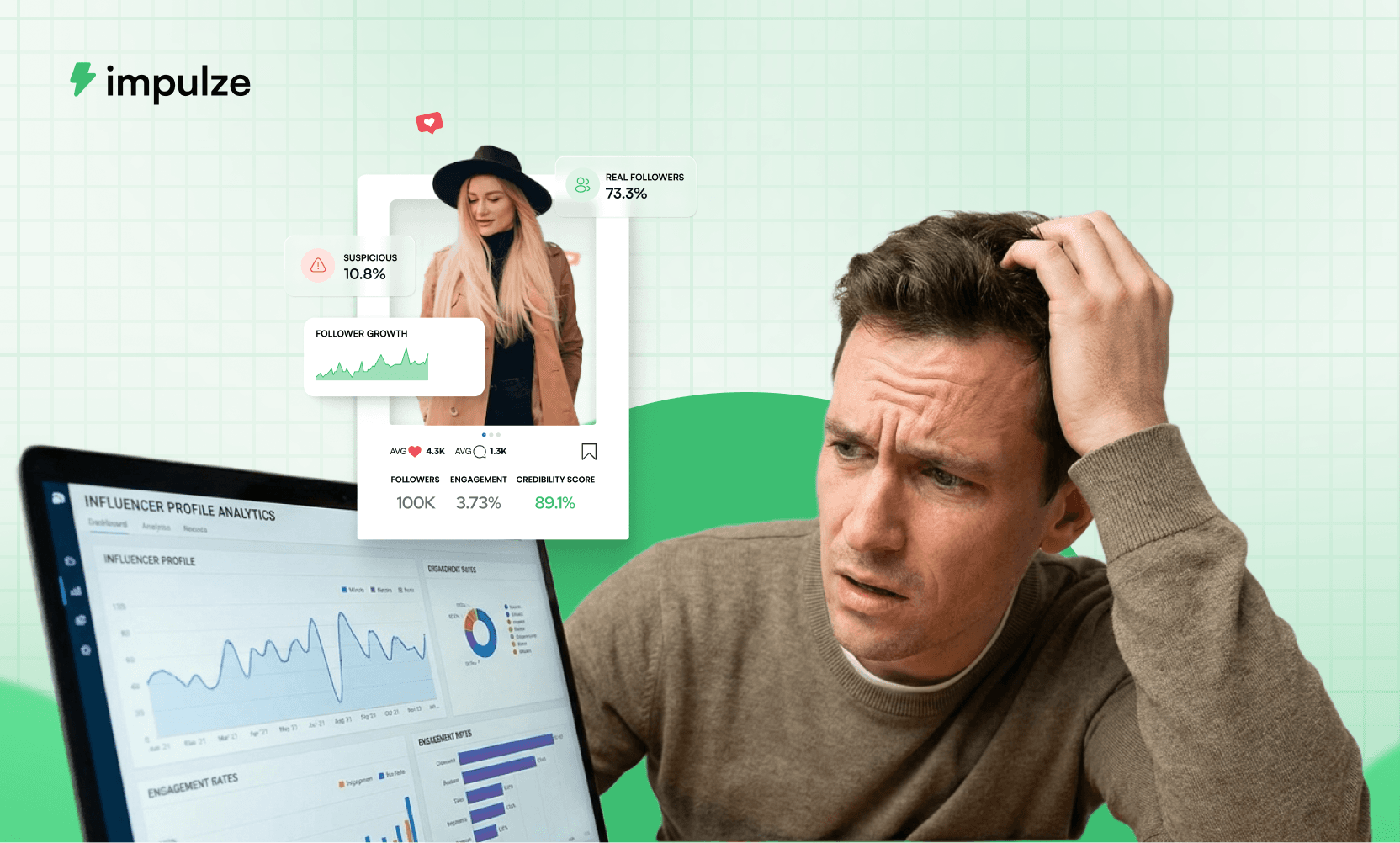
Finding a creator who looks right is the easy part. Their content fits your aesthetic, their follower count is impressive, and their engagement looks solid at first glance. You're ready to brief them.
Then the campaign goes live, and nothing happens. The traffic doesn't show up. The conversions don't materialize. You dig into the data and realize that out of their 200,000 followers, maybe 30,000 are real people who actually care about what they post.
This happens more often than the industry likes to admit. Influencer fraud costs the global economy over $1.3 billion annually, and approximately 15–20% of social media followers are still estimated to be fake or bot accounts as of 2025. The fraud has also gotten more sophisticated. Basic bot networks have been replaced with AI-generated personas, gradual follower padding that mimics organic growth, and engagement pods that make fake interaction look real.
The good news is that most of it is catchable if you know what to look for. This checklist walks you through every check worth running before you commit budget, time, or product to a creator partnership. It's organized so you can move through it quickly, most of these checks take minutes, not hours.
Section 1: Follower Quality and Authenticity
This is where you start every time, without exception. Follower count is the number everyone looks at first and the one that's easiest to fake.
✅ Check the follower-to-engagement ratio
The most basic signal. A creator with 100,000 followers should be generating somewhere between 1,000 and 5,000 engagements per post depending on the platform and tier. If the numbers look wildly off in either direction, that's a flag worth investigating.
Rough benchmarks to work from:
Nano-influencers (1K–10K): 5–10% engagement rate is healthy
Micro-influencers (10K–100K): 2–5% is solid
Macro-influencers (100K–1M): 1–3% is reasonable
Mega-influencers (1M+): 0.5–1.5% is normal at this scale
An engagement rate below 0.5% on a mid-tier account is a serious red flag. Suspiciously high engagement (like 15% on a 500K account) can also indicate engagement pod activity, where groups of creators artificially boost each other's metrics.
✅ Look at the follower growth curve
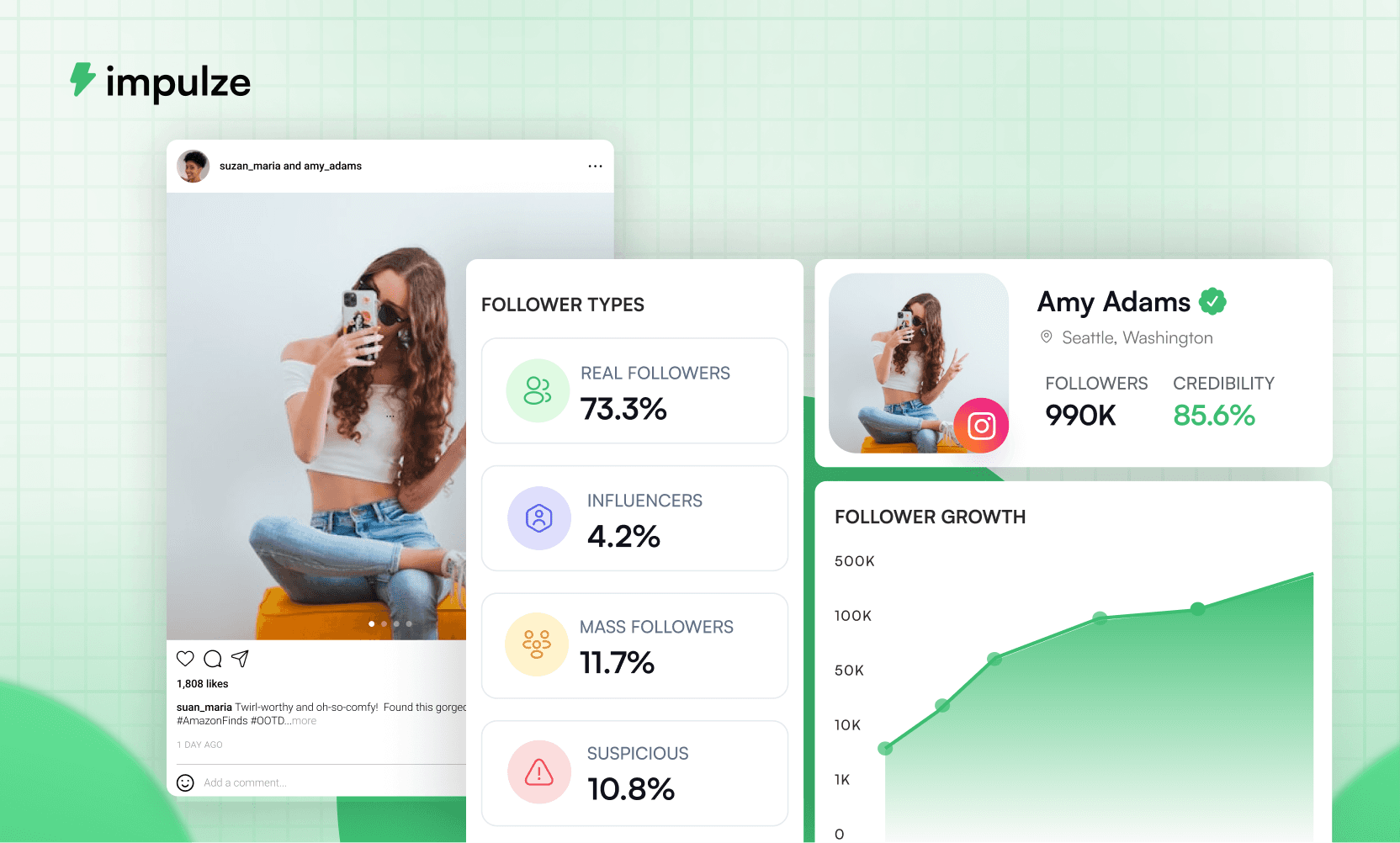
Use impulze.ai’s detailed profile reports and pull up the account's growth history.
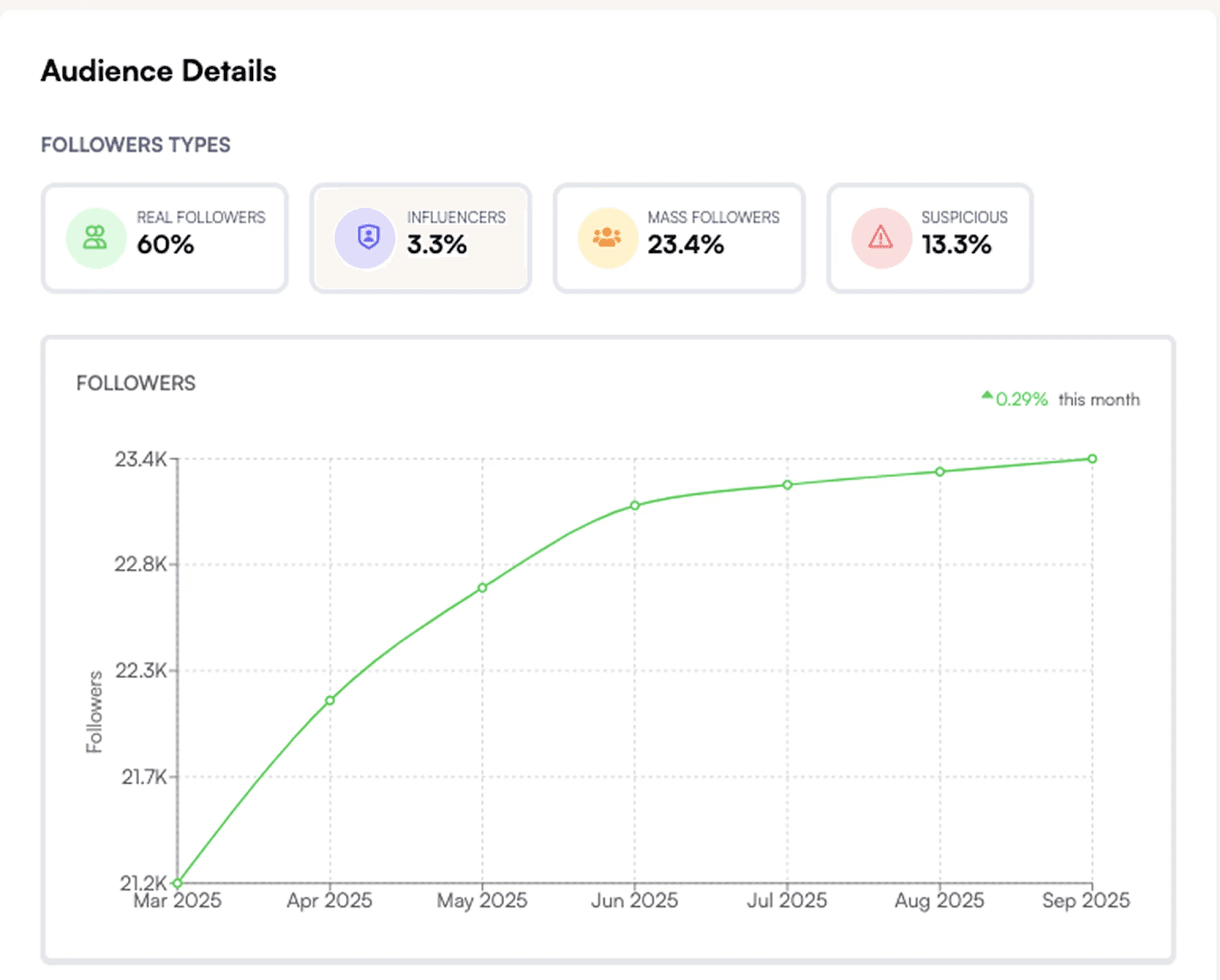
What you want to see is steady, gradual growth that tracks with the creator's content output. What you don't want to see:
Sudden spikes of thousands of followers overnight without a viral moment, press mention, or major shoutout that would explain it
A jagged sawtooth pattern — large spikes followed by drops — which often indicates the follow/unfollow tactic
Flat growth for months followed by a sudden jump — a common sign of a purchased follower package
One thing to watch for: sophisticated fraudsters now pad followers gradually — a few hundred per week over months — specifically to avoid the obvious overnight spike. This is harder to catch at a glance, which is why the 6–12 month view matters more than the 30-day snapshot.
✅ Manually check a sample of their followers
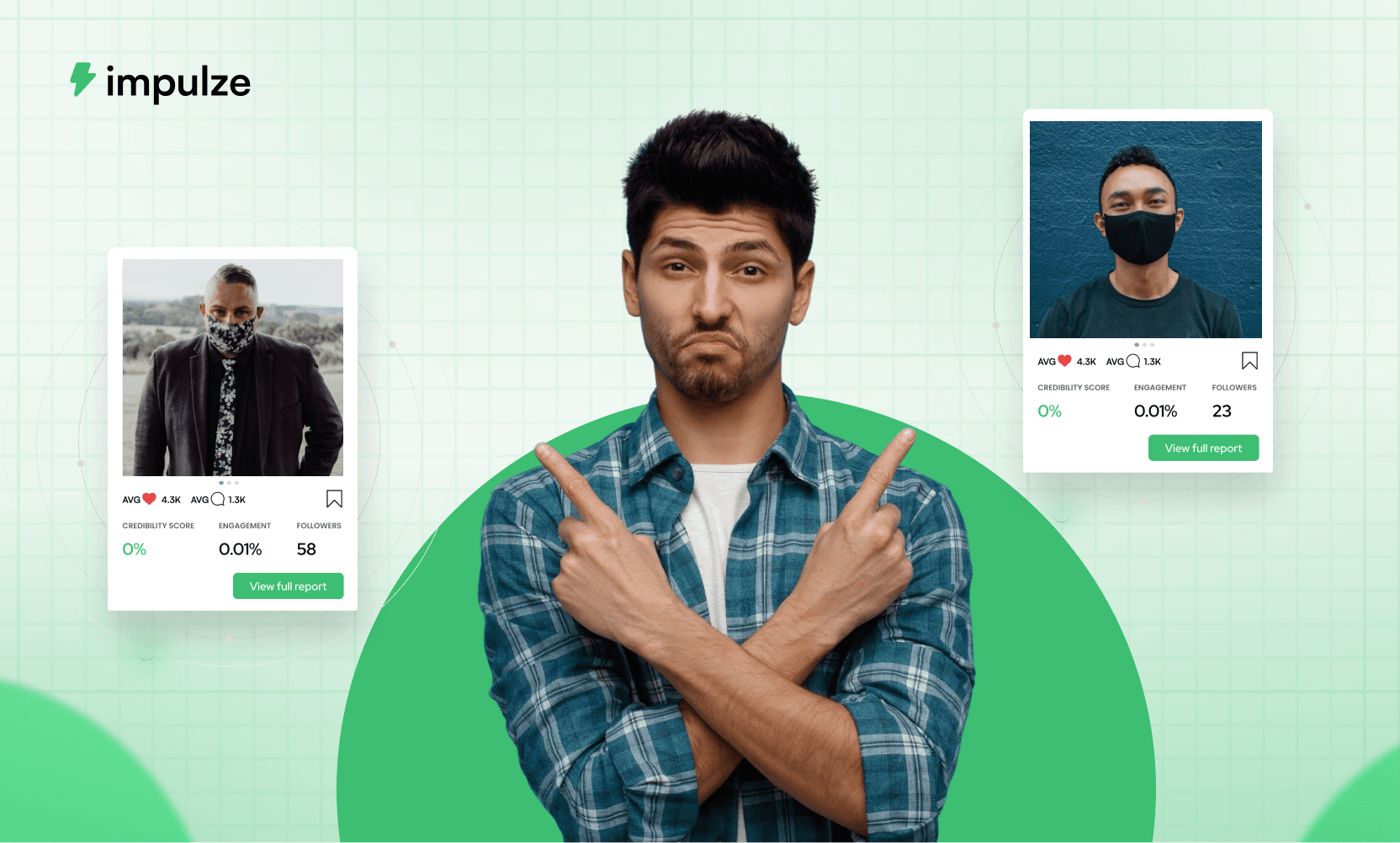
This sounds tedious but it takes five minutes and catches a lot. Click through 20–30 random follower profiles. Legitimate followers have profile pictures, a posting history, a varied follow list, and something that resembles a real person's account. Bot accounts typically show:
No profile picture or a clearly stock/stolen image
A username that looks like a random string of characters or numbers
Zero posts or only a handful of generic posts
Following thousands of accounts but with almost no followers themselves
Bios that are blank or suspiciously generic
You won't catch every fake this way but you'll catch the cheap, bulk-purchased ones quickly.
✅ Check the fake follower percentage with a tool
Manual auditing works for a handful of accounts but doesn't scale. Several tools and chrome extensions will give you an automated estimate:
Two worth knowing:
Impulze.ai gives you the full picture — fake follower detection, audience quality breakdown, demographic data, engagement analysis, and collaboration history all in one place. It's built into the discovery workflow, so you're vetting as you search rather than running a separate audit after you've already found someone you like. By the time a creator lands on your shortlist, you already know whether their audience is real.
SocialiQ is a free Chrome extension and it's useful for a different scenario — when you're browsing Instagram, TikTok, or YouTube and want a quick read on a creator without leaving the platform. It surfaces engagement rates, follower quality signals, and basic audience insights as an overlay on the creator's profile. Think of it as a quick sanity check while you're doing manual research. If something looks off in SocialiQ, that's your cue to run the full Impulze analysis before going any further.
Together they cover both ends of the vetting workflow — fast surface-level checks while browsing, and deep analysis before you commit.
What's acceptable: Most real accounts have 5–15% inactive or questionable followers. This is completely normal. Above 20–25% is where you should start asking questions. Above 40% is a dealbreaker.
Section 2: Engagement Quality
This is different from engagement quantity. A post can have 10,000 likes and still be completely useless from a campaign perspective if those likes came from bots or pods. What you're looking for is evidence that real people are genuinely responding to the creator's content.
✅ Read the comments (actually *read* them)
This is the fastest fraud detection method available and it's completely free. Open 5–10 recent posts and scroll through the comment sections. What genuine engagement looks like:
Specific responses to the actual content ("I tried this at the gym yesterday and it worked")
Questions about the product or topic
Conversations between the creator and followers
Mix of long and short comments, varying tone and phrasing
What fake engagement looks like:
Strings of emojis with no text
Generic, interchangeable phrases ("Love this!" "Amazing content!" "Great post!")
Comments that don't reference the actual post at all
Multiple comments posted within the same minute of each other
Commenters with no profile pictures or no posts of their own
Bot-generated comments tend to appear in clusters within minutes of posting. If you see 50 comments posted within two minutes of a post going live — all generic — that's an engagement pod or bot network, not a real audience.
✅ Check the save rate where possible
Saves are the highest-intent engagement signal on Instagram. They indicate someone found the content valuable enough to return to later — exactly the mindset that correlates with purchase intent.
A high save rate on a post about your product category is a strong signal that the creator's audience is genuinely engaged with that topic.
✅ Look at engagement consistency across post types
A real audience behaves differently depending on the content type. Personal stories tend to drive more comments, product features tend to drive more saves, and entertaining content drives more shares.
If a creator has exactly the same engagement rate on every single post, regardless of content type, that's a flag — authentic engagement varies naturally.
✅ Check their engagement on older content vs. newer content
Scroll back six to twelve months in the creator's feed. Does their engagement hold up, or were there periods where it dropped dramatically? Sudden drops in organic engagement while follower count continued growing can indicate a shift from real to purchased followers.
Section 3: Audience Demographics and Fit
Even if a creator has a perfectly real and engaged audience, that audience might be entirely wrong for your brand. This is one of the most overlooked steps in vetting and one of the most costly mistakes to make.
✅ Verify the audience location matches your target market
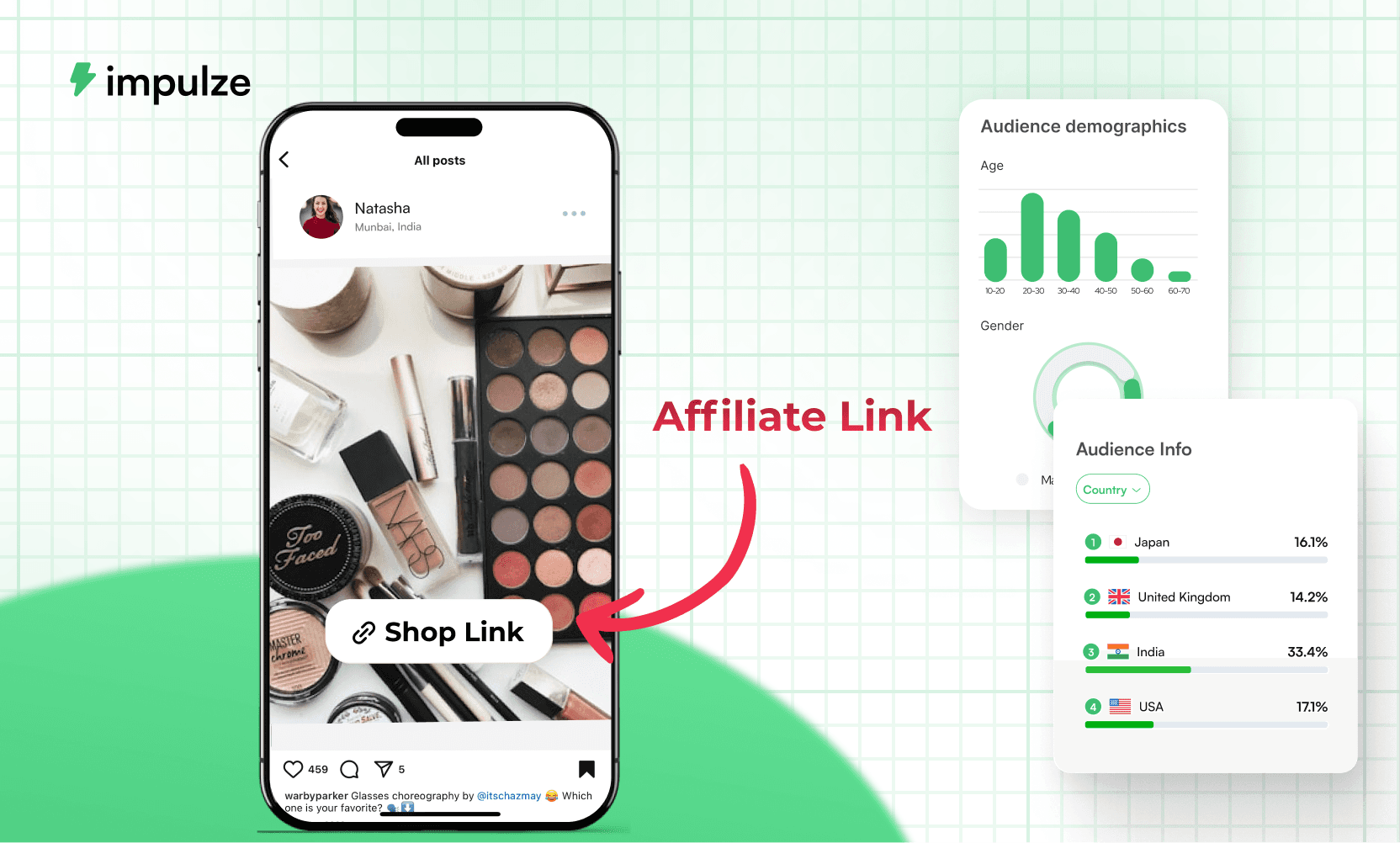
If a US-based fitness influencer has 70% of their audience coming from Brazil, India, or Southeast Asia, the partnership won't deliver regardless of whether those followers are real. You need to ask for a screenshot of their audience insights. Any creator with a real following will be able to provide this or use a influencer analytics tool that surfaces it directly.
What to check:
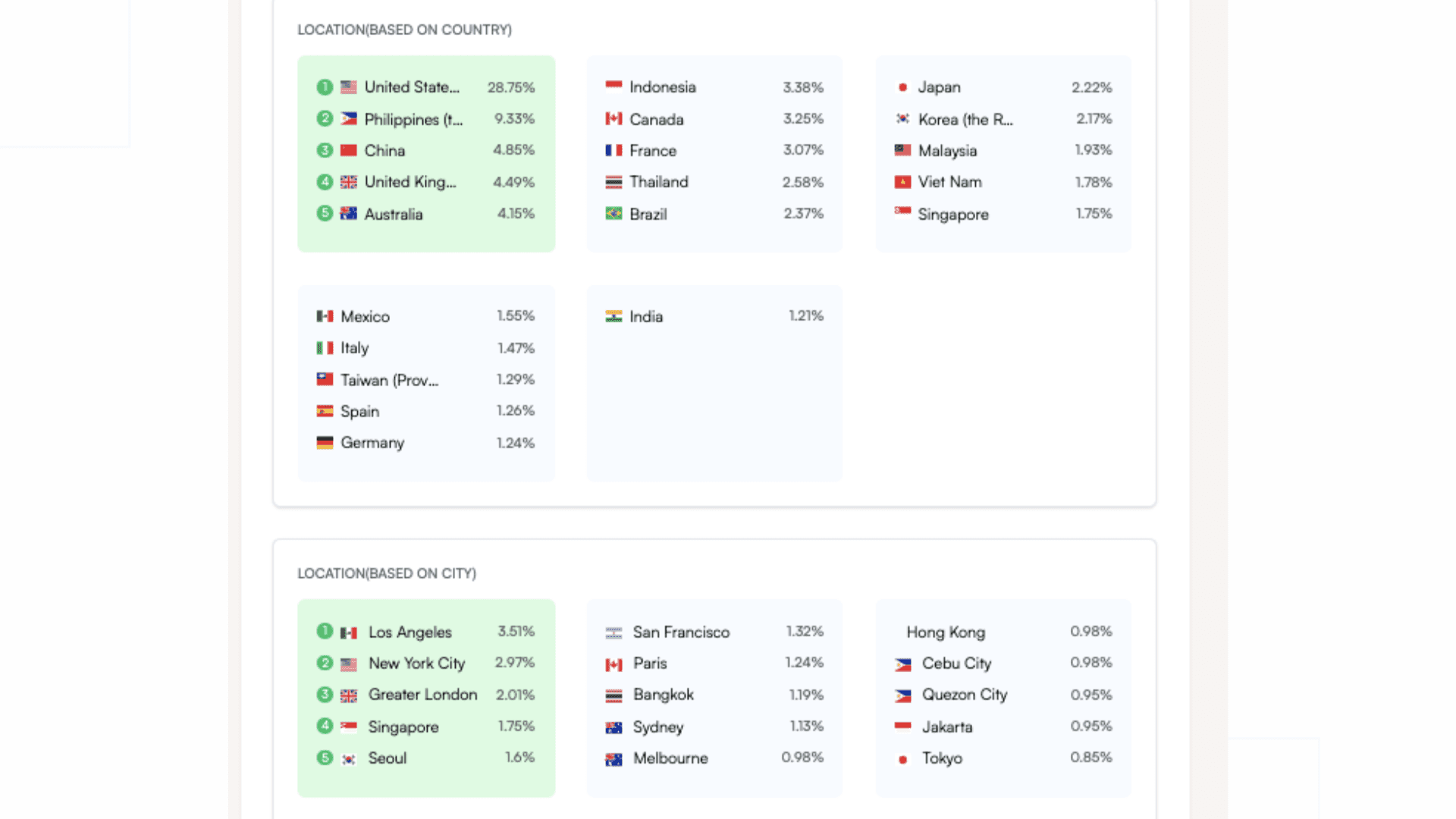
(Source: impulze.ai influencer report)
Top countries: Does the majority of their audience live where your customers are?
Top cities: Relevant for location-specific campaigns
Language: Does the audience communicate in the language your campaign is targeting?
✅ Verify the audience age and gender breakdown
A creator who looks right on the surface might have an audience that skews outside your target demographic. A skincare brand targeting women 25–40, partnering with a creator whose audience is 65% male, aged 18–24, is burning money regardless of engagement rate.
Most creators can share this from their platform analytics. If they're reluctant to share it, that's a signal.
✅ Check for audience interest overlap
Beyond demographics, does the creator's audience actually care about your product category? A beauty influencer with a highly engaged audience might still be a poor fit for your new supplements brand if their followers are following them exclusively for makeup content and have no interest in health or nutrition. Look at what the creator posts most about and whether your product fits naturally into that world.
Section 4: Content Quality and Brand Safety
This is where you move from metrics to judgment. Numbers can be verified objectively. Brand safety requires you to actually look at what this person has been putting out.
✅ Review at least three months of content
Don't just look at their most recent posts. Those are the ones they know brands will check. Scroll back three months minimum and get a feel for the full picture. You're looking for:
Consistency of voice and aesthetic: Is their content recognizably theirs, or does it shift dramatically post-by-post?
Content originality: Are they creating genuine content or heavily reposting others' material?
Sponsored post frequency: Are they running a new brand partnership every week? If every other post is a paid promotion, their audience has tuned out the sponsorship content
Quality of brand integrations: When they do work with brands, does it look natural or does it feel obviously scripted and uncomfortable?
✅ Search for past controversies
This is non-negotiable. Spend ten minutes Googling "[creator name] controversy," "[creator name] scandal," and "[creator name] drama." Check Twitter/X for their name. Look at their comment sections for any hostile or critical threads.
You're not looking for perfection — everyone has had minor internet moments. You're looking for anything that could become a brand liability: past offensive statements, involvement in scandals, a history of misleading their audience, or any behavior that would conflict with your brand values.
This check also extends to the people they publicly associate with. A creator who regularly collaborates with or publicly supports controversial figures can be just as risky as if they were controversial themselves.
✅ Check their previous brand partnerships
Look through their content for past sponsored posts. Two things to check here:
First, do they work with your competitors? If they've been a long-term partner for a direct competitor, their audience already associates them with that brand. A partnership with you might feel confusing to their followers, and some platforms have exclusivity expectations from existing brand partners.
Second, what kinds of brands have they worked with? A creator who has partnered exclusively with legitimate, well-known brands has a track record worth trusting. A creator whose sponsored history is mostly obscure products with questionable credibility is a signal.
✅ Look at how they handle brand integrations
Watch two or three of their sponsored posts or videos. Does the integration feel authentic to their normal content style, or does it feel like they're reading off a brand brief? The best creator integrations barely feel like ads. The product appears naturally in the context of content that their audience would want to watch, regardless. Forced, robotic integrations perform poorly and reflect on the brand.
Section 5: Platform-Specific Checks
Different platforms have different norms, benchmarks, and fraud patterns. The same creator can look completely different depending on which platform you're vetting them on.
Check both feed posts and Stories performance separately, some creators have high feed engagement but dead Stories (or vice versa)
Look for the Reels engagement rate, specifically if you're planning a Reels-based campaign
Verify the "Paid Partnership" label on past sponsored content. Creators who don't disclose sponsorships are an FTC compliance risk for your brand
Check their story view-to-follower ratio, anything below 5% on a consistent basis suggests their Stories audience isn't engaged
TikTok
Completion rate matters more on TikTok than likes. A high average watch time indicates content that genuinely holds attention
Check their "For You Page" reach vs. follower reach ratio. TikTok's algorithm serves content beyond followers, so a creator with 50K followers can realistically reach millions if their content performs well algorithmically
Verify engagement is coming from their actual content and not just viral one-off posts that inflated their follower count without building a real audience
YouTube
Watch time and average view duration are more revealing than subscriber count
Check the ratio of views to subscribers on recent videos, a channel with 500K subscribers averaging 10K views per video has an inactive audience
Read the comment sections on recent uploads. YouTube comments tend to be more substantive than Instagram, which makes engagement pod activity easier to spot
Section 6: Professional Conduct and Reliability
This section often gets skipped in vetting checklists because it's harder to quantify. It matters a lot in practice.
✅ Check their responsiveness during outreach
How quickly do they respond to your initial message? How clearly do they communicate? Do they ask intelligent questions about the campaign?
A creator who takes two weeks to reply to initial outreach, gives one-word answers, and doesn't ask anything about your product is showing you how the working relationship will feel. The professional creators — even micro-influencers — treat brand partnerships like business. They're responsive, thorough, and ask good questions.
✅ Ask for references or past performance data
For any significant partnership, it's completely reasonable to ask: "Can you share any data from past campaigns?" or "Do you have a media kit?" Professional creators will have this ready.
A media kit should include audience demographics, engagement rates, previous brand partners, and sometimes case study results. The absence of any performance data for a creator claiming to have worked with brands before is a yellow flag.
✅ Check for any indication of professionalism in how they present themselves
This isn't about aesthetics — it's about whether they treat their own account like a business. Are their captions thoughtful or rushed? Do they respond to comments on their own posts? Do they maintain a consistent posting schedule? These aren't dealbreakers on their own, but they signal whether this is someone who takes their platform seriously.
Section 7: The Gut Check
After all the data checks, there's still a step that doesn't have a metric attached to it.
✅ Does this creator actually like your product category?
Scroll through their personal content — not just the sponsored posts. Do they talk about your category when they're not being paid to? A fitness creator who actually posts about nutrition unprompted is a far better fit for a supplements brand than one who only mentions health products in sponsored posts. The former has a genuine audience interested in the topic. The latter is just taking money to post about something their audience doesn't associate with them.
This is the thing that separates influencer content that drives real sales from content that gets views but converts nobody. When a creator genuinely cares about what they're recommending, their audience can feel it. When they're posting because they got paid to, their audience can feel that too.
✅ Would you be comfortable if your target customer saw this partnership?
Imagine your ideal customer stumbling across this creator's profile. Does the association make sense? Would it make them more likely to consider your brand, or would it create confusion? The answer to this question is often clearer than any metric.
The Full Checklist at a Glance
Follower Quality:
Follower-to-engagement ratio within normal range
Follower growth curve shows no suspicious spikes
Sample of 20–30 follower profiles look like real people
Fake follower percentage below 20–25% (use a tool)
Engagement Quality:
Comments are specific and genuine, not generic or bot-like
Engagement is consistent across post types
Engagement on older content holds up over time
Save rate and share rate reflect genuine interest
Audience Demographics:
Audience location matches your target market
Age and gender breakdown aligns with your customer profile
Audience interests overlap with your product category
Content and Brand Safety:
Three months of content reviewed, voice is consistent and original
No significant controversies in their history (Google search done)
Previous brand partnerships don't conflict with yours
Sponsored content integrations look natural, not forced
Platform-Specific:
Platform-relevant metrics checked (Stories views, TikTok completion rate, YouTube watch time)
Past sponsored content properly disclosed with FTC-compliant labels
Professional Conduct:
Responsive and professional during outreach
Can provide audience data or media kit
Treats their platform like a business
Gut Check:
Creator genuinely engages with your product category organically
The partnership makes sense to your target customer
Download For Free: Influencer Vetting Checklist
Get Started
Running through this checklist sounds like a lot of work. For 3–5 creators it is. For 50+, it becomes impossible to do manually which is why the brands running large-scale influencer programs build this into their tooling rather than doing it by hand.
Impulze.ai bakes most of this into the discovery workflow so you're not vetting separately from searching:
Fake follower detection built into every creator profile — you see the authenticity score before you ever reach out
Audience demographic breakdown on every profile — age, gender, location, interests — without having to ask the creator to share their insights
Engagement rate analysis with context against platform benchmarks so you know if a 2% rate is good or concerning for that tier
Collaboration history showing which brands a creator has worked with — so you can check for competitor conflicts and past partnership patterns
Search 400M+ creator profiles with filters that do half the vetting work before you've looked at a single profile
Start for free — no credit card, no demo call required.
Finding a creator who looks right is the easy part. Their content fits your aesthetic, their follower count is impressive, and their engagement looks solid at first glance. You're ready to brief them.
Then the campaign goes live, and nothing happens. The traffic doesn't show up. The conversions don't materialize. You dig into the data and realize that out of their 200,000 followers, maybe 30,000 are real people who actually care about what they post.
This happens more often than the industry likes to admit. Influencer fraud costs the global economy over $1.3 billion annually, and approximately 15–20% of social media followers are still estimated to be fake or bot accounts as of 2025. The fraud has also gotten more sophisticated. Basic bot networks have been replaced with AI-generated personas, gradual follower padding that mimics organic growth, and engagement pods that make fake interaction look real.
The good news is that most of it is catchable if you know what to look for. This checklist walks you through every check worth running before you commit budget, time, or product to a creator partnership. It's organized so you can move through it quickly, most of these checks take minutes, not hours.
Section 1: Follower Quality and Authenticity
This is where you start every time, without exception. Follower count is the number everyone looks at first and the one that's easiest to fake.
✅ Check the follower-to-engagement ratio
The most basic signal. A creator with 100,000 followers should be generating somewhere between 1,000 and 5,000 engagements per post depending on the platform and tier. If the numbers look wildly off in either direction, that's a flag worth investigating.
Rough benchmarks to work from:
Nano-influencers (1K–10K): 5–10% engagement rate is healthy
Micro-influencers (10K–100K): 2–5% is solid
Macro-influencers (100K–1M): 1–3% is reasonable
Mega-influencers (1M+): 0.5–1.5% is normal at this scale
An engagement rate below 0.5% on a mid-tier account is a serious red flag. Suspiciously high engagement (like 15% on a 500K account) can also indicate engagement pod activity, where groups of creators artificially boost each other's metrics.
✅ Look at the follower growth curve
Use impulze.ai’s detailed profile reports and pull up the account's growth history.
What you want to see is steady, gradual growth that tracks with the creator's content output. What you don't want to see:
Sudden spikes of thousands of followers overnight without a viral moment, press mention, or major shoutout that would explain it
A jagged sawtooth pattern — large spikes followed by drops — which often indicates the follow/unfollow tactic
Flat growth for months followed by a sudden jump — a common sign of a purchased follower package
One thing to watch for: sophisticated fraudsters now pad followers gradually — a few hundred per week over months — specifically to avoid the obvious overnight spike. This is harder to catch at a glance, which is why the 6–12 month view matters more than the 30-day snapshot.
✅ Manually check a sample of their followers
This sounds tedious but it takes five minutes and catches a lot. Click through 20–30 random follower profiles. Legitimate followers have profile pictures, a posting history, a varied follow list, and something that resembles a real person's account. Bot accounts typically show:
No profile picture or a clearly stock/stolen image
A username that looks like a random string of characters or numbers
Zero posts or only a handful of generic posts
Following thousands of accounts but with almost no followers themselves
Bios that are blank or suspiciously generic
You won't catch every fake this way but you'll catch the cheap, bulk-purchased ones quickly.
✅ Check the fake follower percentage with a tool
Manual auditing works for a handful of accounts but doesn't scale. Several tools and chrome extensions will give you an automated estimate:
Two worth knowing:
Impulze.ai gives you the full picture — fake follower detection, audience quality breakdown, demographic data, engagement analysis, and collaboration history all in one place. It's built into the discovery workflow, so you're vetting as you search rather than running a separate audit after you've already found someone you like. By the time a creator lands on your shortlist, you already know whether their audience is real.
SocialiQ is a free Chrome extension and it's useful for a different scenario — when you're browsing Instagram, TikTok, or YouTube and want a quick read on a creator without leaving the platform. It surfaces engagement rates, follower quality signals, and basic audience insights as an overlay on the creator's profile. Think of it as a quick sanity check while you're doing manual research. If something looks off in SocialiQ, that's your cue to run the full Impulze analysis before going any further.
Together they cover both ends of the vetting workflow — fast surface-level checks while browsing, and deep analysis before you commit.
What's acceptable: Most real accounts have 5–15% inactive or questionable followers. This is completely normal. Above 20–25% is where you should start asking questions. Above 40% is a dealbreaker.
Section 2: Engagement Quality
This is different from engagement quantity. A post can have 10,000 likes and still be completely useless from a campaign perspective if those likes came from bots or pods. What you're looking for is evidence that real people are genuinely responding to the creator's content.
✅ Read the comments (actually *read* them)
This is the fastest fraud detection method available and it's completely free. Open 5–10 recent posts and scroll through the comment sections. What genuine engagement looks like:
Specific responses to the actual content ("I tried this at the gym yesterday and it worked")
Questions about the product or topic
Conversations between the creator and followers
Mix of long and short comments, varying tone and phrasing
What fake engagement looks like:
Strings of emojis with no text
Generic, interchangeable phrases ("Love this!" "Amazing content!" "Great post!")
Comments that don't reference the actual post at all
Multiple comments posted within the same minute of each other
Commenters with no profile pictures or no posts of their own
Bot-generated comments tend to appear in clusters within minutes of posting. If you see 50 comments posted within two minutes of a post going live — all generic — that's an engagement pod or bot network, not a real audience.
✅ Check the save rate where possible
Saves are the highest-intent engagement signal on Instagram. They indicate someone found the content valuable enough to return to later — exactly the mindset that correlates with purchase intent.
A high save rate on a post about your product category is a strong signal that the creator's audience is genuinely engaged with that topic.
✅ Look at engagement consistency across post types
A real audience behaves differently depending on the content type. Personal stories tend to drive more comments, product features tend to drive more saves, and entertaining content drives more shares.
If a creator has exactly the same engagement rate on every single post, regardless of content type, that's a flag — authentic engagement varies naturally.
✅ Check their engagement on older content vs. newer content
Scroll back six to twelve months in the creator's feed. Does their engagement hold up, or were there periods where it dropped dramatically? Sudden drops in organic engagement while follower count continued growing can indicate a shift from real to purchased followers.
Section 3: Audience Demographics and Fit
Even if a creator has a perfectly real and engaged audience, that audience might be entirely wrong for your brand. This is one of the most overlooked steps in vetting and one of the most costly mistakes to make.
✅ Verify the audience location matches your target market
If a US-based fitness influencer has 70% of their audience coming from Brazil, India, or Southeast Asia, the partnership won't deliver regardless of whether those followers are real. You need to ask for a screenshot of their audience insights. Any creator with a real following will be able to provide this or use a influencer analytics tool that surfaces it directly.
What to check:
(Source: impulze.ai influencer report)
Top countries: Does the majority of their audience live where your customers are?
Top cities: Relevant for location-specific campaigns
Language: Does the audience communicate in the language your campaign is targeting?
✅ Verify the audience age and gender breakdown
A creator who looks right on the surface might have an audience that skews outside your target demographic. A skincare brand targeting women 25–40, partnering with a creator whose audience is 65% male, aged 18–24, is burning money regardless of engagement rate.
Most creators can share this from their platform analytics. If they're reluctant to share it, that's a signal.
✅ Check for audience interest overlap
Beyond demographics, does the creator's audience actually care about your product category? A beauty influencer with a highly engaged audience might still be a poor fit for your new supplements brand if their followers are following them exclusively for makeup content and have no interest in health or nutrition. Look at what the creator posts most about and whether your product fits naturally into that world.
Section 4: Content Quality and Brand Safety
This is where you move from metrics to judgment. Numbers can be verified objectively. Brand safety requires you to actually look at what this person has been putting out.
✅ Review at least three months of content
Don't just look at their most recent posts. Those are the ones they know brands will check. Scroll back three months minimum and get a feel for the full picture. You're looking for:
Consistency of voice and aesthetic: Is their content recognizably theirs, or does it shift dramatically post-by-post?
Content originality: Are they creating genuine content or heavily reposting others' material?
Sponsored post frequency: Are they running a new brand partnership every week? If every other post is a paid promotion, their audience has tuned out the sponsorship content
Quality of brand integrations: When they do work with brands, does it look natural or does it feel obviously scripted and uncomfortable?
✅ Search for past controversies
This is non-negotiable. Spend ten minutes Googling "[creator name] controversy," "[creator name] scandal," and "[creator name] drama." Check Twitter/X for their name. Look at their comment sections for any hostile or critical threads.
You're not looking for perfection — everyone has had minor internet moments. You're looking for anything that could become a brand liability: past offensive statements, involvement in scandals, a history of misleading their audience, or any behavior that would conflict with your brand values.
This check also extends to the people they publicly associate with. A creator who regularly collaborates with or publicly supports controversial figures can be just as risky as if they were controversial themselves.
✅ Check their previous brand partnerships
Look through their content for past sponsored posts. Two things to check here:
First, do they work with your competitors? If they've been a long-term partner for a direct competitor, their audience already associates them with that brand. A partnership with you might feel confusing to their followers, and some platforms have exclusivity expectations from existing brand partners.
Second, what kinds of brands have they worked with? A creator who has partnered exclusively with legitimate, well-known brands has a track record worth trusting. A creator whose sponsored history is mostly obscure products with questionable credibility is a signal.
✅ Look at how they handle brand integrations
Watch two or three of their sponsored posts or videos. Does the integration feel authentic to their normal content style, or does it feel like they're reading off a brand brief? The best creator integrations barely feel like ads. The product appears naturally in the context of content that their audience would want to watch, regardless. Forced, robotic integrations perform poorly and reflect on the brand.
Section 5: Platform-Specific Checks
Different platforms have different norms, benchmarks, and fraud patterns. The same creator can look completely different depending on which platform you're vetting them on.
Check both feed posts and Stories performance separately, some creators have high feed engagement but dead Stories (or vice versa)
Look for the Reels engagement rate, specifically if you're planning a Reels-based campaign
Verify the "Paid Partnership" label on past sponsored content. Creators who don't disclose sponsorships are an FTC compliance risk for your brand
Check their story view-to-follower ratio, anything below 5% on a consistent basis suggests their Stories audience isn't engaged
TikTok
Completion rate matters more on TikTok than likes. A high average watch time indicates content that genuinely holds attention
Check their "For You Page" reach vs. follower reach ratio. TikTok's algorithm serves content beyond followers, so a creator with 50K followers can realistically reach millions if their content performs well algorithmically
Verify engagement is coming from their actual content and not just viral one-off posts that inflated their follower count without building a real audience
YouTube
Watch time and average view duration are more revealing than subscriber count
Check the ratio of views to subscribers on recent videos, a channel with 500K subscribers averaging 10K views per video has an inactive audience
Read the comment sections on recent uploads. YouTube comments tend to be more substantive than Instagram, which makes engagement pod activity easier to spot
Section 6: Professional Conduct and Reliability
This section often gets skipped in vetting checklists because it's harder to quantify. It matters a lot in practice.
✅ Check their responsiveness during outreach
How quickly do they respond to your initial message? How clearly do they communicate? Do they ask intelligent questions about the campaign?
A creator who takes two weeks to reply to initial outreach, gives one-word answers, and doesn't ask anything about your product is showing you how the working relationship will feel. The professional creators — even micro-influencers — treat brand partnerships like business. They're responsive, thorough, and ask good questions.
✅ Ask for references or past performance data
For any significant partnership, it's completely reasonable to ask: "Can you share any data from past campaigns?" or "Do you have a media kit?" Professional creators will have this ready.
A media kit should include audience demographics, engagement rates, previous brand partners, and sometimes case study results. The absence of any performance data for a creator claiming to have worked with brands before is a yellow flag.
✅ Check for any indication of professionalism in how they present themselves
This isn't about aesthetics — it's about whether they treat their own account like a business. Are their captions thoughtful or rushed? Do they respond to comments on their own posts? Do they maintain a consistent posting schedule? These aren't dealbreakers on their own, but they signal whether this is someone who takes their platform seriously.
Section 7: The Gut Check
After all the data checks, there's still a step that doesn't have a metric attached to it.
✅ Does this creator actually like your product category?
Scroll through their personal content — not just the sponsored posts. Do they talk about your category when they're not being paid to? A fitness creator who actually posts about nutrition unprompted is a far better fit for a supplements brand than one who only mentions health products in sponsored posts. The former has a genuine audience interested in the topic. The latter is just taking money to post about something their audience doesn't associate with them.
This is the thing that separates influencer content that drives real sales from content that gets views but converts nobody. When a creator genuinely cares about what they're recommending, their audience can feel it. When they're posting because they got paid to, their audience can feel that too.
✅ Would you be comfortable if your target customer saw this partnership?
Imagine your ideal customer stumbling across this creator's profile. Does the association make sense? Would it make them more likely to consider your brand, or would it create confusion? The answer to this question is often clearer than any metric.
The Full Checklist at a Glance
Follower Quality:
Follower-to-engagement ratio within normal range
Follower growth curve shows no suspicious spikes
Sample of 20–30 follower profiles look like real people
Fake follower percentage below 20–25% (use a tool)
Engagement Quality:
Comments are specific and genuine, not generic or bot-like
Engagement is consistent across post types
Engagement on older content holds up over time
Save rate and share rate reflect genuine interest
Audience Demographics:
Audience location matches your target market
Age and gender breakdown aligns with your customer profile
Audience interests overlap with your product category
Content and Brand Safety:
Three months of content reviewed, voice is consistent and original
No significant controversies in their history (Google search done)
Previous brand partnerships don't conflict with yours
Sponsored content integrations look natural, not forced
Platform-Specific:
Platform-relevant metrics checked (Stories views, TikTok completion rate, YouTube watch time)
Past sponsored content properly disclosed with FTC-compliant labels
Professional Conduct:
Responsive and professional during outreach
Can provide audience data or media kit
Treats their platform like a business
Gut Check:
Creator genuinely engages with your product category organically
The partnership makes sense to your target customer
Download For Free: Influencer Vetting Checklist
Get Started
Running through this checklist sounds like a lot of work. For 3–5 creators it is. For 50+, it becomes impossible to do manually which is why the brands running large-scale influencer programs build this into their tooling rather than doing it by hand.
Impulze.ai bakes most of this into the discovery workflow so you're not vetting separately from searching:
Fake follower detection built into every creator profile — you see the authenticity score before you ever reach out
Audience demographic breakdown on every profile — age, gender, location, interests — without having to ask the creator to share their insights
Engagement rate analysis with context against platform benchmarks so you know if a 2% rate is good or concerning for that tier
Collaboration history showing which brands a creator has worked with — so you can check for competitor conflicts and past partnership patterns
Search 400M+ creator profiles with filters that do half the vetting work before you've looked at a single profile
Start for free — no credit card, no demo call required.
Frequently Asked Questions
How long does vetting an influencer take?

How long does vetting an influencer take?
What fake follower percentage is acceptable?
What fake follower percentage is acceptable?
Can micro-influencers have fake followers too?
Can micro-influencers have fake followers too?
Should I ask an influencer for their analytics before partnering?
Should I ask an influencer for their analytics before partnering?
What's the fastest way to spot a fake influencer without using a paid tool?
What's the fastest way to spot a fake influencer without using a paid tool?
We Also Recommend To Read