🥳 Skip the subscription. Pay $299 once for lifetime access— See lifetime plans
🥳 Skip the subscription. Pay $299 once for lifetime access—

9 MIN READ
Learning Basics
Learning Basics
Influencer Metrics Explained: How to Read Creator Data Before You Pay Them
Influencer Metrics Explained: How to Read Creator Data Before You Pay Them
Influencer Metrics Explained: How to Read Creator Data Before You Pay Them

Rashmi Singh
Rashmi Singh
Rashmi Singh
Content Marketer @impulze.ai
Sections
Build your first creator list on Solo, $29 a month.

Blog in Short ⏱️
Blog in Short ⏱️
A quick glance at the highlights—perfect for when you're short on time.
A quick glance at the highlights—perfect for when you're short on time.
Influencer metrics can make creator vetting look simple, but the numbers are only useful when you know what they actually mean. A high engagement rate does not always mean strong influence. It could come from giveaways, comment bait, or posts that never convert. A good audience quality score is helpful, but it still needs context around location, age, fake followers, and audience relevance.
Before paying a creator, look beyond the obvious numbers.
• Engagement rate shows activity, but comment quality shows trust
• Audience quality score helps reveal whether followers are real, active, and relevant
• Credibility score gives a quick read on creator trust and consistency
• Fake follower percentage is a risk signal, not an automatic rejection
• Growth trends help spot natural momentum or suspicious spikes
• Audience demographics decide whether the creator is reaching your actual buyers
You find a creator who looks like a perfect fit.
They have 62,000 followers, a 4.3% engagement rate, an audience quality score of 81, and a credibility score that seems comfortably above average. At first glance, it feels like an easy yes.
But this is exactly where many influencer campaigns start making expensive mistakes.
The problem is not access to data anymore. Most influencer marketing platforms surface dozens of metrics in seconds. Engagement percentages, audience scores, follower growth charts, audience demographics, credibility ratings. The information is all there.
What most marketers struggle with is interpretation.
A strong engagement rate can be inflated by giveaway-heavy content. A healthy audience quality score can still hide a poor geographic fit. A creator with fewer followers but cleaner metrics may outperform someone three times their size.
That is why understanding influencer analytics matters far more than simply having access to them.
This guide explains influencer metrics in plain English, without jargon or dashboard-speak, so you know what actually matters before approving a creator for your next campaign.
Why Most Marketers Misread Influencer Analytics
Influencer analytics can make a creator look easier to judge than they actually are.
You open a dashboard, see clean charts, neat scores, and exact percentages, and it feels like the hard work is already done. But numbers alone do not mean the creator has been properly vetted. They only become useful when you understand what they are really telling you.
Most marketers misread influencer analytics for a few reasons:
• They treat follower count like proof of influence
A creator with 300,000 followers can look safer than one with 25,000. But size does not always mean value. A smaller creator with stronger engagement, better audience fit, and a history of good branded content can easily outperform a larger account.
• They trust platform scores without understanding them
An audience quality score of 84 or a credibility score of 79 might look impressive. But if you do not know what those scores measure, you are trusting the result without understanding the evidence behind it.
• They compare creators without context
A beauty creator, gaming creator, parenting influencer, and meme page should not be judged using the same benchmarks. Engagement rates, audience behavior, and content performance vary heavily by niche and platform.
• They focus on the wrong metric for the campaign goal
If your goal is awareness, reach and average views may matter more. If your goal is sales, audience trust, comment quality, and past branded content performance become far more important.
That is why influencer analytics should never be read as isolated numbers. They work best when you use them to understand the full picture: who the creator reaches, how the audience responds, and whether that creator can actually help your campaign goal.
1. Engagement Rate
If there is one metric every marketer has heard of, it is engagement rate.
At a basic level, engagement rate tells you how actively a creator’s audience interacts with their content. Depending on the platform or tool, this may include likes, comments, shares, saves, and sometimes views.
The reason marketers care about engagement is straightforward. Followers can be passive. Engagement suggests activity.
A creator with 80,000 followers and almost no interaction is unlikely to move the needle. Meanwhile, a smaller creator with an engaged community may deliver stronger results because their audience actually pays attention.
That is the theory.
In practice, engagement rate gets misunderstood constantly.
A high engagement rate is not automatically a sign of creator quality.
Some creators inflate engagement unintentionally through giveaway content. Posts asking followers to tag friends, comment for entries, or participate in low-friction contests often generate artificially high activity that says very little about actual audience trust.
Others manipulate engagement more directly through engagement pods, comment groups, or repetitive engagement bait.
A post full of comments does not necessarily mean influence. Sometimes it simply means the creator knows how to trigger interaction.
This is why engagement rate should be treated as a starting point, not a final decision-maker.
What matters more is context.
Ask questions like:
• Is engagement consistent across recent posts?
• Do comments feel genuine or generic?
• Does branded content perform similarly to organic content?
• Are followers actually having conversations, or just dropping emojis?
That last point matters more than many marketers realise.
Some creators perform beautifully on personal content but collapse when sponsorship enters the picture. If engagement disappears the moment a brand appears, the creator may not be commercially effective, no matter how strong their average numbers look.
As a rough guide, smaller creators often show higher engagement percentages because their communities are tighter. Larger creators usually see engagement percentages decline as audience size scales.
But benchmarks alone are dangerous without context.
A creator with 2.8% engagement in one niche may be excellent. The same number elsewhere may be mediocre.
The better question is not “Is this engagement rate high?”
It is “What is driving this engagement, and will it translate into campaign performance?”
Also Read: Top 7 Instagram Engagement Rate Calculators (Free and Paid)
2. Audience Quality Score
Audience quality score is one of the most useful metrics in influencer analytics, and also one of the most misunderstood.
Many marketers assume it is simply a fake follower detector. It is not. A proper audience quality score looks at the overall health of a creator’s audience. That includes fake followers, but also much more than that.
A strong audience quality score usually reflects things like audience authenticity, engagement health, follower relevance, suspicious account behaviour, and the percentage of inactive or low-value followers.
Think of it as an overall audience health check rather than a single fraud signal.
Here is why this matters:
Two creators might both have 100,000 followers. On paper, they look comparable.
But one creator may have an audience made up of highly engaged real users in your target geography, while the other has a follower base inflated by inactive accounts, poor-quality engagement, or audiences that have little commercial relevance to your campaign.
The second creator may still look “big.” They just will not perform like it.
Audience quality helps separate visibility from actual value. A few warning signs to watch for:
• unusually weak engagement despite large follower counts
• suspicious audience geography that does not match content language
• inflated follower numbers with inconsistent post performance
• heavy dependence on giveaway spikes or viral anomalies
A creator with 25,000 followers and strong audience quality will often outperform someone with 150,000 followers and weak audience health. This is exactly why marketers who focus only on reach often overspend.
3. Influencer Credibility Score
Credibility score is often confused with audience quality score, but they are not the same thing. Audience quality is mostly about the people following the creator. Credibility is more about the creator’s own trust signals.
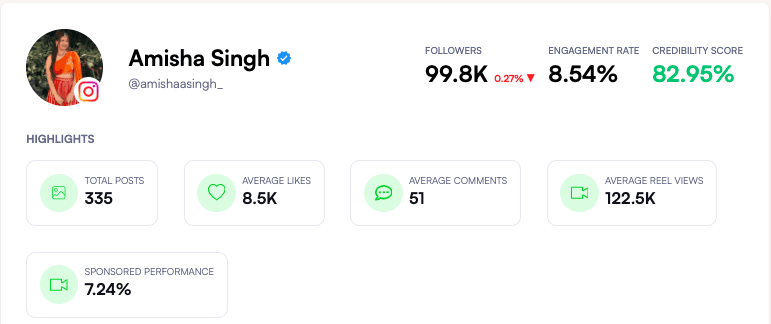
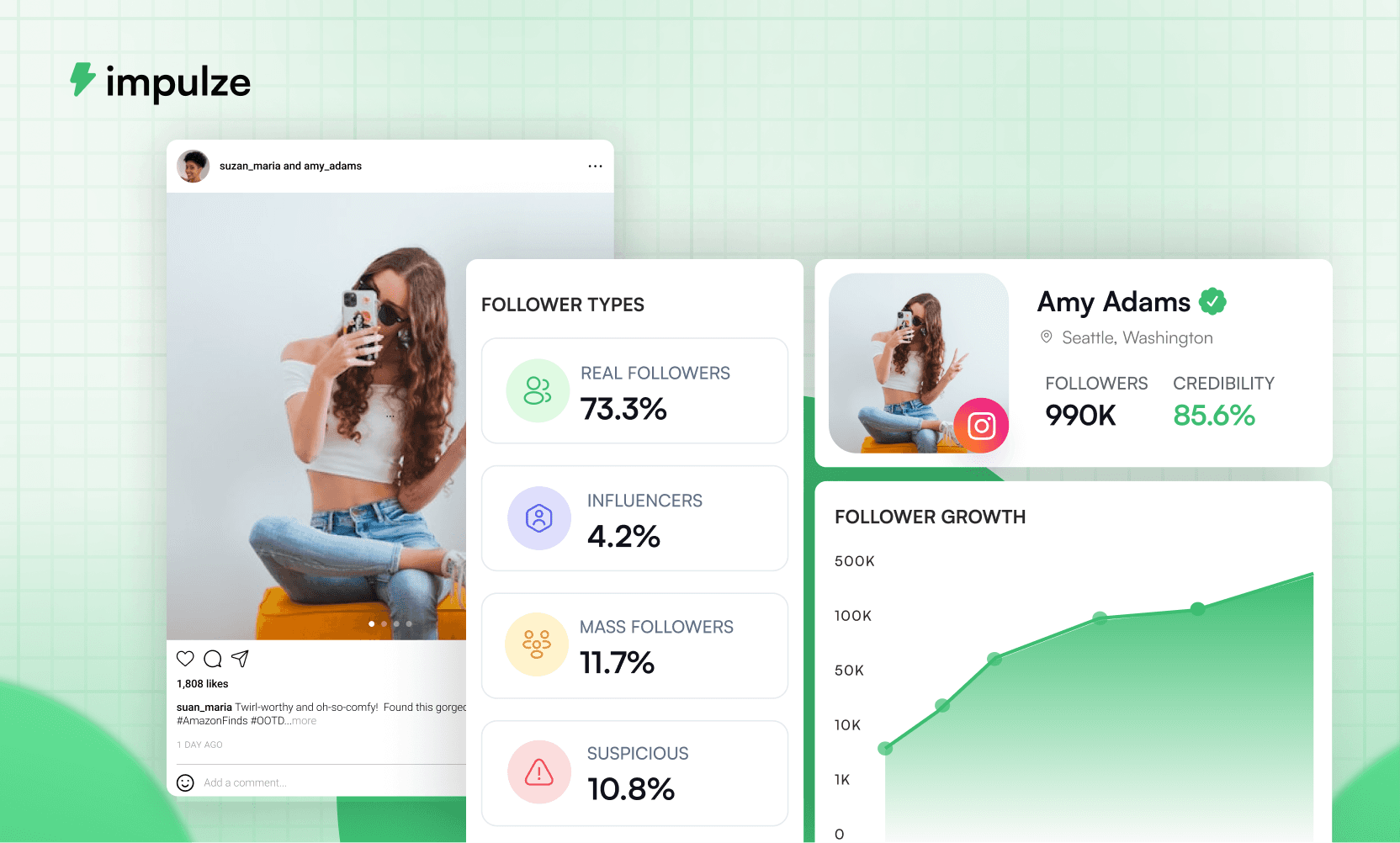
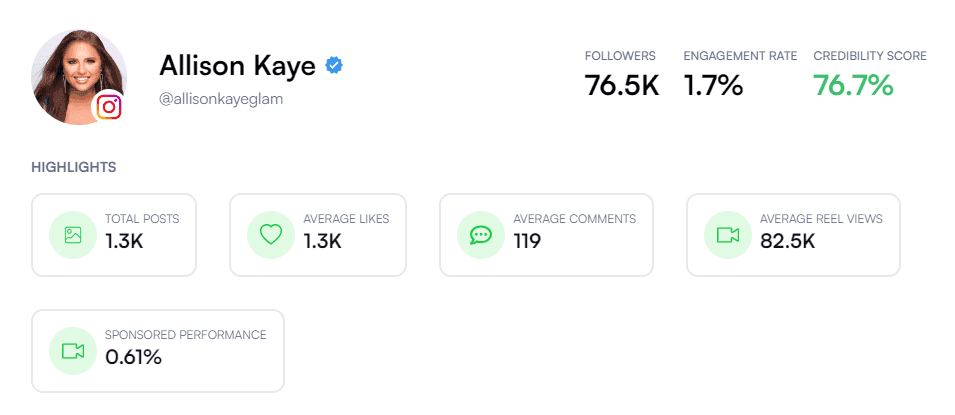
(impulze.ai’s influencer report showing credibility score)
A good credibility score usually looks at factors like posting consistency, engagement authenticity, audience trust, content behaviour, growth patterns, and how naturally people interact with the creator. It tries to answer a slightly different question.
Not just, “Is this audience real?” But, “Does this creator look trustworthy enough to represent a brand?” That distinction matters.
A creator might have a clean audience but still be a weak brand partner. Maybe they post inconsistently. Maybe their sponsored content feels forced. Maybe their comments are active, but not meaningful. Maybe they have worked with too many unrelated brands in a short period of time, which makes every new partnership feel less believable.
A strong credibility score suggests the creator has built some level of trust with their audience. Their content is consistent. Their engagement looks natural. Their audience response does not collapse when a brand appears.
But again, the score should not replace judgment.
You still need to look at the creator’s actual content and ask:
• Do they speak about products naturally?
• Do their followers seem to trust their recommendations?
• Does sponsored content feel aligned with their usual content?
• Are they promoting too many unrelated products?
A credibility score is useful because it gives you a quick signal. But the final decision should always come from looking at the full profile.
If the score is strong and the content feels aligned, that is a good sign. If the score is strong but the creator’s feed feels like a rotating billboard, pause before you approve.
4. Fake Followers Percentage
Fake followers are one of the easiest influencer metrics to understand emotionally.
Nobody wants to pay for followers that are not real.
But the reality is a little more nuanced. A creator does not need to have a perfectly clean audience to be worth working with. Almost every public account will have some level of suspicious or low-quality followers, especially once they grow.
The question is not whether fake followers exist. The question is whether the percentage is high enough to weaken campaign performance.
As a rough guide, a small fake follower percentage is normal. If a creator has under 10% suspicious followers, it is usually not a major concern unless other red flags appear. Once the number moves into the 15% to 25% range, it is worth investigating more carefully. If it crosses 30%, you should be cautious, especially if the creator is charging based on reach.
But fake followers should never be judged in isolation.
A creator with 18% suspicious followers but strong comments, healthy reach, and a highly relevant audience may still be useful. A creator with 12% suspicious followers but poor engagement and weak audience fit may still be a bad choice.
Look for patterns around the number.
A high fake follower percentage becomes more concerning when you also see:
• sudden follower spikes without clear reason
• low comments compared to follower count
• generic engagement from suspicious accounts
• audience locations that do not match the creator’s content
• branded posts that perform much worse than organic posts
Fake follower percentage is not a pass-or-fail metric. It is a risk signal.
The higher it gets, the more proof you need from the rest of the profile.
5. Follower Growth Trends
Follower growth is one of the most underrated influencer metrics. Most marketers check how many followers a creator has today. Fewer check how they got there.
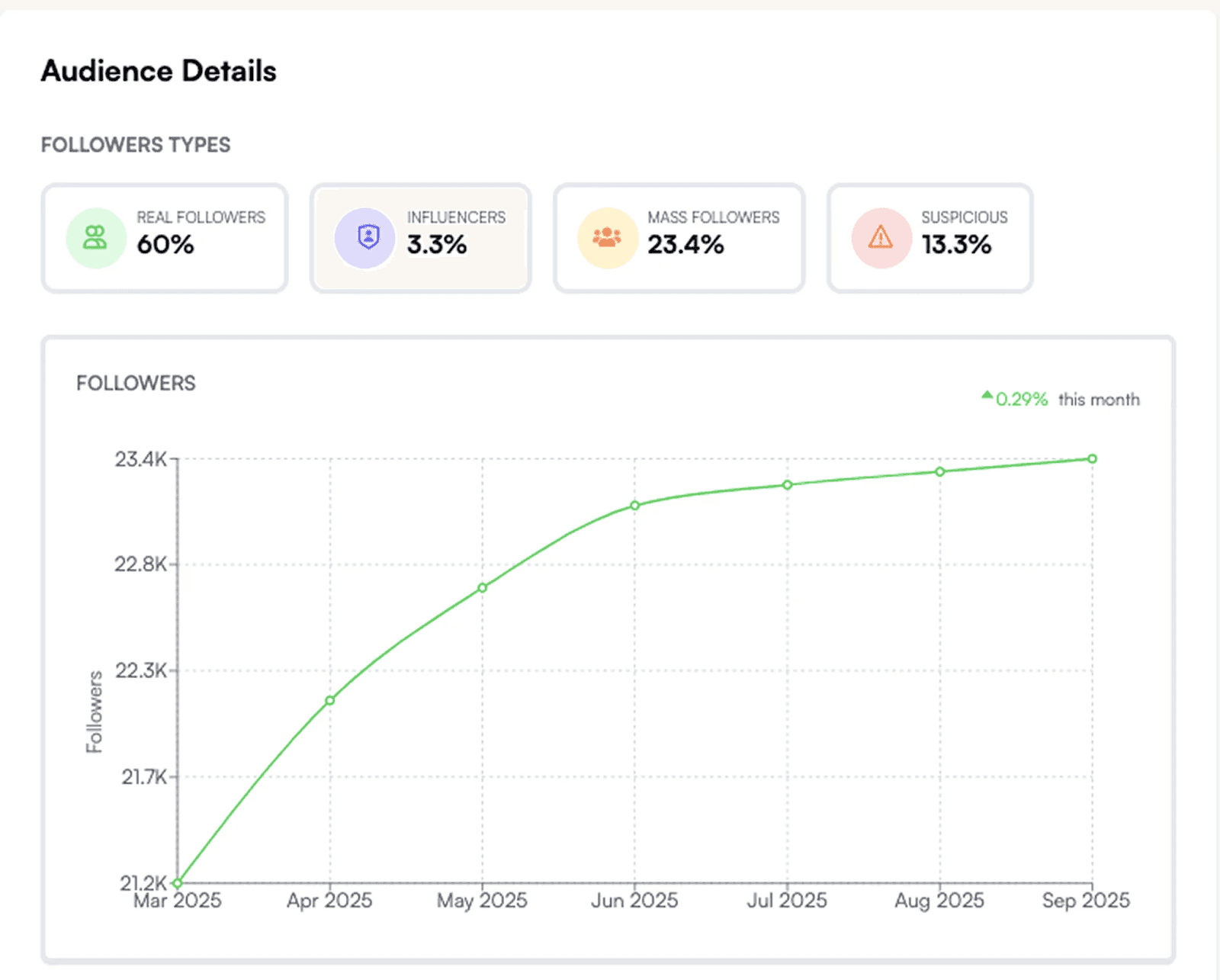
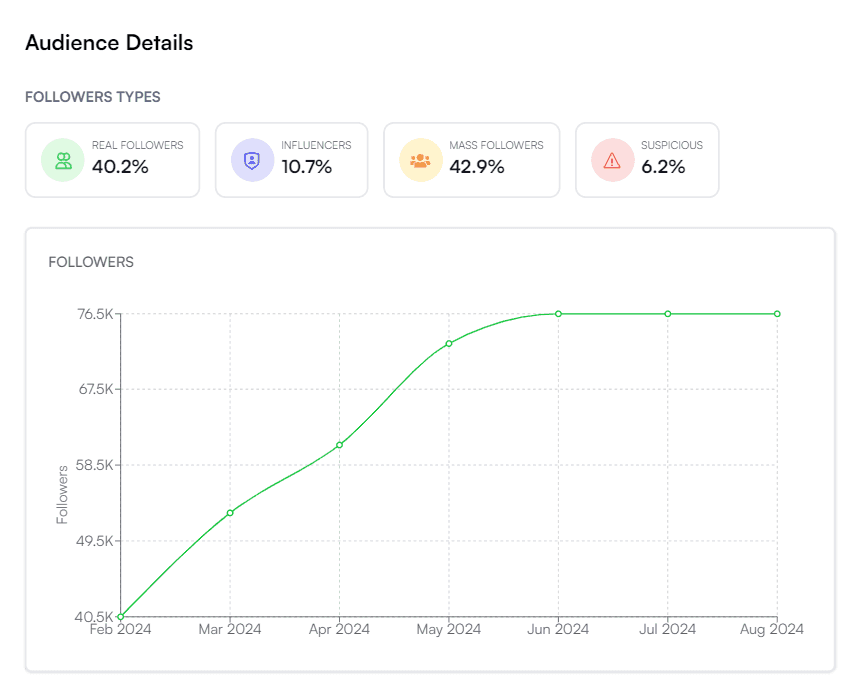
(impulze.ai’s influencer report showing growth trend)
That is a mistake.
Growth trends tell you whether a creator is building an audience steadily, gaining momentum from strong content, or showing patterns that deserve a closer look.
Healthy growth usually looks gradual. The creator gains followers consistently over time, with occasional bumps after strong posts, viral moments, press features, or collaborations. That kind of growth makes sense.
Suspicious growth often looks different. You may see a creator gain 20,000 followers overnight with no viral post attached. Or their follower count jumps sharply, stays flat, then drops again. Sometimes there are repeated spikes that do not match content performance.
That does not always prove anything shady happened. A creator might have been featured by a larger account, appeared in the news, or had a post take off on another platform. But unexplained growth should always make you ask questions.
A healthy follower growth chart gives you confidence that the creator’s audience is growing naturally.
A messy one tells you to look deeper.
Before approving a creator, check whether their growth makes sense with what you see on their profile. If they gained followers after a viral Reel, collaboration, or product review, that is understandable. If the numbers jumped without any visible reason, treat it as a caution signal.
The best creators do not always grow the fastest. They grow in a way that matches their content, niche, and audience behaviour.
6. Audience Demographics
Audience demographics may not sound exciting, but they can save your campaign budget.
A creator can have strong engagement, clean audience quality, and beautiful content, but still be the wrong fit if their audience does not match your buyer. This happens more often than brands think.
Imagine a UK skincare brand finds a creator with 90,000 followers and strong engagement. The content looks perfect. The comments are active. The creator’s aesthetic matches the brand.
Then the audience data shows that most followers are outside the UK, in countries the brand does not ship to. That creator may still be talented. They are just not useful for that campaign.
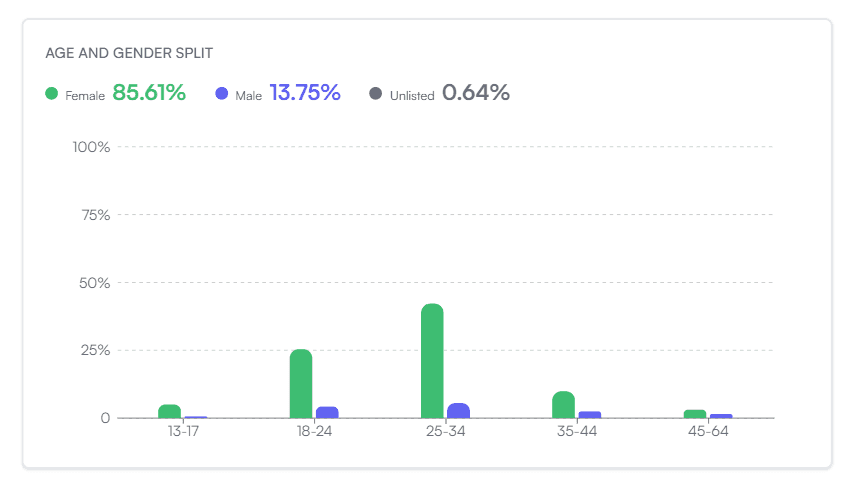
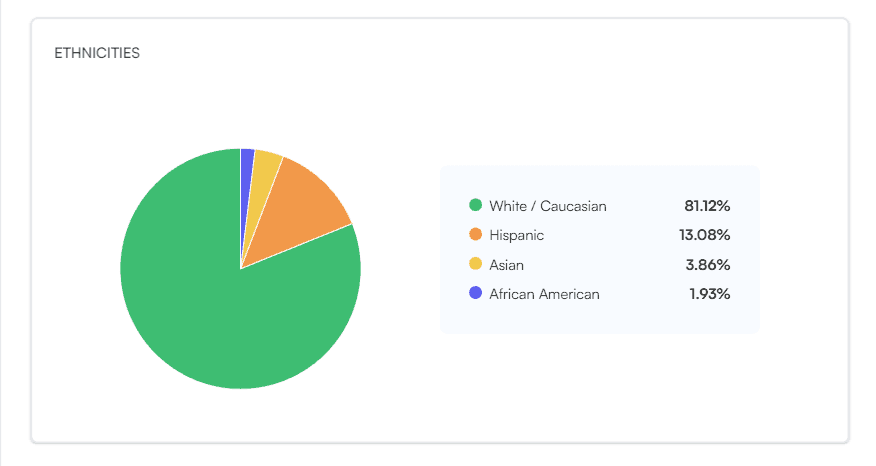
Audience demographics help you understand who you are actually reaching. The most important details usually include location, age, gender, language, and sometimes interests or audience affinity depending on the tool.
For most brands, geography is the first filter. If you only sell in the US, a creator with 70% of their audience outside your shipping market is a poor fit, even if their engagement looks excellent.
Age matters too. A skincare brand targeting women aged 25 to 34 should be careful with a creator whose audience is mostly teenagers. A B2B tool should not overvalue a creator whose following is mostly students if the buyer is a working professional.
This is where influencer analytics become practical. You are not just asking, “Does this creator have an audience?” You are asking, “Is this the audience we actually want?”
That one question prevents a lot of wasted spend.
7. Average Views and Reach
Follower count tells you the size of a creator’s audience. Average views and reach tell you how many people actually see their content. Those are very different things.
On platforms like TikTok, YouTube Shorts, Instagram Reels, and YouTube, follower count is becoming less reliable as a visibility signal. Algorithms decide how far content travels, and not every follower sees every post.
A creator with 50,000 followers may consistently reach 80,000 people per Reel because their content gets pushed beyond their audience. Another creator with 200,000 followers may average only 12,000 views because their audience is inactive or their content no longer performs.
That is why average views matter. They show the creator’s real distribution power.
For video-first campaigns, especially on TikTok, YouTube Shorts, and Reels, average views can be more useful than follower count. If your goal is awareness, demos, app installs, or product education, you need to know how many people are actually watching. But reach alone is still not enough.
A creator who gets views but no meaningful engagement may be entertaining without being influential. A creator who gets lower views but strong saves, comments, and click intent may be better for conversion.
The better way to read views is to compare them against the creator’s follower count and content consistency.
If a creator regularly reaches a meaningful percentage of their audience, that is a strong sign. If only one post went viral but everything else underperforms, be careful. One viral video does not guarantee campaign performance.
8. Posting Consistency
Posting consistency sounds boring until a campaign goes live late.
Then it suddenly matters a lot.
A creator who posts regularly is usually easier to work with because they already have content habits. They understand their own workflow. They know what formats perform. Their audience is used to hearing from them.
A creator who posts once every six weeks may still create beautiful content, but they may be a campaign risk if your timeline is tight.
Posting consistency also affects performance.
Audiences tend to respond better to creators who show up regularly. If someone disappears for months and suddenly returns with a sponsored post, that content can feel awkward. The audience may not be warmed up enough to engage. This does not mean every creator needs to post daily. That would be unrealistic, and in some niches, unnecessary. What you want is a pattern that makes sense.
A YouTube creator might post once a week. A TikTok creator may post several times a week. An Instagram lifestyle creator may mix Stories, Reels, and feed posts across the month.
The question is whether they have a rhythm.
Before approving a creator, look at the past 60 to 90 days. Have they been active? Are there long gaps? Do they disappear often? Do they only post when sponsored content is involved?
Those answers tell you more about campaign reliability than follower count ever will.
9. Previous Brand Collaborations
Past collaborations are one of the best ways to predict future campaign performance.
If a creator has worked with brands before, do not just look at the logos. Look at how the content performed and whether the partnership made sense.
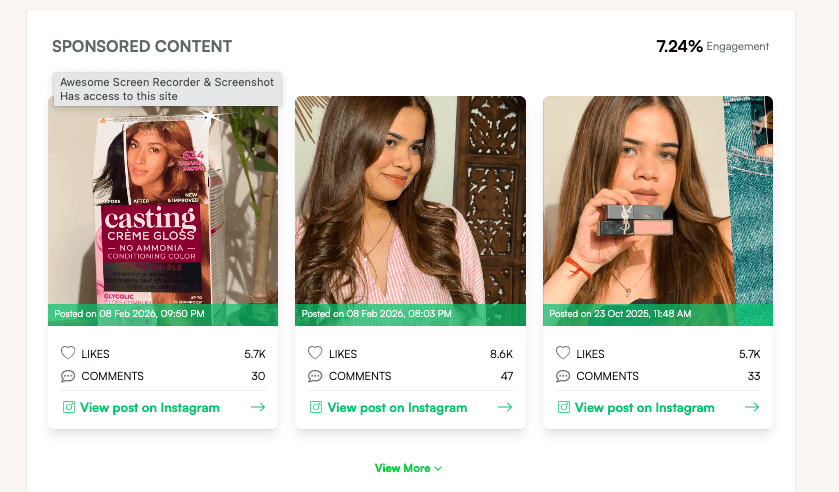
(impulze.ai’s influencer report showing past sponsored content performance)
A creator who has collaborated with relevant brands in your category can be a strong fit. Their audience is already used to seeing product recommendations in that space. If those posts performed well, even better. But too many unrelated collaborations can weaken trust.
If one week they promote skincare, the next week a crypto app, then a protein powder, then a random gadget, followers may stop taking recommendations seriously. Sponsored content should feel like a natural extension of the creator’s usual content.
For example, a fitness creator promoting workout gear, supplements, or a running app makes sense. The audience can understand the connection. A fitness creator suddenly promoting an unrelated finance tool may still generate reach, but the recommendation may feel less believable.
When reviewing past collaborations, pay attention to:
• whether sponsored posts match the creator’s niche
• how audiences respond to brand mentions
• whether comments include buying intent or genuine questions
• how often the creator promotes products
• whether they have worked with direct competitors recently
A creator’s brand history helps you understand both fit and fatigue. You want someone who can sell naturally, not someone whose feed feels overloaded with ads.
A Quick Creator Sanity Check Before You Pay Anyone
Before you approve a creator, do a quick sanity check across the full profile.
You do not need to spend hours overthinking every metric. You just need enough context to avoid obvious mistakes.
Ask yourself:
• Is their engagement consistent, or only strong on certain posts?
• Do the comments feel real and relevant?
• Does their audience match our target market?
• Are fake follower signals within a reasonable range?
• Does follower growth look natural?
• Do they post consistently enough for our campaign timeline?
• Has their past branded content performed well?
• Does this creator genuinely fit the product we are promoting?
The strongest creators usually pass on multiple dimensions. They do not just have one impressive number. They have healthy engagement, a relevant audience, believable content, and a track record that makes sense.
That is what good influencer vetting looks like.
Also Read: The Complete Influencer Vetting Checklist: Things to Check Before You Partner
Start With Better Creator Data
Reading influencer metrics manually across dozens of profiles gets exhausting fast.
You can check engagement by hand. You can scan comments manually. You can estimate audience fit from public content. But once you are comparing 50, 100, or 200 creators, that process becomes slow and inconsistent.
Tools like Impulze.ai and SocialiQ help make the process faster. The chrome extension SocialiQ gives you instant peek into a metrics like engagement rate, average likes, average comments, posting consistency, hashtags, and all.
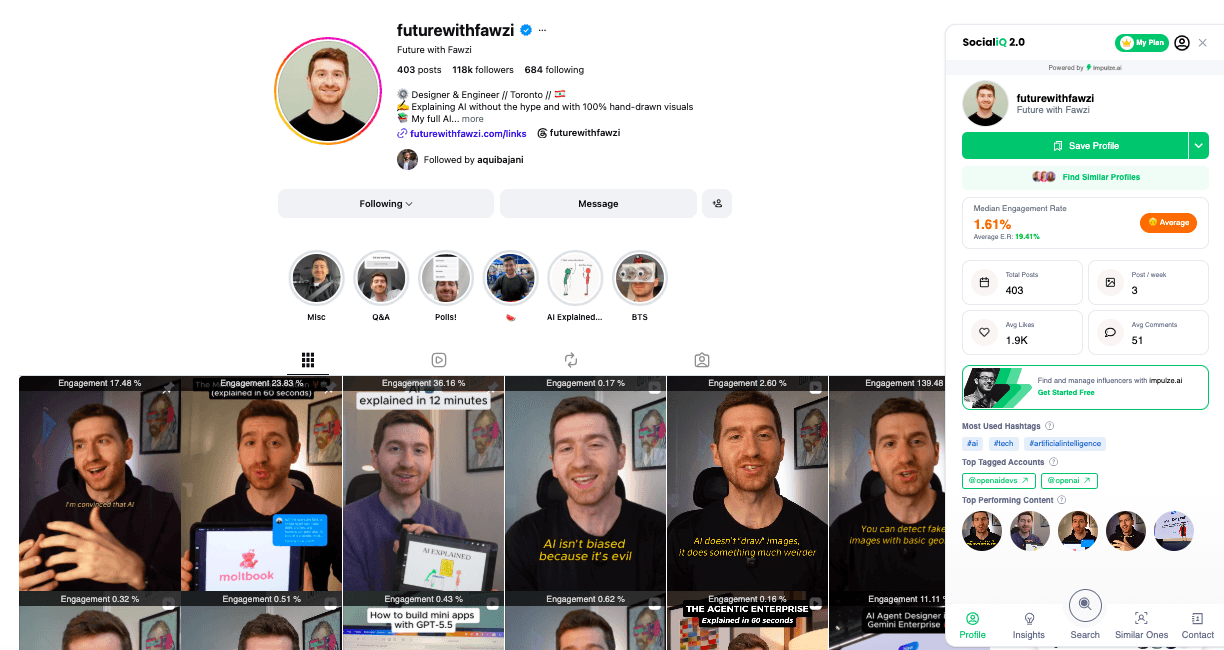
On the other hand, the influencer marketing platform impulze.ai is your best bet for deep analysis for engagement quality, audience demographics, fake follower signals, follower growth, and past collaboration data before deciding who to reach out to. That means fewer guesses, cleaner shortlists, and better campaigns.
Start creator discovery for free and upgrade when you are ready to scale.
You find a creator who looks like a perfect fit.
They have 62,000 followers, a 4.3% engagement rate, an audience quality score of 81, and a credibility score that seems comfortably above average. At first glance, it feels like an easy yes.
But this is exactly where many influencer campaigns start making expensive mistakes.
The problem is not access to data anymore. Most influencer marketing platforms surface dozens of metrics in seconds. Engagement percentages, audience scores, follower growth charts, audience demographics, credibility ratings. The information is all there.
What most marketers struggle with is interpretation.
A strong engagement rate can be inflated by giveaway-heavy content. A healthy audience quality score can still hide a poor geographic fit. A creator with fewer followers but cleaner metrics may outperform someone three times their size.
That is why understanding influencer analytics matters far more than simply having access to them.
This guide explains influencer metrics in plain English, without jargon or dashboard-speak, so you know what actually matters before approving a creator for your next campaign.
Why Most Marketers Misread Influencer Analytics
Influencer analytics can make a creator look easier to judge than they actually are.
You open a dashboard, see clean charts, neat scores, and exact percentages, and it feels like the hard work is already done. But numbers alone do not mean the creator has been properly vetted. They only become useful when you understand what they are really telling you.
Most marketers misread influencer analytics for a few reasons:
• They treat follower count like proof of influence
A creator with 300,000 followers can look safer than one with 25,000. But size does not always mean value. A smaller creator with stronger engagement, better audience fit, and a history of good branded content can easily outperform a larger account.
• They trust platform scores without understanding them
An audience quality score of 84 or a credibility score of 79 might look impressive. But if you do not know what those scores measure, you are trusting the result without understanding the evidence behind it.
• They compare creators without context
A beauty creator, gaming creator, parenting influencer, and meme page should not be judged using the same benchmarks. Engagement rates, audience behavior, and content performance vary heavily by niche and platform.
• They focus on the wrong metric for the campaign goal
If your goal is awareness, reach and average views may matter more. If your goal is sales, audience trust, comment quality, and past branded content performance become far more important.
That is why influencer analytics should never be read as isolated numbers. They work best when you use them to understand the full picture: who the creator reaches, how the audience responds, and whether that creator can actually help your campaign goal.
1. Engagement Rate
If there is one metric every marketer has heard of, it is engagement rate.
At a basic level, engagement rate tells you how actively a creator’s audience interacts with their content. Depending on the platform or tool, this may include likes, comments, shares, saves, and sometimes views.
The reason marketers care about engagement is straightforward. Followers can be passive. Engagement suggests activity.
A creator with 80,000 followers and almost no interaction is unlikely to move the needle. Meanwhile, a smaller creator with an engaged community may deliver stronger results because their audience actually pays attention.
That is the theory.
In practice, engagement rate gets misunderstood constantly.
A high engagement rate is not automatically a sign of creator quality.
Some creators inflate engagement unintentionally through giveaway content. Posts asking followers to tag friends, comment for entries, or participate in low-friction contests often generate artificially high activity that says very little about actual audience trust.
Others manipulate engagement more directly through engagement pods, comment groups, or repetitive engagement bait.
A post full of comments does not necessarily mean influence. Sometimes it simply means the creator knows how to trigger interaction.
This is why engagement rate should be treated as a starting point, not a final decision-maker.
What matters more is context.
Ask questions like:
• Is engagement consistent across recent posts?
• Do comments feel genuine or generic?
• Does branded content perform similarly to organic content?
• Are followers actually having conversations, or just dropping emojis?
That last point matters more than many marketers realise.
Some creators perform beautifully on personal content but collapse when sponsorship enters the picture. If engagement disappears the moment a brand appears, the creator may not be commercially effective, no matter how strong their average numbers look.
As a rough guide, smaller creators often show higher engagement percentages because their communities are tighter. Larger creators usually see engagement percentages decline as audience size scales.
But benchmarks alone are dangerous without context.
A creator with 2.8% engagement in one niche may be excellent. The same number elsewhere may be mediocre.
The better question is not “Is this engagement rate high?”
It is “What is driving this engagement, and will it translate into campaign performance?”
Also Read: Top 7 Instagram Engagement Rate Calculators (Free and Paid)
2. Audience Quality Score
Audience quality score is one of the most useful metrics in influencer analytics, and also one of the most misunderstood.
Many marketers assume it is simply a fake follower detector. It is not. A proper audience quality score looks at the overall health of a creator’s audience. That includes fake followers, but also much more than that.
A strong audience quality score usually reflects things like audience authenticity, engagement health, follower relevance, suspicious account behaviour, and the percentage of inactive or low-value followers.
Think of it as an overall audience health check rather than a single fraud signal.
Here is why this matters:
Two creators might both have 100,000 followers. On paper, they look comparable.
But one creator may have an audience made up of highly engaged real users in your target geography, while the other has a follower base inflated by inactive accounts, poor-quality engagement, or audiences that have little commercial relevance to your campaign.
The second creator may still look “big.” They just will not perform like it.
Audience quality helps separate visibility from actual value. A few warning signs to watch for:
• unusually weak engagement despite large follower counts
• suspicious audience geography that does not match content language
• inflated follower numbers with inconsistent post performance
• heavy dependence on giveaway spikes or viral anomalies
A creator with 25,000 followers and strong audience quality will often outperform someone with 150,000 followers and weak audience health. This is exactly why marketers who focus only on reach often overspend.
3. Influencer Credibility Score
Credibility score is often confused with audience quality score, but they are not the same thing. Audience quality is mostly about the people following the creator. Credibility is more about the creator’s own trust signals.
(impulze.ai’s influencer report showing credibility score)
A good credibility score usually looks at factors like posting consistency, engagement authenticity, audience trust, content behaviour, growth patterns, and how naturally people interact with the creator. It tries to answer a slightly different question.
Not just, “Is this audience real?” But, “Does this creator look trustworthy enough to represent a brand?” That distinction matters.
A creator might have a clean audience but still be a weak brand partner. Maybe they post inconsistently. Maybe their sponsored content feels forced. Maybe their comments are active, but not meaningful. Maybe they have worked with too many unrelated brands in a short period of time, which makes every new partnership feel less believable.
A strong credibility score suggests the creator has built some level of trust with their audience. Their content is consistent. Their engagement looks natural. Their audience response does not collapse when a brand appears.
But again, the score should not replace judgment.
You still need to look at the creator’s actual content and ask:
• Do they speak about products naturally?
• Do their followers seem to trust their recommendations?
• Does sponsored content feel aligned with their usual content?
• Are they promoting too many unrelated products?
A credibility score is useful because it gives you a quick signal. But the final decision should always come from looking at the full profile.
If the score is strong and the content feels aligned, that is a good sign. If the score is strong but the creator’s feed feels like a rotating billboard, pause before you approve.
4. Fake Followers Percentage
Fake followers are one of the easiest influencer metrics to understand emotionally.
Nobody wants to pay for followers that are not real.
But the reality is a little more nuanced. A creator does not need to have a perfectly clean audience to be worth working with. Almost every public account will have some level of suspicious or low-quality followers, especially once they grow.
The question is not whether fake followers exist. The question is whether the percentage is high enough to weaken campaign performance.
As a rough guide, a small fake follower percentage is normal. If a creator has under 10% suspicious followers, it is usually not a major concern unless other red flags appear. Once the number moves into the 15% to 25% range, it is worth investigating more carefully. If it crosses 30%, you should be cautious, especially if the creator is charging based on reach.
But fake followers should never be judged in isolation.
A creator with 18% suspicious followers but strong comments, healthy reach, and a highly relevant audience may still be useful. A creator with 12% suspicious followers but poor engagement and weak audience fit may still be a bad choice.
Look for patterns around the number.
A high fake follower percentage becomes more concerning when you also see:
• sudden follower spikes without clear reason
• low comments compared to follower count
• generic engagement from suspicious accounts
• audience locations that do not match the creator’s content
• branded posts that perform much worse than organic posts
Fake follower percentage is not a pass-or-fail metric. It is a risk signal.
The higher it gets, the more proof you need from the rest of the profile.
5. Follower Growth Trends
Follower growth is one of the most underrated influencer metrics. Most marketers check how many followers a creator has today. Fewer check how they got there.
(impulze.ai’s influencer report showing growth trend)
That is a mistake.
Growth trends tell you whether a creator is building an audience steadily, gaining momentum from strong content, or showing patterns that deserve a closer look.
Healthy growth usually looks gradual. The creator gains followers consistently over time, with occasional bumps after strong posts, viral moments, press features, or collaborations. That kind of growth makes sense.
Suspicious growth often looks different. You may see a creator gain 20,000 followers overnight with no viral post attached. Or their follower count jumps sharply, stays flat, then drops again. Sometimes there are repeated spikes that do not match content performance.
That does not always prove anything shady happened. A creator might have been featured by a larger account, appeared in the news, or had a post take off on another platform. But unexplained growth should always make you ask questions.
A healthy follower growth chart gives you confidence that the creator’s audience is growing naturally.
A messy one tells you to look deeper.
Before approving a creator, check whether their growth makes sense with what you see on their profile. If they gained followers after a viral Reel, collaboration, or product review, that is understandable. If the numbers jumped without any visible reason, treat it as a caution signal.
The best creators do not always grow the fastest. They grow in a way that matches their content, niche, and audience behaviour.
6. Audience Demographics
Audience demographics may not sound exciting, but they can save your campaign budget.
A creator can have strong engagement, clean audience quality, and beautiful content, but still be the wrong fit if their audience does not match your buyer. This happens more often than brands think.
Imagine a UK skincare brand finds a creator with 90,000 followers and strong engagement. The content looks perfect. The comments are active. The creator’s aesthetic matches the brand.
Then the audience data shows that most followers are outside the UK, in countries the brand does not ship to. That creator may still be talented. They are just not useful for that campaign.
Audience demographics help you understand who you are actually reaching. The most important details usually include location, age, gender, language, and sometimes interests or audience affinity depending on the tool.
For most brands, geography is the first filter. If you only sell in the US, a creator with 70% of their audience outside your shipping market is a poor fit, even if their engagement looks excellent.
Age matters too. A skincare brand targeting women aged 25 to 34 should be careful with a creator whose audience is mostly teenagers. A B2B tool should not overvalue a creator whose following is mostly students if the buyer is a working professional.
This is where influencer analytics become practical. You are not just asking, “Does this creator have an audience?” You are asking, “Is this the audience we actually want?”
That one question prevents a lot of wasted spend.
7. Average Views and Reach
Follower count tells you the size of a creator’s audience. Average views and reach tell you how many people actually see their content. Those are very different things.
On platforms like TikTok, YouTube Shorts, Instagram Reels, and YouTube, follower count is becoming less reliable as a visibility signal. Algorithms decide how far content travels, and not every follower sees every post.
A creator with 50,000 followers may consistently reach 80,000 people per Reel because their content gets pushed beyond their audience. Another creator with 200,000 followers may average only 12,000 views because their audience is inactive or their content no longer performs.
That is why average views matter. They show the creator’s real distribution power.
For video-first campaigns, especially on TikTok, YouTube Shorts, and Reels, average views can be more useful than follower count. If your goal is awareness, demos, app installs, or product education, you need to know how many people are actually watching. But reach alone is still not enough.
A creator who gets views but no meaningful engagement may be entertaining without being influential. A creator who gets lower views but strong saves, comments, and click intent may be better for conversion.
The better way to read views is to compare them against the creator’s follower count and content consistency.
If a creator regularly reaches a meaningful percentage of their audience, that is a strong sign. If only one post went viral but everything else underperforms, be careful. One viral video does not guarantee campaign performance.
8. Posting Consistency
Posting consistency sounds boring until a campaign goes live late.
Then it suddenly matters a lot.
A creator who posts regularly is usually easier to work with because they already have content habits. They understand their own workflow. They know what formats perform. Their audience is used to hearing from them.
A creator who posts once every six weeks may still create beautiful content, but they may be a campaign risk if your timeline is tight.
Posting consistency also affects performance.
Audiences tend to respond better to creators who show up regularly. If someone disappears for months and suddenly returns with a sponsored post, that content can feel awkward. The audience may not be warmed up enough to engage. This does not mean every creator needs to post daily. That would be unrealistic, and in some niches, unnecessary. What you want is a pattern that makes sense.
A YouTube creator might post once a week. A TikTok creator may post several times a week. An Instagram lifestyle creator may mix Stories, Reels, and feed posts across the month.
The question is whether they have a rhythm.
Before approving a creator, look at the past 60 to 90 days. Have they been active? Are there long gaps? Do they disappear often? Do they only post when sponsored content is involved?
Those answers tell you more about campaign reliability than follower count ever will.
9. Previous Brand Collaborations
Past collaborations are one of the best ways to predict future campaign performance.
If a creator has worked with brands before, do not just look at the logos. Look at how the content performed and whether the partnership made sense.
(impulze.ai’s influencer report showing past sponsored content performance)
A creator who has collaborated with relevant brands in your category can be a strong fit. Their audience is already used to seeing product recommendations in that space. If those posts performed well, even better. But too many unrelated collaborations can weaken trust.
If one week they promote skincare, the next week a crypto app, then a protein powder, then a random gadget, followers may stop taking recommendations seriously. Sponsored content should feel like a natural extension of the creator’s usual content.
For example, a fitness creator promoting workout gear, supplements, or a running app makes sense. The audience can understand the connection. A fitness creator suddenly promoting an unrelated finance tool may still generate reach, but the recommendation may feel less believable.
When reviewing past collaborations, pay attention to:
• whether sponsored posts match the creator’s niche
• how audiences respond to brand mentions
• whether comments include buying intent or genuine questions
• how often the creator promotes products
• whether they have worked with direct competitors recently
A creator’s brand history helps you understand both fit and fatigue. You want someone who can sell naturally, not someone whose feed feels overloaded with ads.
A Quick Creator Sanity Check Before You Pay Anyone
Before you approve a creator, do a quick sanity check across the full profile.
You do not need to spend hours overthinking every metric. You just need enough context to avoid obvious mistakes.
Ask yourself:
• Is their engagement consistent, or only strong on certain posts?
• Do the comments feel real and relevant?
• Does their audience match our target market?
• Are fake follower signals within a reasonable range?
• Does follower growth look natural?
• Do they post consistently enough for our campaign timeline?
• Has their past branded content performed well?
• Does this creator genuinely fit the product we are promoting?
The strongest creators usually pass on multiple dimensions. They do not just have one impressive number. They have healthy engagement, a relevant audience, believable content, and a track record that makes sense.
That is what good influencer vetting looks like.
Also Read: The Complete Influencer Vetting Checklist: Things to Check Before You Partner
Start With Better Creator Data
Reading influencer metrics manually across dozens of profiles gets exhausting fast.
You can check engagement by hand. You can scan comments manually. You can estimate audience fit from public content. But once you are comparing 50, 100, or 200 creators, that process becomes slow and inconsistent.
Tools like Impulze.ai and SocialiQ help make the process faster. The chrome extension SocialiQ gives you instant peek into a metrics like engagement rate, average likes, average comments, posting consistency, hashtags, and all.
On the other hand, the influencer marketing platform impulze.ai is your best bet for deep analysis for engagement quality, audience demographics, fake follower signals, follower growth, and past collaboration data before deciding who to reach out to. That means fewer guesses, cleaner shortlists, and better campaigns.
Start creator discovery for free and upgrade when you are ready to scale.
Frequently Asked Questions
What is a good influencer engagement rate?

What is a good influencer engagement rate?
What does audience quality score mean?
What does audience quality score mean?
What does influencer credibility score mean?
What does influencer credibility score mean?
How much fake following is acceptable?
How much fake following is acceptable?
Which influencer metric matters most?
Which influencer metric matters most?
How do I know if an influencer is legit?
How do I know if an influencer is legit?
Why do influencer metrics vary between tools?
Why do influencer metrics vary between tools?
Author Bio
Author Bio
Rashmi Singh
Rashmi Singh
Rashmi Singh is a writer and strategist with more than 7 years of experience. When not writing, she is either spending time with her friends or planning her next trip. You can learn more about her here.
Rashmi Singh is a writer and strategist with more than 7 years of experience. When not writing, she is either spending time with her friends or planning her next trip. You can learn more about her here.
We Also Recommend To Read