🥳 Skip the subscription. Pay $299 once for lifetime access— See lifetime plans
🥳 Skip the subscription. Pay $299 once for lifetime access—

7 MIN READ
Strategy
Strategy
How to Repurpose Influencer Content in Paid Ads: The Complete Whitelisting Guide
How to Repurpose Influencer Content in Paid Ads: The Complete Whitelisting Guide
How to Repurpose Influencer Content in Paid Ads: The Complete Whitelisting Guide
Sections
Try Influencer marketing tools for free

Blog in Short ⏱️
Blog in Short ⏱️
A quick glance at the highlights—perfect for when you're short on time.
A quick glance at the highlights—perfect for when you're short on time.
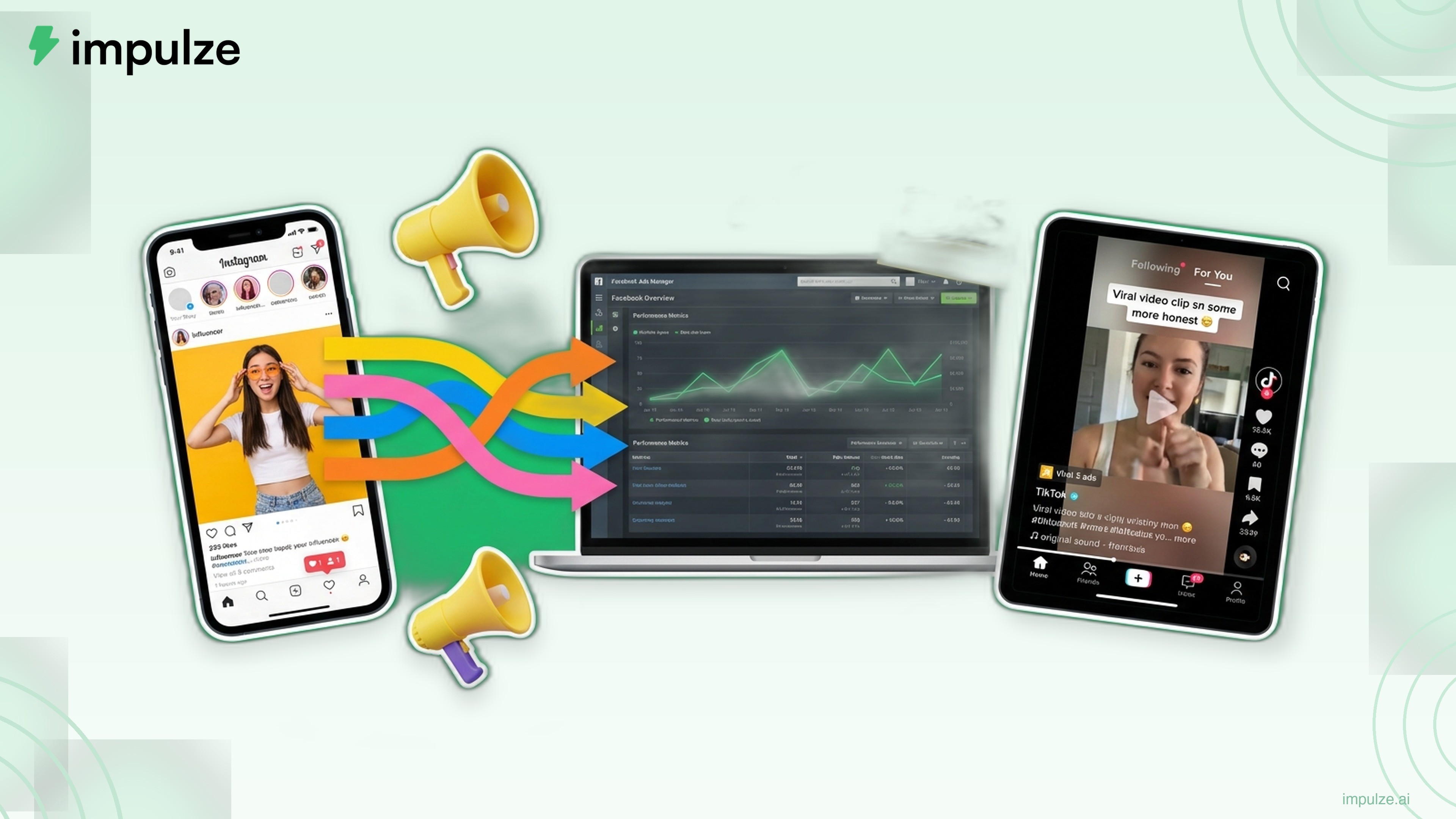
Most brands treat influencer content like a one-time asset. A post goes live, performs well, and then disappears. The smartest brands do the opposite. They turn one creator post into a full content engine that drives results across multiple channels.
Here’s what actually works:
• Influencer content feels native, which is why it drives 2x higher engagement than brand ads
• Repurposing that content into paid ads can reduce CPA by 30–50%
• Whitelisting lets you run ads from a creator’s handle, increasing trust and performance
• Formats like Spark Ads and dark posts help scale content without losing authenticity
• Organic performance signals like saves, comments, and watch time help identify winning creatives
The goal is simple. Don’t create more content. Make every piece of influencer content work harder and longer across your entire marketing funnel.
Here's a scenario that happens more often than most brands admit.
You spend two weeks finding the right influencer. You brief them, send the product, review drafts, and approve the final post. It goes live, performs well — genuinely good engagement, some solid comments, traffic ticks up.
And then 48 hours later, it's buried in the feed and you're already thinking about the next campaign.
That influencer post you just paid for? You used it once.
This is one of the most expensive habits in influencer marketing, and it's completely avoidable. The brands getting the best returns from creator partnerships aren't just running good campaigns; they're building content engines.
One creator post becomes a Facebook ad, a TikTok Spark Ad, an email header, a landing page hero, a retargeting creative. The same piece of content earns across five different channels instead of one.
The strategy behind this is called influencer whitelisting and it's one of the most underused levers in performance marketing. Whitelisted influencer campaigns outperform standard brand ads by 20–50% in performance metrics. Brands report 30–50% lower cost-per-action (CPA) versus their regular paid creative. Meta's own research shows that using influencer-generated content in paid ads increases purchase outcomes by 82% and drives a 4x improvement in brand lift.
These aren't marginal gains. They're the kind of numbers that make a performance team sit up.
So let's break down exactly how this works, what the different approaches are, and how to set it up properly.
Why Influencer Content Outperforms Brand Creative in Paid Ads
Before we get into mechanics, it's worth understanding why this works. Because the answer isn't obvious.
You'd think an ad with a bigger budget, professional lighting, and a properly written brief would outperform a creator's phone-shot video. It often doesn't. The reason comes down to something the performance marketing world calls "native feel."
Consumers have developed extremely sensitive ad-detection instincts. They've been served polished brand ads their entire digital lives, and they've learned to scroll past them reflexively.
But a creator talking directly to the camera in their kitchen, or showing a product in the context of their actual morning routine — that stops the scroll.
Not because it's higher quality.
Because it doesn't look like an ad.
Influencer-led ads drive 2x higher engagement than brand-led ads, according to Meta Business data. UGC-style content lifts ad performance by up to 50% compared to traditional formats. And 57% of consumers say they trust influencer-endorsed ads more than traditional brand ads.
The trust that creators build with their audiences doesn't disappear when their content is served as a paid placement. It travels with the content. That's the asset brands are tapping into when they repurpose creator content in paid channels.
The Terminology, Cleared Up
This space has a few terms that get used interchangeably but mean slightly different things. Getting them straight saves confusion when briefing your media team.
Whitelisting (also called allowlisting or creator licensing):
The brand runs paid ads directly from the influencer's account handle.
The ad appears to come from the creator, not the brand. You get access to run ads through their profile — targeting people beyond their organic audience, including lookalike audiences who've never heard of them.
This is the most powerful approach because it preserves full creator identity while giving you complete control over targeting and spend.
Boosting:
Either the creator or the brand boosts an existing post from the creator's account. Less control than full whitelisting, but simpler to set up and a good starting point for testing whether a piece of content has paid media legs.
Dark posts:
Ads that run under the influencer's handle but never appear on their organic feed. The audience sees them as ads in their feed, but the influencer's profile doesn't accumulate sponsored posts. This is increasingly popular with creators who want to protect the organic feel of their grid.
Repurposing for brand channels:
Using creator content (with usage rights secured) in your own paid ads, email campaigns, landing pages, or organic social. You're not running ads from the influencer's account, you're using their content as creative within your own brand's ad account.
All four approaches work. The best brands use a combination of them, starting with what the data supports.
Different Ways to Repurpose Creator Content
Not all repurposing is equal. Here's where influencer content can work beyond the organic post it was originally intended for.
Paid social ads (the primary use case)
This is the most impactful application. Take an influencer's best-performing content and run it as a paid ad — either from their handle (whitelisting) or from your own brand account (repurposing with usage rights).
The key is using content that has already demonstrated organic performance. If a post generated strong engagement and comments without paid amplification, that's your signal it has creative legs. Put budget behind what's already working rather than guessing.
TikTok Spark Ads
TikTok's version of whitelisting.
The creator generates a Spark Ad code, you enter it in your TikTok Ads Manager, and you can run their content as a paid placement while it still shows under their handle, with their existing organic likes and comments intact.
The social proof element is part of the ad — a viewer sees a post with thousands of likes and genuine comments, which reinforces trust in a way a clean brand ad can't replicate.
Email campaigns
This is where most brands miss an obvious win. Glossier repurposes influencer-generated content in their email newsletters and promotions — embedding creator imagery in campaigns rather than using brand photography.
The familiarity of seeing a real person using a product in an inbox context cuts through the visual noise of a promotional email. Creator quotes work well here too. A genuine testimonial from a recognizable creator adds credibility to a product launch email in a way that brand copy doesn't.
Landing pages and product pages
Influencer testimonials embedded on product pages directly address purchase hesitation. A video review from a credible creator on a product page gives browsers the social proof they need to convert.
Icon Fitness used this approach. They didn't need to commission product photography or video — they had creator content doing that job across their owned channels.
Retargeting campaigns
Once a piece of influencer content has run as a top-of-funnel awareness ad, you can retarget the people who engaged with it — using the same or similar creator content, deeper in the funnel.
Someone who watched 75% of a creator's product demo video is a warm audience. Retargeting them with a discount offer or a "here's what to order first" from the same creator is considerably more efficient than cold prospecting.
How to Set It Up: Platform by Platform
Meta (Instagram and Facebook)
The most established whitelisting infrastructure. The process:
The influencer connects their account to your brand's Meta Business Manager through Meta's Partnership Ads tool (formerly Branded Content Ads)
They grant you "advertising access" to their account — not full access, specifically advertising permissions
You build the ad in your Ads Manager using their handle as the ad identity
You control all targeting, budget, bidding, and optimization from your own account
The ad appears under their name, with their profile picture, to audiences you define
The influencer doesn't see your targeting. They see that an ad is running from their account, but they don't control who it reaches or for how long. This is the dark post mechanic. It doesn't appear on their feed, only as a paid placement to your target audience.
TikTok Spark Ads
The creator posts their content organically (or can keep it as a draft — TikTok also allows Spark Ads on non-public posts)
They generate a Spark Ad authorization code from within their TikTok settings (Settings → Creator tools → Ad settings → Authorize ad account)
You enter that code in your TikTok Ads Manager
You run the content as an in-feed ad from their handle, with their existing organic engagement visible
One important distinction: Spark Ads run the creator's original post, engagement and all. Standard TikTok ads run brand-controlled creative. Spark Ads consistently outperform standard ads on trust metrics because the social proof is built in.
YouTube
YouTube's version is handled through Google's Brand Lift measurement and the official "Branded Content" tagging system. For straightforward repurposing of creator content as YouTube pre-roll or mid-roll, you need usage rights secured in the creator contract and to upload the content to your own Google Ads account.
Full whitelisting (running from the creator's channel) is less common on YouTube and more complex to set up than on Meta or TikTok.
The Usage Rights Problem (and How to Avoid It)
Here's where a lot of brands get stuck.
They find a piece of creator content that performed brilliantly, want to run it as an ad, and then discover they don't have the rights to do it. The creator owns the content. Without explicit usage rights in the contract, you can't legally repurpose it.
This is entirely preventable, but it requires building usage rights language into your agreements from the start, not as an afterthought when you've already identified which post you want to amplify.
What your influencer contract needs to specify:
Which channels you can use the content on (paid social, email, website, out-of-home, etc.)
Duration of usage rights (30 days? 6 months? 12 months? In perpetuity?)
Exclusivity — whether you have exclusive use or the creator can license the same content to other brands
Modification rights — whether you can edit the content, add captions, change the CTA, or cut it for different formats
Creators typically charge extra for usage rights on top of their base fee. The standard is 20–30% of their base rate for whitelisting access. So if their base rate for a Reel is $1,000, expect to pay $200–$300 on top for usage rights. Some creators charge more for longer durations or broader channel rights.
The conversation about usage rights needs to happen before the content is created, not after. Once a creator has delivered a post and it's performed well, the negotiating dynamic shifts entirely in their favor. Build it into the initial brief.
How to Decide Which Content Is Worth Amplifying
Not everything deserves ad spend behind it. The way to identify what's worth whitelisting is to treat your organic influencer posts as a testing ground first.
Look at the organic performance data before putting budget behind anything. What you're looking for:
Strong save rate. Saves are the highest-intent engagement signal on most platforms. They indicate someone found the content useful or purchase-worthy enough to return to later. A high save-to-view ratio is often a better predictor of paid performance than like count.
Comment quality. Not just volume. Are people asking "where do I get this?" or "how much is it?" Those are buying signals. Generic comments ("great post!") aren't.
High completion rate on video. If people are watching a 60-second creator video to the end, the content is holding attention. That's what you want in a paid placement.
Organic reach beyond the creator's followers. If a post is being shared and appearing in Explore or FYP for people who don't follow the creator, it has algorithmic momentum, which usually translates to better paid performance too.
Once you've identified the top performers by these signals, those are your candidates for whitelisting.
The Practical Checklist for Running Your First Whitelisted Campaign
Before you launch:
Usage rights language included in the influencer contract (channels, duration, modification rights)
Creator has connected their account to your Meta Business Manager or provided their TikTok Spark Ad code
You've identified which organic post(s) you're amplifying based on performance data
Ad creative is formatted for the intended placement (aspect ratio, length, caption length)
Tracking is set up — UTM parameters, pixel events, or affiliate links to measure performance at the post level
CTA and landing page are aligned. The ad should lead somewhere that matches what the creator said
During the campaign:
Watch the first 48–72 hours closely. Whitelisted ads sometimes have a brief learning period as the algorithm calibrates
If you're A/B testing multiple creator posts, give each meaningful budget before drawing conclusions
Monitor comments. Whitelisted ads can generate real comments from users who think they're engaging with the creator organically. The creator should know this might happen and how you want to handle it
After:
Compare CPA and ROAS against your baseline brand creative, this is the number that makes the case internally
Document which creator, content format, and audience segment performed best
Build this into your creator contract template going forward so usage rights are always pre-cleared
The Bigger Picture: Thinking Like a Content Company
Most brands still treat influencer marketing as a campaign channel. You run a campaign, measure the results, brief the next one. The content is a byproduct of the partnership.
The brands generating the best long-term returns think about it differently. They treat every influencer collaboration as a content production event. The partnership produces assets — video, photography, testimonials, reviews — that earn across multiple channels over an extended period. The organic post is the launch. The paid amplification is the compounding return.
77% of marketers repurpose creator content in paid social campaigns. The ones who don't are leaving the majority of their influencer investment's value on the table.
The practical shift is this: when you're briefing an influencer, don't just brief them on the post. Brief them on the creative assets you need. What formats work for your paid channels? What aspect ratios? What length of video? If you know you're going to run this as a Meta ad, brief for Meta specs from the start.
The best influencer content is content that works twice: once organically, and once as your best-performing paid creative.
Start with the Best
Finding creators who produce content worth amplifying starts with finding the right creators in the first place — ones whose audience actually looks like your customer and whose engagement is real rather than inflated.
Impulze.ai helps you get this right before you spend anything:
Search 400M+ creator profiles across Instagram, TikTok, and YouTube filtered by niche, engagement rate, audience demographics, and content quality
Fake follower detection so you're not building whitelisting campaigns on inflated metrics
Collaboration history to see what brands a creator has worked with and how their content has performed
Campaign tracking in one place — from content approval through paid performance, so you can identify which assets are worth amplifying
Here's a scenario that happens more often than most brands admit.
You spend two weeks finding the right influencer. You brief them, send the product, review drafts, and approve the final post. It goes live, performs well — genuinely good engagement, some solid comments, traffic ticks up.
And then 48 hours later, it's buried in the feed and you're already thinking about the next campaign.
That influencer post you just paid for? You used it once.
This is one of the most expensive habits in influencer marketing, and it's completely avoidable. The brands getting the best returns from creator partnerships aren't just running good campaigns; they're building content engines.
One creator post becomes a Facebook ad, a TikTok Spark Ad, an email header, a landing page hero, a retargeting creative. The same piece of content earns across five different channels instead of one.
The strategy behind this is called influencer whitelisting and it's one of the most underused levers in performance marketing. Whitelisted influencer campaigns outperform standard brand ads by 20–50% in performance metrics. Brands report 30–50% lower cost-per-action (CPA) versus their regular paid creative. Meta's own research shows that using influencer-generated content in paid ads increases purchase outcomes by 82% and drives a 4x improvement in brand lift.
These aren't marginal gains. They're the kind of numbers that make a performance team sit up.
So let's break down exactly how this works, what the different approaches are, and how to set it up properly.
Why Influencer Content Outperforms Brand Creative in Paid Ads
Before we get into mechanics, it's worth understanding why this works. Because the answer isn't obvious.
You'd think an ad with a bigger budget, professional lighting, and a properly written brief would outperform a creator's phone-shot video. It often doesn't. The reason comes down to something the performance marketing world calls "native feel."
Consumers have developed extremely sensitive ad-detection instincts. They've been served polished brand ads their entire digital lives, and they've learned to scroll past them reflexively.
But a creator talking directly to the camera in their kitchen, or showing a product in the context of their actual morning routine — that stops the scroll.
Not because it's higher quality.
Because it doesn't look like an ad.
Influencer-led ads drive 2x higher engagement than brand-led ads, according to Meta Business data. UGC-style content lifts ad performance by up to 50% compared to traditional formats. And 57% of consumers say they trust influencer-endorsed ads more than traditional brand ads.
The trust that creators build with their audiences doesn't disappear when their content is served as a paid placement. It travels with the content. That's the asset brands are tapping into when they repurpose creator content in paid channels.
The Terminology, Cleared Up
This space has a few terms that get used interchangeably but mean slightly different things. Getting them straight saves confusion when briefing your media team.
Whitelisting (also called allowlisting or creator licensing):
The brand runs paid ads directly from the influencer's account handle.
The ad appears to come from the creator, not the brand. You get access to run ads through their profile — targeting people beyond their organic audience, including lookalike audiences who've never heard of them.
This is the most powerful approach because it preserves full creator identity while giving you complete control over targeting and spend.
Boosting:
Either the creator or the brand boosts an existing post from the creator's account. Less control than full whitelisting, but simpler to set up and a good starting point for testing whether a piece of content has paid media legs.
Dark posts:
Ads that run under the influencer's handle but never appear on their organic feed. The audience sees them as ads in their feed, but the influencer's profile doesn't accumulate sponsored posts. This is increasingly popular with creators who want to protect the organic feel of their grid.
Repurposing for brand channels:
Using creator content (with usage rights secured) in your own paid ads, email campaigns, landing pages, or organic social. You're not running ads from the influencer's account, you're using their content as creative within your own brand's ad account.
All four approaches work. The best brands use a combination of them, starting with what the data supports.
Different Ways to Repurpose Creator Content
Not all repurposing is equal. Here's where influencer content can work beyond the organic post it was originally intended for.
Paid social ads (the primary use case)
This is the most impactful application. Take an influencer's best-performing content and run it as a paid ad — either from their handle (whitelisting) or from your own brand account (repurposing with usage rights).
The key is using content that has already demonstrated organic performance. If a post generated strong engagement and comments without paid amplification, that's your signal it has creative legs. Put budget behind what's already working rather than guessing.
TikTok Spark Ads
TikTok's version of whitelisting.
The creator generates a Spark Ad code, you enter it in your TikTok Ads Manager, and you can run their content as a paid placement while it still shows under their handle, with their existing organic likes and comments intact.
The social proof element is part of the ad — a viewer sees a post with thousands of likes and genuine comments, which reinforces trust in a way a clean brand ad can't replicate.
Email campaigns
This is where most brands miss an obvious win. Glossier repurposes influencer-generated content in their email newsletters and promotions — embedding creator imagery in campaigns rather than using brand photography.
The familiarity of seeing a real person using a product in an inbox context cuts through the visual noise of a promotional email. Creator quotes work well here too. A genuine testimonial from a recognizable creator adds credibility to a product launch email in a way that brand copy doesn't.
Landing pages and product pages
Influencer testimonials embedded on product pages directly address purchase hesitation. A video review from a credible creator on a product page gives browsers the social proof they need to convert.
Icon Fitness used this approach. They didn't need to commission product photography or video — they had creator content doing that job across their owned channels.
Retargeting campaigns
Once a piece of influencer content has run as a top-of-funnel awareness ad, you can retarget the people who engaged with it — using the same or similar creator content, deeper in the funnel.
Someone who watched 75% of a creator's product demo video is a warm audience. Retargeting them with a discount offer or a "here's what to order first" from the same creator is considerably more efficient than cold prospecting.
How to Set It Up: Platform by Platform
Meta (Instagram and Facebook)
The most established whitelisting infrastructure. The process:
The influencer connects their account to your brand's Meta Business Manager through Meta's Partnership Ads tool (formerly Branded Content Ads)
They grant you "advertising access" to their account — not full access, specifically advertising permissions
You build the ad in your Ads Manager using their handle as the ad identity
You control all targeting, budget, bidding, and optimization from your own account
The ad appears under their name, with their profile picture, to audiences you define
The influencer doesn't see your targeting. They see that an ad is running from their account, but they don't control who it reaches or for how long. This is the dark post mechanic. It doesn't appear on their feed, only as a paid placement to your target audience.
TikTok Spark Ads
The creator posts their content organically (or can keep it as a draft — TikTok also allows Spark Ads on non-public posts)
They generate a Spark Ad authorization code from within their TikTok settings (Settings → Creator tools → Ad settings → Authorize ad account)
You enter that code in your TikTok Ads Manager
You run the content as an in-feed ad from their handle, with their existing organic engagement visible
One important distinction: Spark Ads run the creator's original post, engagement and all. Standard TikTok ads run brand-controlled creative. Spark Ads consistently outperform standard ads on trust metrics because the social proof is built in.
YouTube
YouTube's version is handled through Google's Brand Lift measurement and the official "Branded Content" tagging system. For straightforward repurposing of creator content as YouTube pre-roll or mid-roll, you need usage rights secured in the creator contract and to upload the content to your own Google Ads account.
Full whitelisting (running from the creator's channel) is less common on YouTube and more complex to set up than on Meta or TikTok.
The Usage Rights Problem (and How to Avoid It)
Here's where a lot of brands get stuck.
They find a piece of creator content that performed brilliantly, want to run it as an ad, and then discover they don't have the rights to do it. The creator owns the content. Without explicit usage rights in the contract, you can't legally repurpose it.
This is entirely preventable, but it requires building usage rights language into your agreements from the start, not as an afterthought when you've already identified which post you want to amplify.
What your influencer contract needs to specify:
Which channels you can use the content on (paid social, email, website, out-of-home, etc.)
Duration of usage rights (30 days? 6 months? 12 months? In perpetuity?)
Exclusivity — whether you have exclusive use or the creator can license the same content to other brands
Modification rights — whether you can edit the content, add captions, change the CTA, or cut it for different formats
Creators typically charge extra for usage rights on top of their base fee. The standard is 20–30% of their base rate for whitelisting access. So if their base rate for a Reel is $1,000, expect to pay $200–$300 on top for usage rights. Some creators charge more for longer durations or broader channel rights.
The conversation about usage rights needs to happen before the content is created, not after. Once a creator has delivered a post and it's performed well, the negotiating dynamic shifts entirely in their favor. Build it into the initial brief.
How to Decide Which Content Is Worth Amplifying
Not everything deserves ad spend behind it. The way to identify what's worth whitelisting is to treat your organic influencer posts as a testing ground first.
Look at the organic performance data before putting budget behind anything. What you're looking for:
Strong save rate. Saves are the highest-intent engagement signal on most platforms. They indicate someone found the content useful or purchase-worthy enough to return to later. A high save-to-view ratio is often a better predictor of paid performance than like count.
Comment quality. Not just volume. Are people asking "where do I get this?" or "how much is it?" Those are buying signals. Generic comments ("great post!") aren't.
High completion rate on video. If people are watching a 60-second creator video to the end, the content is holding attention. That's what you want in a paid placement.
Organic reach beyond the creator's followers. If a post is being shared and appearing in Explore or FYP for people who don't follow the creator, it has algorithmic momentum, which usually translates to better paid performance too.
Once you've identified the top performers by these signals, those are your candidates for whitelisting.
The Practical Checklist for Running Your First Whitelisted Campaign
Before you launch:
Usage rights language included in the influencer contract (channels, duration, modification rights)
Creator has connected their account to your Meta Business Manager or provided their TikTok Spark Ad code
You've identified which organic post(s) you're amplifying based on performance data
Ad creative is formatted for the intended placement (aspect ratio, length, caption length)
Tracking is set up — UTM parameters, pixel events, or affiliate links to measure performance at the post level
CTA and landing page are aligned. The ad should lead somewhere that matches what the creator said
During the campaign:
Watch the first 48–72 hours closely. Whitelisted ads sometimes have a brief learning period as the algorithm calibrates
If you're A/B testing multiple creator posts, give each meaningful budget before drawing conclusions
Monitor comments. Whitelisted ads can generate real comments from users who think they're engaging with the creator organically. The creator should know this might happen and how you want to handle it
After:
Compare CPA and ROAS against your baseline brand creative, this is the number that makes the case internally
Document which creator, content format, and audience segment performed best
Build this into your creator contract template going forward so usage rights are always pre-cleared
The Bigger Picture: Thinking Like a Content Company
Most brands still treat influencer marketing as a campaign channel. You run a campaign, measure the results, brief the next one. The content is a byproduct of the partnership.
The brands generating the best long-term returns think about it differently. They treat every influencer collaboration as a content production event. The partnership produces assets — video, photography, testimonials, reviews — that earn across multiple channels over an extended period. The organic post is the launch. The paid amplification is the compounding return.
77% of marketers repurpose creator content in paid social campaigns. The ones who don't are leaving the majority of their influencer investment's value on the table.
The practical shift is this: when you're briefing an influencer, don't just brief them on the post. Brief them on the creative assets you need. What formats work for your paid channels? What aspect ratios? What length of video? If you know you're going to run this as a Meta ad, brief for Meta specs from the start.
The best influencer content is content that works twice: once organically, and once as your best-performing paid creative.
Start with the Best
Finding creators who produce content worth amplifying starts with finding the right creators in the first place — ones whose audience actually looks like your customer and whose engagement is real rather than inflated.
Impulze.ai helps you get this right before you spend anything:
Search 400M+ creator profiles across Instagram, TikTok, and YouTube filtered by niche, engagement rate, audience demographics, and content quality
Fake follower detection so you're not building whitelisting campaigns on inflated metrics
Collaboration history to see what brands a creator has worked with and how their content has performed
Campaign tracking in one place — from content approval through paid performance, so you can identify which assets are worth amplifying
Frequently Asked Questions
What's the difference between whitelisting and boosting?

What's the difference between whitelisting and boosting?
How much does influencer whitelisting cost?
How much does influencer whitelisting cost?
Do I need the creator's password or account login?
Do I need the creator's password or account login?
How long should I run whitelisted ads?
How long should I run whitelisted ads?
Can a creator refuse whitelisting?
Can a creator refuse whitelisting?
We Also Recommend To Read