🥳 Skip the subscription. Pay $299 once for lifetime access— See lifetime plans
🥳 Skip the subscription. Pay $299 once for lifetime access—

8 MIN READ
Discovery
Discovery
Influencer Marketing for Lifestyle Brands: Strategies That Work
Influencer Marketing for Lifestyle Brands: Strategies That Work
Influencer Marketing for Lifestyle Brands: Strategies That Work

Rashmi Singh
Rashmi Singh
Rashmi Singh
Content Marketer @impulze.ai
Sections
Try Influencer marketing tools for free

Blog in Short ⏱️
Blog in Short ⏱️
A quick glance at the highlights—perfect for when you're short on time.
A quick glance at the highlights—perfect for when you're short on time.
Influencer marketing for lifestyle brands works best when influence builds over time. The most effective strategies focus on trust, habits, and consistency rather than one-off promotions. A few of the best ones are:
Prioritize customer-generated content to build real credibility
Show products inside daily routines to create habit visibility
Work with fewer creators but commit to long-term partnerships
Let creators speak naturally instead of following scripts
Measure impact through saves, comments, and repeat exposure
Use affiliate links quietly to track delayed conversions
Turn audiences into contributors through community-led campaigns
Most influencer marketing advice is wrong for lifestyle brands.
The usual playbook—big creators, short campaigns, one-off posts—might work for launches or discounts. But lifestyle brands sell habits, identity, and consistency.
So, if your influencer strategy doesn’t reflect that, results will always feel underwhelming. To ensure you don’t make the same mistakes, we have created this guide that focuses on how experienced marketers rethink influencer marketing specifically for lifestyle brands and how you can use these influencer marketing strategies for your lifestyle brand.
Let’s begin!
Why Influencer Marketing Feels Different for Lifestyle Brands
Over the past few months, we wrote several articles around influencer marketing strategies for restaurants, wellness brands, gaming, and beauty brands. However, you would see that each one had a different approach.
The same goes for influencer marketing for lifestyle brands. And the biggest reason is the way people evaluate lifestyle brands. They don’t buy a product on instinct and stick to it for a long time. Rather, lifestyle brands are judged slowly—over time—through repeated exposure and subtle signals.
A skincare brand isn’t just assessed on results. It’s noticed on bathroom shelves.
A fitness brand isn’t judged by one workout. It shows up in routines, playlists, and recovery days.
A fashion or home brand becomes familiar long before it becomes purchased.
This is why influencer marketing feels different for lifestyle brands. The goal isn’t immediate persuasion. It’s sustained presence. For lifestyle brands, influence compounds. Trust builds through repetition.
Influencer Marketing Strategies for Lifestyle Brands That Actually Work
1. Invest in Customer UGC
Lifestyle brands thrive on believability, and nothing feels more believable than real customers. Unlike influencers, customers don’t have a “creator agenda.” For them, a reel created for your brand is not for getting more views but they are sharing their lives and habits with their “people”. That’s exactly why their content converts trust so well.
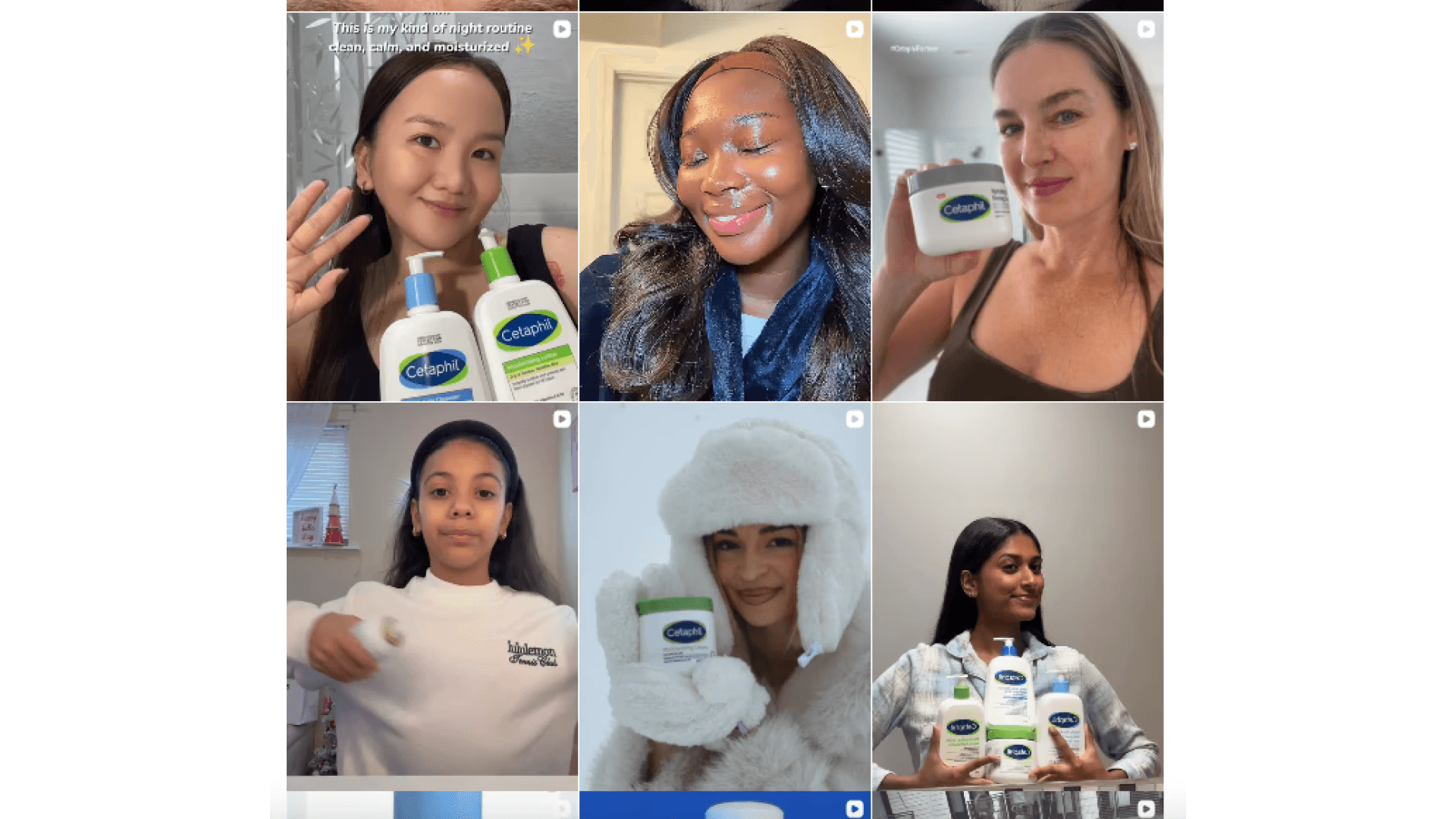
Take Cetaphil as an example. A large part of their content ecosystem isn’t influencer-heavy. It’s everyday people sharing skincare journeys, routine videos, before-and-after photos, and honest reviews. These reels don’t have perfect lines or perfect scripts, but that’s what makes them feel genuine and real.
Why this works
Customers talk like customers, not marketers
The content feels earned, not paid
It reassures hesitant buyers: “People like me use this”
Tips to do this well
Actively DM customers who tag your brand and ask permission to reuse their content
Incentivize UGC with store credits or feature shoutouts (not always money)
Build a UGC library and reuse top-performing content across ads, product pages, and emails
2. Build Habit Visibility
Lifestyle brands don’t win by explaining features. They win by quietly becoming part of someone’s routine. The moment your product shows up repeatedly in a creator’s daily life, it stops feeling optional.
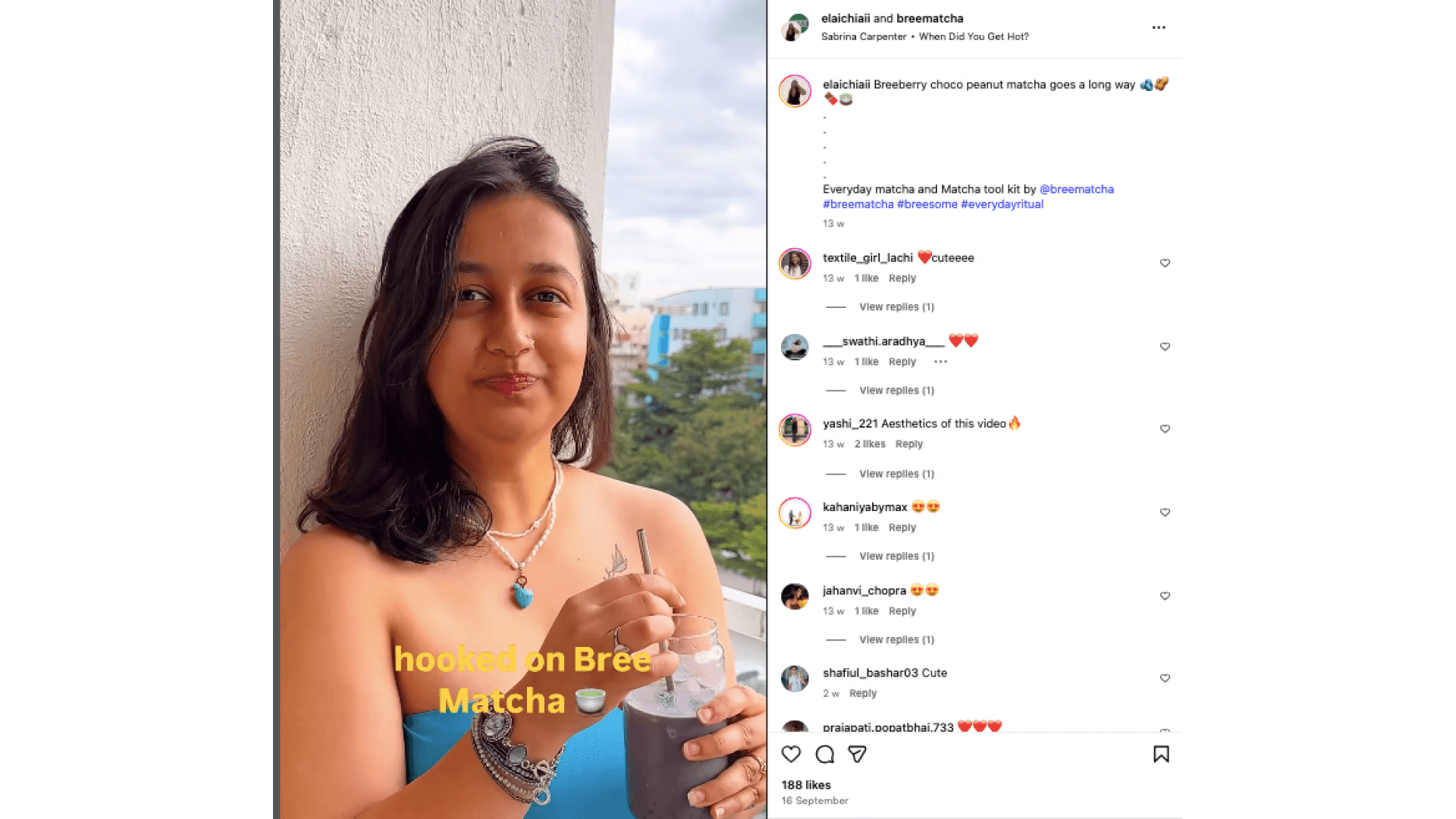
For example, a wellness brand that appears every morning in a creator’s “get ready with me” or a protein brand that shows up in post-workout clips—without explanation—creates subconscious familiarity.
Why this works
Repetition builds recall
Habits feel more trustworthy than recommendations
Viewers imagine themselves using the product naturally
Tips to do this well
Ask creators to integrate your product into existing routines (don’t invent new ones)
Avoid heavy CTAs—let visibility do the work
Track frequency of appearance, not just engagement
Lifestyle influence grows quietly. That’s the point.
3. Fewer Creators, Longer Partnerships
One of the most common mistakes lifestyle brands make is chasing scale too early. There’s a temptation to work with dozens of creators at once—more faces, more reach, more posts. On paper, it looks like momentum. In reality, it often creates noise without memory.
Lifestyle influence doesn’t work like a product launch. People don’t make decisions after seeing something once. They notice patterns. They remember familiarity.
Imagine seeing the same creator use a brand consistently over six months. Not as the headline of every video, but as a quiet constant—on their shelf, in their routine, in the background of everyday content. Over time, that repetition changes perception. The brand stops feeling sponsored and starts feeling chosen.
This is where trust compounds. Audiences subconsciously think, “They’re still using it. It must be good.” That belief is far stronger than any one-off shoutout.
Long-term partnerships also change how creators talk about a brand. The content becomes more relaxed, more honest, and more integrated. Creators stop “introducing” the product and start referring to it naturally, the same way they would a favorite coffee or skincare staple.
For brands, this approach also creates better ROI clarity. Instead of measuring success post by post, you start seeing trends:
Higher recall over time
More meaningful comments
Repeat mentions without prompts
Better performance on retargeting and ads
Fewer creators doesn’t mean less reach. It means deeper influence per creator.
Practical Tips
Start with 5–10 creators and commit for 3–6 months
Look for creators whose lifestyle already matches your product, not those who need to “act it”
Measure performance across the partnership lifespan, not individual posts
4. Don’t Be Scripted (Let Creators Sound Like Themselves)
Nothing breaks trust faster than scripted influencer content. Audiences can sense brand language instantly—and they scroll past it.
Creators understand how their audience thinks, jokes, doubts, and decides. Your job is to give context, not control.
Why this works
Natural storytelling feels authentic
Creators maintain audience trust
Content performs better organically
Example
Instead of asking a creator to say:
“This product is dermatologist-approved and clinically tested”
Let them say:
“I’ve been using this for a few weeks, and my skin doesn’t feel irritated anymore.”
Same message. Completely different impact.
Practical Tips
Share talking points in the creator brief, not scripts
Allow creators to mention cons if relevant (it builds credibility)
Judge content by authenticity, not polish
Trust creators with creativity—or don’t collaborate at all.
5. Measure Lifestyle ROI Differently (Not Everything Converts Instantly)
Lifestyle influence is a slow burn. It doesn’t behave like a flash sale or a performance ad and that’s where many brands get it wrong. If you expect every influencer post to drive instant purchases, you’ll assume influencer marketing isn’t working. In reality, it is working, just not on an immediate checkout timeline.
When someone follows a lifestyle creator, they’re not in “buy mode” all the time. They’re observing. Absorbing. Noticing what keeps showing up. Purchase decisions often happen weeks later, sometimes after multiple exposures, sometimes when a personal need finally clicks.
That’s why judging lifestyle campaigns only by same-day sales misses most of the impact.
What to Measure
Saves: One of the strongest buying-intent signals. People save what they plan to come back to.
Comments asking questions: “Does this work for oily skin?” or “Is this available in India?” These are pre-purchase moments.
Profile visits after posts: Curiosity is a powerful indicator. People don’t visit profiles randomly.
Repeat brand mentions: When audiences start bringing your brand up themselves, influence is compounding.
To connect influence to revenue without forcing sales language, many lifestyle brands lean on affiliate links. They sit quietly in bios, Stories, or captions—available when the audience is ready, not pushed before they are.
Creators earn passively.
Brands track accurately.
And the content stays natural.
Practical tips
Assign affiliate links to creators you work with long-term
Track performance over 30–90 days, not 24 hours
Combine revenue data with qualitative signals like saves and comments
Note: We are launching the affiliate tracking feature soon, so you can handle both influencers and their sales ina single dashboard. Stay tuned for more!
6. Offline-to-Online Influence Loops
Some of the strongest lifestyle content actually starts offline.
When creators experience a brand in real life—through events, pop-ups, gyms, cafes, or retreats—the content they later share online feels natural, lived-in, and believable. There’s a big difference between being told what to post and having something worth talking about.
Real-world Examples
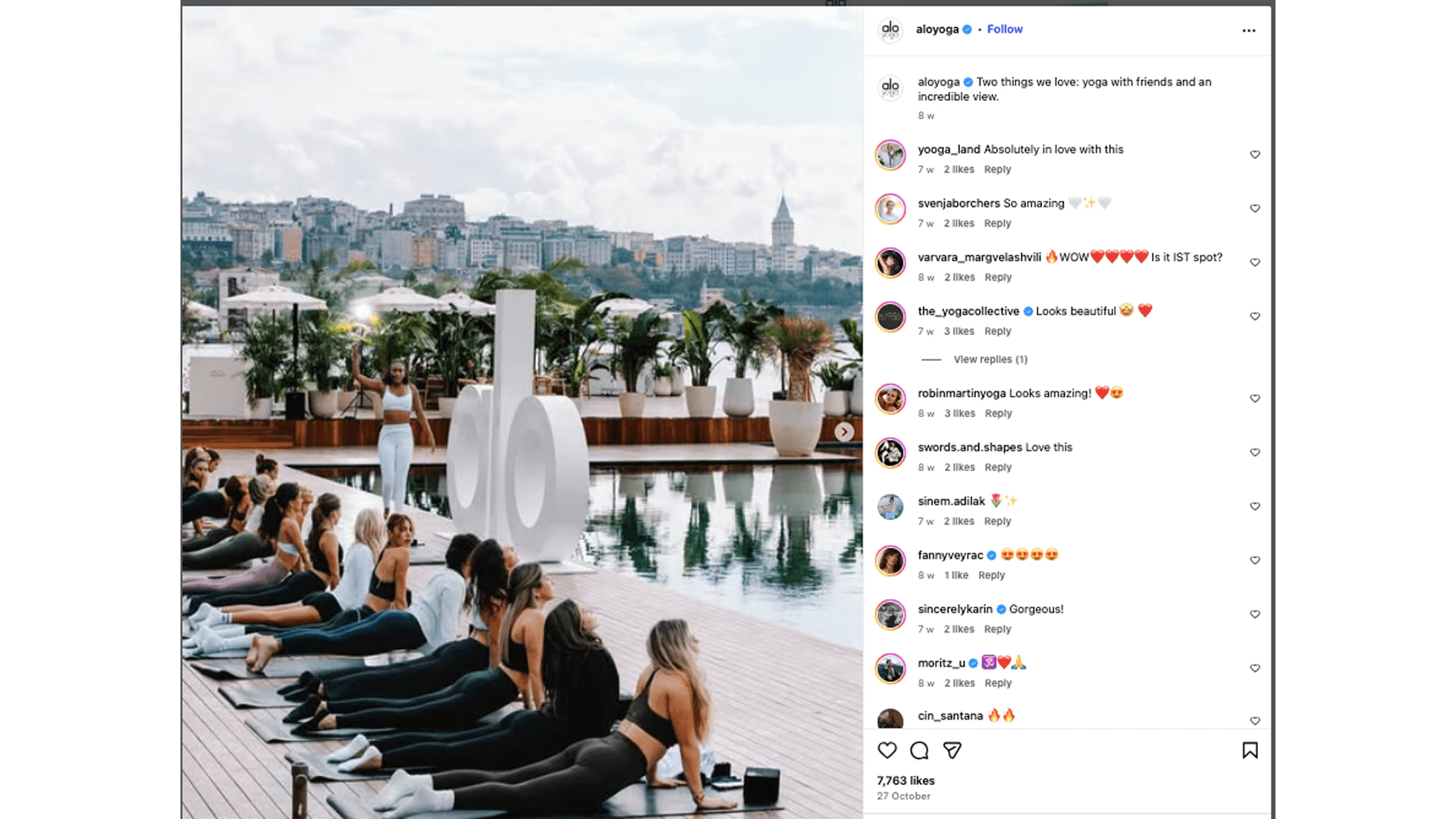
Alo Yoga regularly invites creators to in-person yoga sessions, studio openings, and wellness events. There’s no hard posting requirement. Weeks later, you’ll see creators casually wearing Alo in their daily routines or tagging the brand during workouts, because it’s already part of their lifestyle.
Nike Training Club and Nike Run Club events work the same way. Creators attend runs or training sessions offline, build real connections, and later reference the experience while sharing their fitness journeys.
Wellness and skincare brands like Glossier have hosted small community dinners, pop-ups, and invite-only experiences. Creators often mention the brand weeks later while discussing routines, skin changes, or self-care, without sounding sponsored.
Why this works
Real experiences create better, more detailed stories
Content feels observational, not transactional
Brand recall improves because the brand is tied to memory, not messaging
Practical tips
Host small, intimate experiences instead of big influencer-heavy launches
Design moments creators will remember, not just photograph
Remove posting pressure and let creators share when it feels natural
7. Audience Co-Creation Campaigns (Make the Community Visible)
Lifestyle brands grow faster when they stop behaving like broadcasters and start acting like hosts. At their core, lifestyle brands are shared identities. Audience co-creation campaigns tap into that feeling by inviting the community to actively shape the brand’s story.
A fitness brand might start the year with a simple prompt:
“What’s one habit you’re committing to this month?”
Creators kick off the conversation by sharing their own habits—morning walks, strength training, better sleep—but the spotlight quickly shifts to the audience. Followers reply in comments, Stories, and DMs. The brand then curates these responses into Reels, carousel posts, and Stories, turning everyday followers into the heroes of the campaign.
Brands like Nike, Peloton, and Gymshark do this exceptionally well. They regularly reshare audience workouts, progress photos, and personal milestones, making their communities feel visible.
Practical Tips
Use open-ended prompts instead of rigid contests
Feature audience stories consistently
Blend creator-led content with real community moments
How to Scale Influencer Marketing for Lifestyle Brands
Scaling influencer campaigns for lifestyle brands is tricky. The challenge isn’t just adding more creators, it’s keeping the human connection intact. Chaos kills trust faster than low ROI ever could.
Here’s how experts approach scaling smartly:
1. Systems Over Spreadsheets
Relying on spreadsheets or scattered documents for dozens of creators is chaotic and error-prone. Structured systems centralize everything—from contracts and content calendars to performance tracking and payments—so campaigns run smoothly.
Brands can easily monitor deadlines, approvals, and content status without chasing multiple messages.
2. Creator CRM: Build Deeper Relationships
Long-term influencer partnerships outperform one-off campaigns. A Creator CRM stores details such as audience demographics, engagement patterns, past collaborations, content style, and contact history. This helps brands personalize outreach and retain top-performing creators.
Example: If you are a skincare brand that wants to prioritize high-engagement creators consistently, then you should track 10 creators instead of fifty sporadic ones, resulting in better ROI and stronger brand trust.
3. Performance Tracking Beyond Immediate Sales
Lifestyle campaigns rarely show instant ROI. Brands must track metrics that indicate influence over time, including content saves, story replies, profile visits, website clicks, and repeat mentions.
Affiliate links can link content to measurable revenue while keeping posts authentic.
4. Build Reusable Content Libraries
Every piece of lifestyle content is an asset. So make sure you use them all in all possible formats and platforms.
You can do this by curating content by theme, creator, or campaign and then reuse these high-quality assets for multiple channels like social media, ads, email marketing, and landing pages.
5. Implement Affiliate & Ambassador Programs
There are plenty of ways to ensure creators stay with you for a long time. Affiliate links and ambassador programs are among the most proven ones. These incentivize creators to stay long-term.
You too can try this by offering recurring commissions, bonuses, or milestone rewards to motivate creators to produce authentic content consistently.
6. Standardize Processes Without Killing Creativity
Scaling doesn’t mean micromanaging. Clear briefs, timelines, and usage rights provide structure while giving creators the freedom to maintain their voice.
Define the approval process but avoid over-controlling the content. Brands that balance clarity with creative freedom see higher engagement and authentic campaigns.
How Impulze.ai Fits Into Lifestyle Influencer Marketing
Scaling lifestyle influencer campaigns can get messy fast. Managing dozens of creators, tracking long-term impact, and ensuring content authenticity is tough and spreadsheets and DMs only go so far.
This is where impulze.ai can be your partner. This influencer marketing platform can streamline your worlflow while also saving 10s of hours every week. Here’s a glimpse of how you can use impulze.ai for your lifestyle influencer marketing:
1. Finding Creators Who Already Match Your Lifestyle
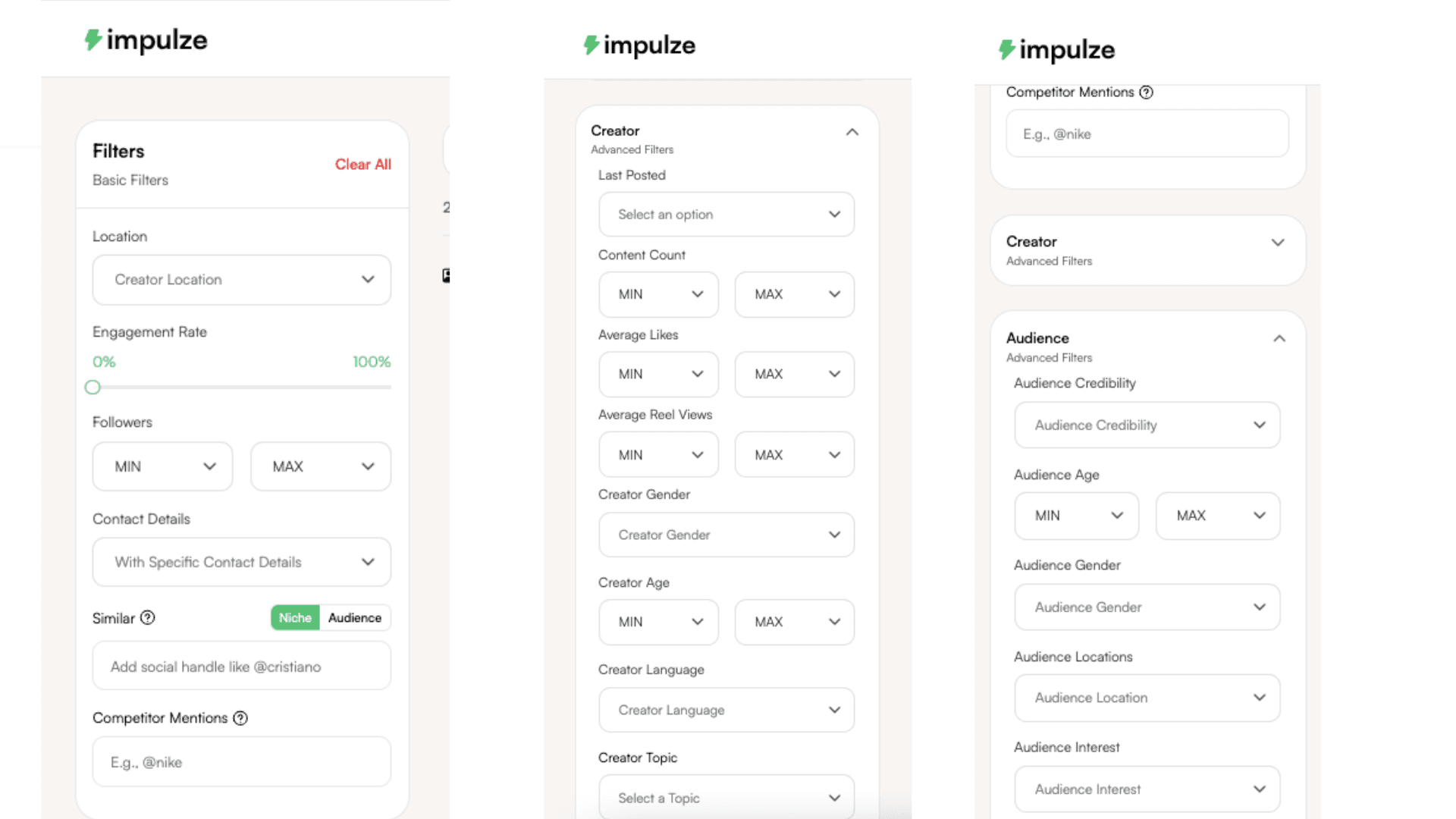
Instead of guessing which creators fit your brand, Impulze.ai filters profiles by niche, audience demographics, engagement quality, and past collaborations.

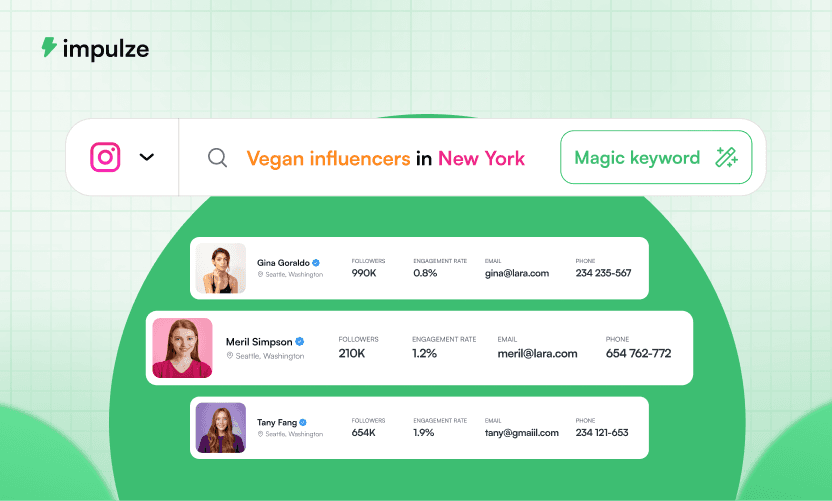
You can also search influencers by using relevant keywords and once you find a good match, you can use that profile to find similar influencers and accelerate your search.
2. Vetting Authenticity and Engagement
Once you have found and saved the influencers, you can use impulze.ai’s detailed profile reports to analyse if the influencer is genuine or not.
In the report, you can see metrics like engagement rate, their audience growth, audience demographics, follower quality, previous brand collaborations, and also notable followers.
All this helps you avoid wrong matches and work with creators who match your brand vibe and goals.
3. Outreach in Bulk
Outreach in impulze.ai is also pretty simple. Firstly, it’s an automated process wherein you only have to select the influencers whom you want to send a message, fill in some details about the campaign and just send. The rest of the things – from writing the mail to sending follow-ups – are managed by impulze.ai automatically.
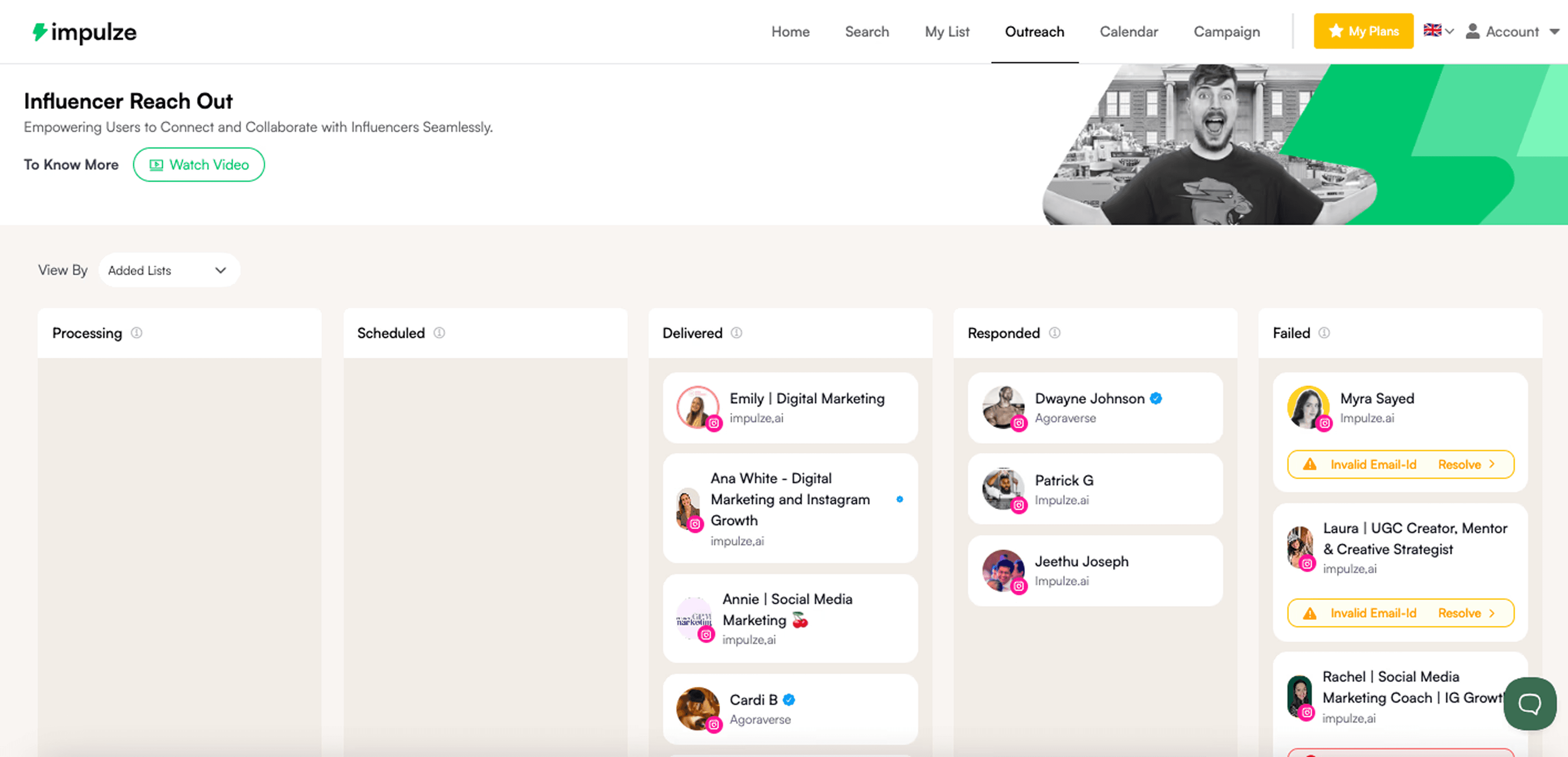
You also get access to a Kanban board where you can see all the communication stages and stay updated.
4. Managing Long-Term Relationships at Scale
Beyond influencer search, analysis, and outreach, impulze.ai also helps in managing influencer data and relationships. So be it tracking multiple contracts, deliverables, or sticking to posting schedules, it all becomes manageable with a centralized system.
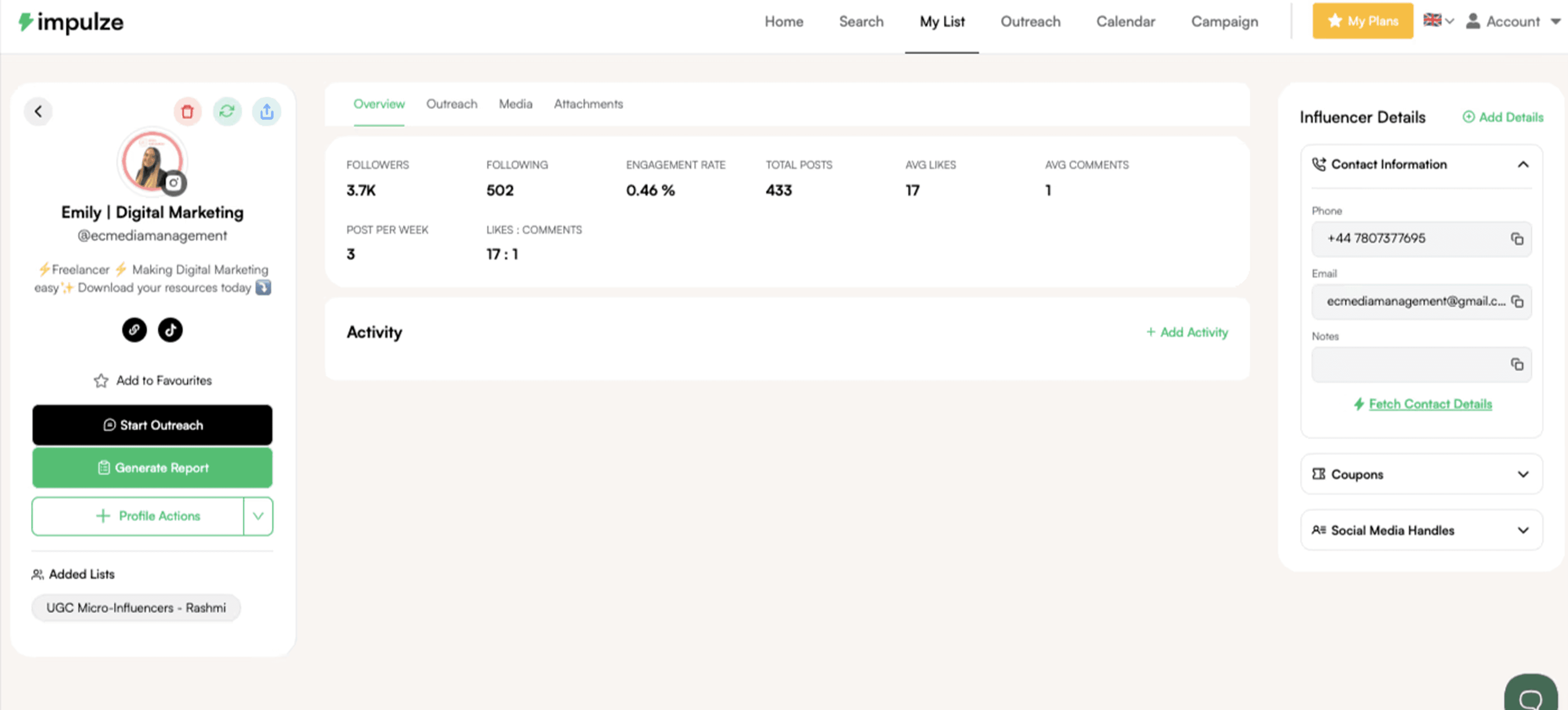
Using impulze.ai’s influencer CRM, lifestyle brands can prioritize ongoing partnerships, nurture top-performing creators, and maintain a consistent brand presence without micromanaging.
5. Tracking Performance Without Micromanaging
As impulze.ai is a proper influencer management platform too, you can also track the performance of the campaigns. You can see live impressions, clicks, and engagement as well for individual creators and as the overall performance of the campaign too.

You also get hashtag tracking, so you can track if a campaign is getting caught up in the trend or not. With this single dashboard, you can measure lifestyle influence over weeks or months, making slow-burn campaigns more transparent and easier to optimize.
The best part? You can try the platform by signing up for a free account and if you like it, then you can upgrade to a paid plan.
Don’t wait until the last minute — the earlier you start, the bigger your results. All the best!
Most influencer marketing advice is wrong for lifestyle brands.
The usual playbook—big creators, short campaigns, one-off posts—might work for launches or discounts. But lifestyle brands sell habits, identity, and consistency.
So, if your influencer strategy doesn’t reflect that, results will always feel underwhelming. To ensure you don’t make the same mistakes, we have created this guide that focuses on how experienced marketers rethink influencer marketing specifically for lifestyle brands and how you can use these influencer marketing strategies for your lifestyle brand.
Let’s begin!
Why Influencer Marketing Feels Different for Lifestyle Brands
Over the past few months, we wrote several articles around influencer marketing strategies for restaurants, wellness brands, gaming, and beauty brands. However, you would see that each one had a different approach.
The same goes for influencer marketing for lifestyle brands. And the biggest reason is the way people evaluate lifestyle brands. They don’t buy a product on instinct and stick to it for a long time. Rather, lifestyle brands are judged slowly—over time—through repeated exposure and subtle signals.
A skincare brand isn’t just assessed on results. It’s noticed on bathroom shelves.
A fitness brand isn’t judged by one workout. It shows up in routines, playlists, and recovery days.
A fashion or home brand becomes familiar long before it becomes purchased.
This is why influencer marketing feels different for lifestyle brands. The goal isn’t immediate persuasion. It’s sustained presence. For lifestyle brands, influence compounds. Trust builds through repetition.
Influencer Marketing Strategies for Lifestyle Brands That Actually Work
1. Invest in Customer UGC
Lifestyle brands thrive on believability, and nothing feels more believable than real customers. Unlike influencers, customers don’t have a “creator agenda.” For them, a reel created for your brand is not for getting more views but they are sharing their lives and habits with their “people”. That’s exactly why their content converts trust so well.
Take Cetaphil as an example. A large part of their content ecosystem isn’t influencer-heavy. It’s everyday people sharing skincare journeys, routine videos, before-and-after photos, and honest reviews. These reels don’t have perfect lines or perfect scripts, but that’s what makes them feel genuine and real.
Why this works
Customers talk like customers, not marketers
The content feels earned, not paid
It reassures hesitant buyers: “People like me use this”
Tips to do this well
Actively DM customers who tag your brand and ask permission to reuse their content
Incentivize UGC with store credits or feature shoutouts (not always money)
Build a UGC library and reuse top-performing content across ads, product pages, and emails
2. Build Habit Visibility
Lifestyle brands don’t win by explaining features. They win by quietly becoming part of someone’s routine. The moment your product shows up repeatedly in a creator’s daily life, it stops feeling optional.
For example, a wellness brand that appears every morning in a creator’s “get ready with me” or a protein brand that shows up in post-workout clips—without explanation—creates subconscious familiarity.
Why this works
Repetition builds recall
Habits feel more trustworthy than recommendations
Viewers imagine themselves using the product naturally
Tips to do this well
Ask creators to integrate your product into existing routines (don’t invent new ones)
Avoid heavy CTAs—let visibility do the work
Track frequency of appearance, not just engagement
Lifestyle influence grows quietly. That’s the point.
3. Fewer Creators, Longer Partnerships
One of the most common mistakes lifestyle brands make is chasing scale too early. There’s a temptation to work with dozens of creators at once—more faces, more reach, more posts. On paper, it looks like momentum. In reality, it often creates noise without memory.
Lifestyle influence doesn’t work like a product launch. People don’t make decisions after seeing something once. They notice patterns. They remember familiarity.
Imagine seeing the same creator use a brand consistently over six months. Not as the headline of every video, but as a quiet constant—on their shelf, in their routine, in the background of everyday content. Over time, that repetition changes perception. The brand stops feeling sponsored and starts feeling chosen.
This is where trust compounds. Audiences subconsciously think, “They’re still using it. It must be good.” That belief is far stronger than any one-off shoutout.
Long-term partnerships also change how creators talk about a brand. The content becomes more relaxed, more honest, and more integrated. Creators stop “introducing” the product and start referring to it naturally, the same way they would a favorite coffee or skincare staple.
For brands, this approach also creates better ROI clarity. Instead of measuring success post by post, you start seeing trends:
Higher recall over time
More meaningful comments
Repeat mentions without prompts
Better performance on retargeting and ads
Fewer creators doesn’t mean less reach. It means deeper influence per creator.
Practical Tips
Start with 5–10 creators and commit for 3–6 months
Look for creators whose lifestyle already matches your product, not those who need to “act it”
Measure performance across the partnership lifespan, not individual posts
4. Don’t Be Scripted (Let Creators Sound Like Themselves)
Nothing breaks trust faster than scripted influencer content. Audiences can sense brand language instantly—and they scroll past it.
Creators understand how their audience thinks, jokes, doubts, and decides. Your job is to give context, not control.
Why this works
Natural storytelling feels authentic
Creators maintain audience trust
Content performs better organically
Example
Instead of asking a creator to say:
“This product is dermatologist-approved and clinically tested”
Let them say:
“I’ve been using this for a few weeks, and my skin doesn’t feel irritated anymore.”
Same message. Completely different impact.
Practical Tips
Share talking points in the creator brief, not scripts
Allow creators to mention cons if relevant (it builds credibility)
Judge content by authenticity, not polish
Trust creators with creativity—or don’t collaborate at all.
5. Measure Lifestyle ROI Differently (Not Everything Converts Instantly)
Lifestyle influence is a slow burn. It doesn’t behave like a flash sale or a performance ad and that’s where many brands get it wrong. If you expect every influencer post to drive instant purchases, you’ll assume influencer marketing isn’t working. In reality, it is working, just not on an immediate checkout timeline.
When someone follows a lifestyle creator, they’re not in “buy mode” all the time. They’re observing. Absorbing. Noticing what keeps showing up. Purchase decisions often happen weeks later, sometimes after multiple exposures, sometimes when a personal need finally clicks.
That’s why judging lifestyle campaigns only by same-day sales misses most of the impact.
What to Measure
Saves: One of the strongest buying-intent signals. People save what they plan to come back to.
Comments asking questions: “Does this work for oily skin?” or “Is this available in India?” These are pre-purchase moments.
Profile visits after posts: Curiosity is a powerful indicator. People don’t visit profiles randomly.
Repeat brand mentions: When audiences start bringing your brand up themselves, influence is compounding.
To connect influence to revenue without forcing sales language, many lifestyle brands lean on affiliate links. They sit quietly in bios, Stories, or captions—available when the audience is ready, not pushed before they are.
Creators earn passively.
Brands track accurately.
And the content stays natural.
Practical tips
Assign affiliate links to creators you work with long-term
Track performance over 30–90 days, not 24 hours
Combine revenue data with qualitative signals like saves and comments
Note: We are launching the affiliate tracking feature soon, so you can handle both influencers and their sales ina single dashboard. Stay tuned for more!
6. Offline-to-Online Influence Loops
Some of the strongest lifestyle content actually starts offline.
When creators experience a brand in real life—through events, pop-ups, gyms, cafes, or retreats—the content they later share online feels natural, lived-in, and believable. There’s a big difference between being told what to post and having something worth talking about.
Real-world Examples
Alo Yoga regularly invites creators to in-person yoga sessions, studio openings, and wellness events. There’s no hard posting requirement. Weeks later, you’ll see creators casually wearing Alo in their daily routines or tagging the brand during workouts, because it’s already part of their lifestyle.
Nike Training Club and Nike Run Club events work the same way. Creators attend runs or training sessions offline, build real connections, and later reference the experience while sharing their fitness journeys.
Wellness and skincare brands like Glossier have hosted small community dinners, pop-ups, and invite-only experiences. Creators often mention the brand weeks later while discussing routines, skin changes, or self-care, without sounding sponsored.
Why this works
Real experiences create better, more detailed stories
Content feels observational, not transactional
Brand recall improves because the brand is tied to memory, not messaging
Practical tips
Host small, intimate experiences instead of big influencer-heavy launches
Design moments creators will remember, not just photograph
Remove posting pressure and let creators share when it feels natural
7. Audience Co-Creation Campaigns (Make the Community Visible)
Lifestyle brands grow faster when they stop behaving like broadcasters and start acting like hosts. At their core, lifestyle brands are shared identities. Audience co-creation campaigns tap into that feeling by inviting the community to actively shape the brand’s story.
A fitness brand might start the year with a simple prompt:
“What’s one habit you’re committing to this month?”
Creators kick off the conversation by sharing their own habits—morning walks, strength training, better sleep—but the spotlight quickly shifts to the audience. Followers reply in comments, Stories, and DMs. The brand then curates these responses into Reels, carousel posts, and Stories, turning everyday followers into the heroes of the campaign.
Brands like Nike, Peloton, and Gymshark do this exceptionally well. They regularly reshare audience workouts, progress photos, and personal milestones, making their communities feel visible.
Practical Tips
Use open-ended prompts instead of rigid contests
Feature audience stories consistently
Blend creator-led content with real community moments
How to Scale Influencer Marketing for Lifestyle Brands
Scaling influencer campaigns for lifestyle brands is tricky. The challenge isn’t just adding more creators, it’s keeping the human connection intact. Chaos kills trust faster than low ROI ever could.
Here’s how experts approach scaling smartly:
1. Systems Over Spreadsheets
Relying on spreadsheets or scattered documents for dozens of creators is chaotic and error-prone. Structured systems centralize everything—from contracts and content calendars to performance tracking and payments—so campaigns run smoothly.
Brands can easily monitor deadlines, approvals, and content status without chasing multiple messages.
2. Creator CRM: Build Deeper Relationships
Long-term influencer partnerships outperform one-off campaigns. A Creator CRM stores details such as audience demographics, engagement patterns, past collaborations, content style, and contact history. This helps brands personalize outreach and retain top-performing creators.
Example: If you are a skincare brand that wants to prioritize high-engagement creators consistently, then you should track 10 creators instead of fifty sporadic ones, resulting in better ROI and stronger brand trust.
3. Performance Tracking Beyond Immediate Sales
Lifestyle campaigns rarely show instant ROI. Brands must track metrics that indicate influence over time, including content saves, story replies, profile visits, website clicks, and repeat mentions.
Affiliate links can link content to measurable revenue while keeping posts authentic.
4. Build Reusable Content Libraries
Every piece of lifestyle content is an asset. So make sure you use them all in all possible formats and platforms.
You can do this by curating content by theme, creator, or campaign and then reuse these high-quality assets for multiple channels like social media, ads, email marketing, and landing pages.
5. Implement Affiliate & Ambassador Programs
There are plenty of ways to ensure creators stay with you for a long time. Affiliate links and ambassador programs are among the most proven ones. These incentivize creators to stay long-term.
You too can try this by offering recurring commissions, bonuses, or milestone rewards to motivate creators to produce authentic content consistently.
6. Standardize Processes Without Killing Creativity
Scaling doesn’t mean micromanaging. Clear briefs, timelines, and usage rights provide structure while giving creators the freedom to maintain their voice.
Define the approval process but avoid over-controlling the content. Brands that balance clarity with creative freedom see higher engagement and authentic campaigns.
How Impulze.ai Fits Into Lifestyle Influencer Marketing
Scaling lifestyle influencer campaigns can get messy fast. Managing dozens of creators, tracking long-term impact, and ensuring content authenticity is tough and spreadsheets and DMs only go so far.
This is where impulze.ai can be your partner. This influencer marketing platform can streamline your worlflow while also saving 10s of hours every week. Here’s a glimpse of how you can use impulze.ai for your lifestyle influencer marketing:
1. Finding Creators Who Already Match Your Lifestyle
Instead of guessing which creators fit your brand, Impulze.ai filters profiles by niche, audience demographics, engagement quality, and past collaborations.
You can also search influencers by using relevant keywords and once you find a good match, you can use that profile to find similar influencers and accelerate your search.
2. Vetting Authenticity and Engagement
Once you have found and saved the influencers, you can use impulze.ai’s detailed profile reports to analyse if the influencer is genuine or not.
In the report, you can see metrics like engagement rate, their audience growth, audience demographics, follower quality, previous brand collaborations, and also notable followers.
All this helps you avoid wrong matches and work with creators who match your brand vibe and goals.
3. Outreach in Bulk
Outreach in impulze.ai is also pretty simple. Firstly, it’s an automated process wherein you only have to select the influencers whom you want to send a message, fill in some details about the campaign and just send. The rest of the things – from writing the mail to sending follow-ups – are managed by impulze.ai automatically.
You also get access to a Kanban board where you can see all the communication stages and stay updated.
4. Managing Long-Term Relationships at Scale
Beyond influencer search, analysis, and outreach, impulze.ai also helps in managing influencer data and relationships. So be it tracking multiple contracts, deliverables, or sticking to posting schedules, it all becomes manageable with a centralized system.
Using impulze.ai’s influencer CRM, lifestyle brands can prioritize ongoing partnerships, nurture top-performing creators, and maintain a consistent brand presence without micromanaging.
5. Tracking Performance Without Micromanaging
As impulze.ai is a proper influencer management platform too, you can also track the performance of the campaigns. You can see live impressions, clicks, and engagement as well for individual creators and as the overall performance of the campaign too.
You also get hashtag tracking, so you can track if a campaign is getting caught up in the trend or not. With this single dashboard, you can measure lifestyle influence over weeks or months, making slow-burn campaigns more transparent and easier to optimize.
The best part? You can try the platform by signing up for a free account and if you like it, then you can upgrade to a paid plan.
Don’t wait until the last minute — the earlier you start, the bigger your results. All the best!
Frequently Asked Questions
What is influencer marketing for lifestyle brands and why does it work so well?

What is influencer marketing for lifestyle brands and why does it work so well?
Do lifestyle brands really need big influencers to see results?
Do lifestyle brands really need big influencers to see results?
How long does it take to see results from lifestyle influencer marketing?
How long does it take to see results from lifestyle influencer marketing?
What type of influencer content converts best for lifestyle brands?
What type of influencer content converts best for lifestyle brands?
How should lifestyle brands measure influencer ROI without killing authenticity?
How should lifestyle brands measure influencer ROI without killing authenticity?
Are long-term influencer partnerships worth the investment?
Are long-term influencer partnerships worth the investment?
How can lifestyle brands scale influencer marketing without losing control?
How can lifestyle brands scale influencer marketing without losing control?
Author Bio
Author Bio
Rashmi Singh
Rashmi Singh
Rashmi Singh is a writer and strategist with more than 7 years of experience. When not writing, she is either spending time with her friends or planning her next trip. You can learn more about her here.
Rashmi Singh is a writer and strategist with more than 7 years of experience. When not writing, she is either spending time with her friends or planning her next trip. You can learn more about her here.
We Also Recommend To Read