🥳 Skip the subscription. Pay $299 once for lifetime access— See lifetime plans
🥳 Skip the subscription. Pay $299 once for lifetime access—

5 MIN READ
Discovery
Discovery
How to Build a Brand Ambassador Program
How to Build a Brand Ambassador Program
How to Build a Brand Ambassador Program

Sections
Build your first creator list on Solo, $29 a month.

Blog in Short ⏱️
Blog in Short ⏱️
A quick glance at the highlights—perfect for when you're short on time.
A quick glance at the highlights—perfect for when you're short on time.
A brand ambassador program turns loyal customers and niche creators into long term advocates for your brand. This guide explains how to build one that actually scales.
• Define clear goals and success metrics before recruiting ambassadors
• Identify the right people based on audience fit, engagement, and genuine product affinity
• Find ambassadors among existing customers, micro creators, and niche communities
• Structure the program with clear deliverables, compensation, and communication
• Onboard ambassadors properly so they understand your brand and expectations
• Track meaningful metrics like referral sales, engagement, and retention
• Use the right tools to discover creators and manage relationships as your program grows
Most brands stumble into their first brand ambassador program by accident. A customer posts something glowing, it gets shared, sales tick up, and someone in the room says "we should do more of this."
What follows is usually a loose arrangement, a discount code here, a free product there, that eventually fizzles because nobody owns it.
That's not a program. That's a vibe.
A real brand ambassador program is structured, intentional, and built to compound over time. Done right, it becomes one of the highest-ROI marketing channels you have because you're not renting someone's audience for a week, you're building relationships with people who genuinely believe in what you sell.
Here's how to actually build one.
What Makes a Brand Ambassador Program Different From Influencer Marketing
The line can get blurry, so let's draw it clearly before we move ahead.
An influencer campaign is transactional. You find someone with an audience, agree on a deliverable, pay them, and move on. It can be incredibly effective for awareness, but there's no continuity. The moment the contract ends, so does the relationship.
A brand ambassador is someone who represents you consistently over time, not just when they're paid to. They show up in comment sections. They recommend you unprompted. They become associated with your brand in their community's mind.
The best example of this done well is Lululemon's early ambassador program.
Before they were a billion-dollar brand, they recruited local yoga instructors and fitness coaches with small but deeply loyal communities. They gave these creators product and a bit of support, and let them carry the brand into spaces Lululemon couldn't reach through ads. Those ambassadors weren't mega-influencers. They were trusted community figures. That's the model worth copying.
Step 1: Define What You Actually Want Before You Recruit Anyone
This sounds obvious. Brands skip it constantly.
Before you approach a single person, you need three things written down:
- What you're asking ambassadors to do:
Not vaguely ("create content and spread the word") but specifically.
How many posts per month?
What format: Reels, Stories, static?
Are they attending events?
Writing reviews?
Referring customers with a unique code?
The more specific you are here, the less you'll argue about expectations in month two.
- What success looks like:
Are you optimizing for UGC volume, referral sales, brand credibility in a specific niche, or event presence?
Each of those requires a different type of ambassador and a different structure. A DTC fitness brand recruiting for UGC needs creators who post consistently. A wellness brand building local community presence needs people with offline influence. These are not the same program, even if they share the same name.
- How you'll measure it
One of the most common mistakes brands make is tracking the wrong metrics. Impressions and total posts might look good in a report, but they rarely show whether your ambassador program is actually driving business results. Instead, focus on metrics that connect directly to growth.
Key metrics to track include:
• Referral conversions
How many sales or signups are coming directly from ambassador links or codes.
• Repeat purchase rate
Whether customers acquired through ambassadors come back and buy again.
• Content reuse rate
How often is the ambassador-created content reused in ads, social media, or email campaigns.
Define these KPIs before the program launches so everyone involved understands what success looks like from the start.
Step 2: Build Your Ambassador Persona Before You Search
Here's something most guides skip: before you go looking for ambassadors, write an internal document that describes your ideal one.
Not just demographics. Go deeper:
What are they already talking about online?
What brands are they already associated with?
What does their engagement look like — are their comments real conversations or generic "🔥🔥" responses?
What's their relationship with your category? Are they a casual user or genuinely embedded in the community?
Would someone in your target audience trust them specifically, or just find them entertaining?
This persona becomes your filter. Not every candidate needs to match perfectly, but they should share the core traits, otherwise you end up with a diverse group of ambassadors sending completely different signals about what your brand stands for.
Also Read: How to Find Your Ideal Influencer Profile (IIP)
Step 3: Find Ambassadors in the Three Places Most Brands Miss
1. Your existing customer base
Your best ambassadors are probably already buying from you. The problem is most brands look at this wrong. They look for customers with big followings rather than customers with genuine enthusiasm.
Look for customers who already show genuine enthusiasm for your brand. For example:
• Customers who tag your brand in posts without being asked
• People who leave detailed reviews instead of short comments like “great product”
• Followers who regularly reply to your Instagram Stories
• Customers who DM you to share feedback or their experience with the product
These are strong signals that the person already believes in what you sell. A brand ambassador program simply formalizes a relationship that is already there.
Practical tip: Search your follower list for micro and nano-creators. Anyone with 1,000+ followers who is already following you is a warm lead.
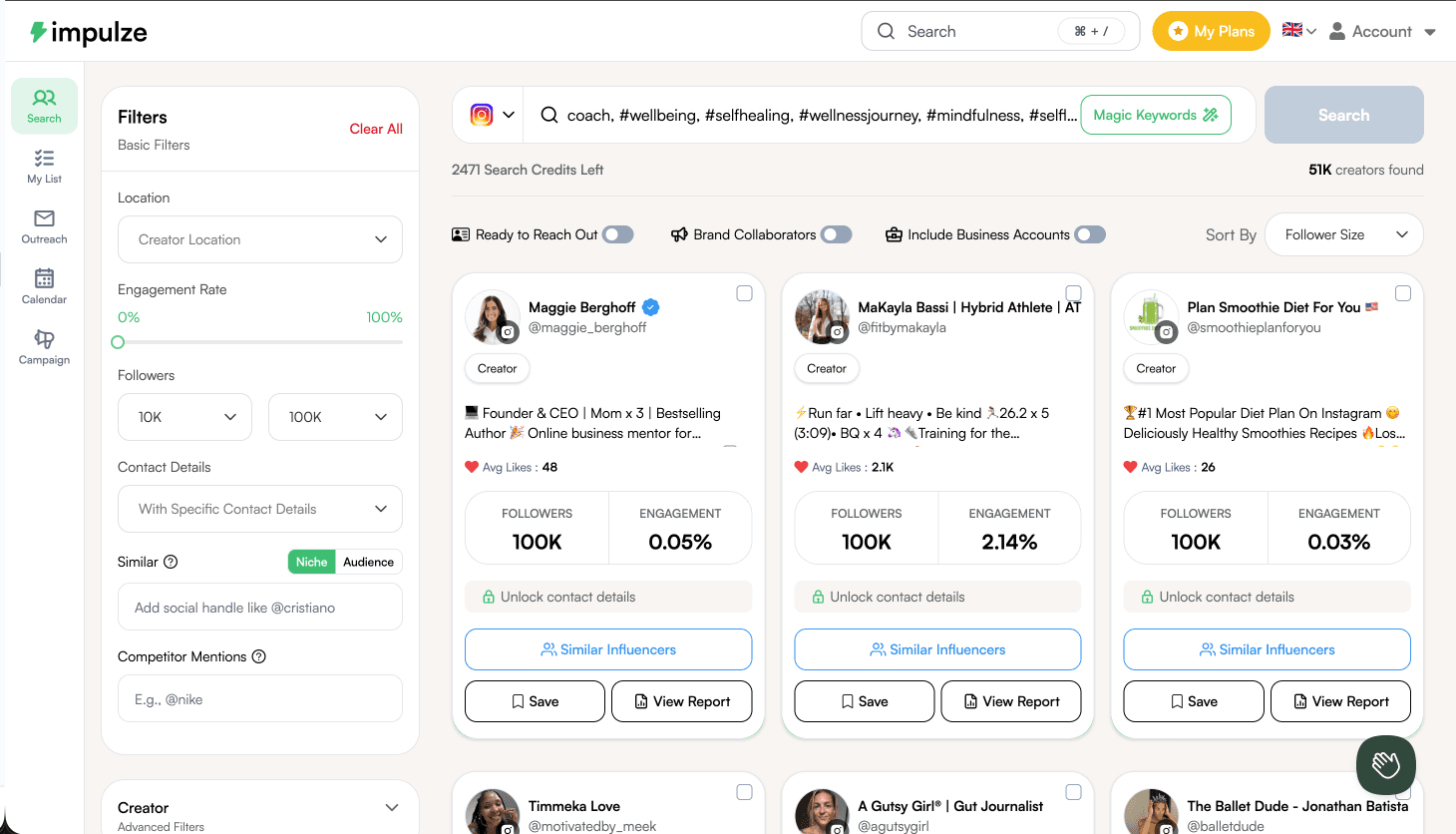
impulze.ai's discovery tool lets you do this at scale. Filter your existing audience by follower count, engagement rate, and niche, so you're not manually checking profiles one by one.
2. Micro and nano-creators in your exact niche
The data here is clear. Micro-influencers (10K–100K followers) average a 3.9% engagement rate compared to roughly 1.2% for macro-influencers.
For ambassador programs, that gap matters enormously. A creator with 12,000 engaged followers in your exact category will drive more meaningful attention than someone with 300,000 followers and a mixed audience.
The key filter isn't follower count, it's audience fit. Someone with 8,000 deeply engaged followers in UK sustainable skincare is more valuable to a sustainable beauty brand than someone with 80,000 followers in a general lifestyle. Relevance compounds over time in a way that raw reach doesn't.
3. Community spaces your target customer lives in
Reddit, Facebook groups, Substack communities, Discord servers, niche podcasts — wherever your target customer hangs out, there are people with influence who don't think of themselves as influencers yet. These are often your best finds.
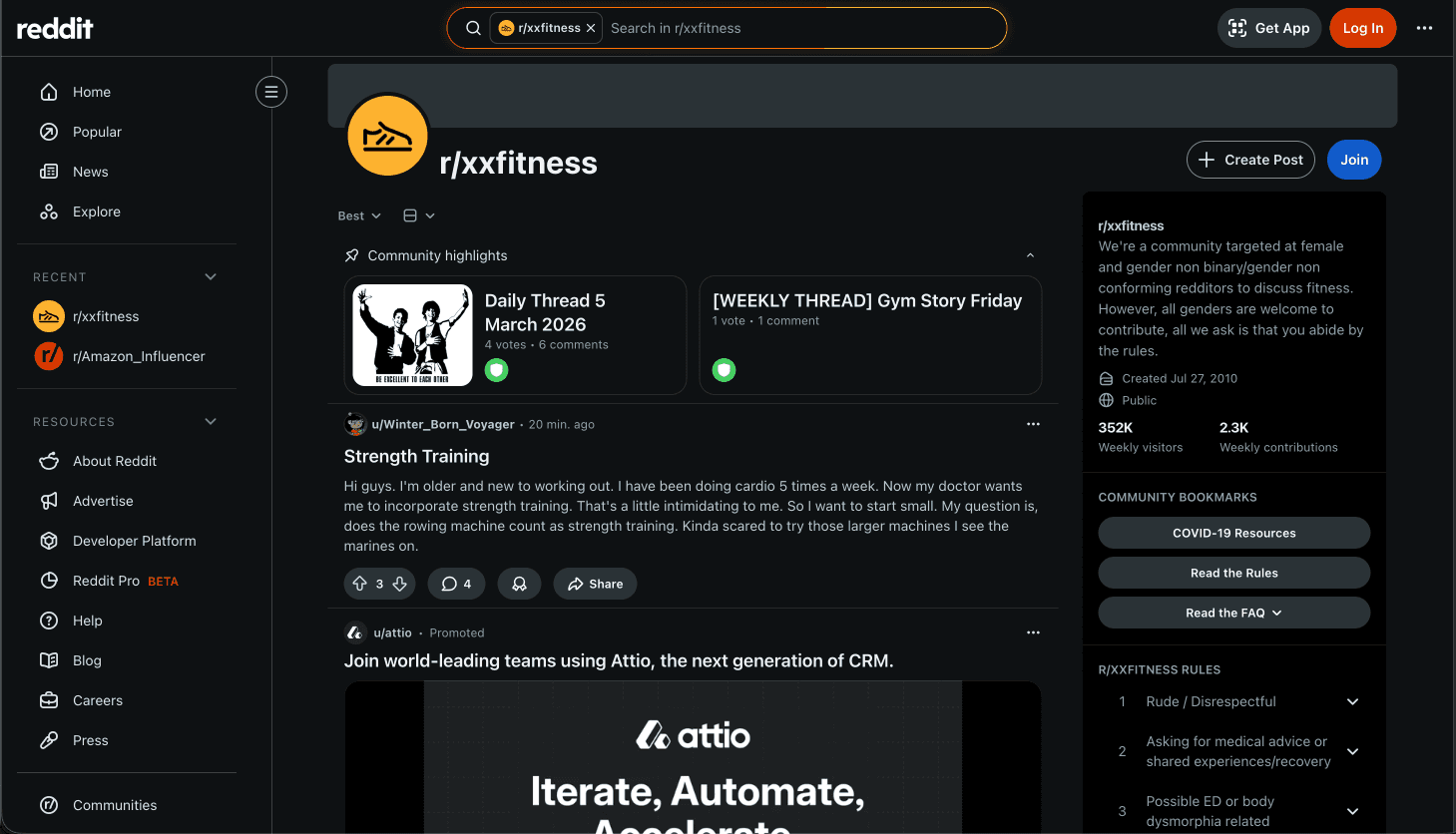
For instance, a fitness supplement brand mining r/xxfitness will find women who are trusted voices in that community, who already talk about nutrition and training daily, and whose recommendations feel nothing like advertising.
That kind of trust is almost impossible to buy but it's very possible to build a relationship with.
Also Read: How to Find Brand Ambassadors: A Step-by-Step Playbook for Brands
Step 4: Structure the Program Before the First Outreach Goes Out
This is where most programs fall apart.
Brands recruit before they've built the infrastructure, and then scramble to figure out expectations, payments, and communication rhythms while managing actual ambassadors. That scramble is what creates the month-three drop-off.
Write the program one-pager first
This is the document you'll share with every potential ambassador. It should answer:
What does being an ambassador for us actually involve? (Specific deliverables)
What do you get in return? (Specific compensation, not vague promises)
How long is the initial term? (3 or 6 months is standard)
How do we communicate? (One primary channel, not six)
What happens at the review point?
Keep it to one page.
If it takes three pages to explain, the program is too complicated.
Set up your tracking infrastructure before anyone starts
Every ambassador should have a unique promo code or UTM link from day one. This isn't just for measurement, it's how ambassadors know their work is being attributed to them. Nothing kills ambassador motivation faster than doing the work and feeling invisible.
Step 5: Build a Compensation Structure That Actually Retains People
Free product is a great entry point but it's not a retention strategy.
Here's a realistic compensation framework for DTC and mid-size brands at different stages:
- Starting out (under 20 ambassadors)
Offer product + a percentage commission on referral sales. For most consumer brands, 10–20% commission is a common starting point.
This approach works well early on because it keeps costs performance based while still giving ambassadors a clear financial incentive to promote your brand.
Key advantages of this structure:
• Keeps your program low risk and scalable
• Rewards ambassadors only when results happen
• Helps you quickly identify which ambassadors genuinely drive sales
A useful benchmark: if an ambassador is not generating at least their product value in referral revenue within 60 days, it may be worth reviewing their fit in the program.
- Scaling up (20–100 ambassadors)
Once you identify ambassadors who consistently perform, it makes sense to reward them with more stability.
At this stage, many brands introduce a flat monthly retainer for top performers, while still keeping the commission structure in place.
This hybrid model works well because it:
• Rewards consistent ambassadors who deliver strong content or sales
• Encourages ambassadors to prioritize your brand long term
• Maintains performance incentives through commissions
You can also layer additional perks for your best ambassadors:
• Early access to new product launches
• Higher commission tiers for top performers
• Opportunities to collaborate on campaigns or product feedback
These incentives help turn high performing ambassadors into long term brand advocates rather than one time promoters.
Beyond money, the stuff that actually drives retention:
Early access to new products before launch
Co-creation opportunities (collab products, naming input, campaign involvement)
A private community with other ambassadors — this is underestimated. People stay in programs where they feel like insiders and not contractors.
Public recognition also makes an impact. So feature ambassadors on your main channels, in your email list, in your retail environment.
Step 6: Onboard Properly
Most brands send an onboarding email, ship some product, and wait. That's not onboarding. That's mailing a package and hoping for the best.
A proper 30-day onboarding looks like this:
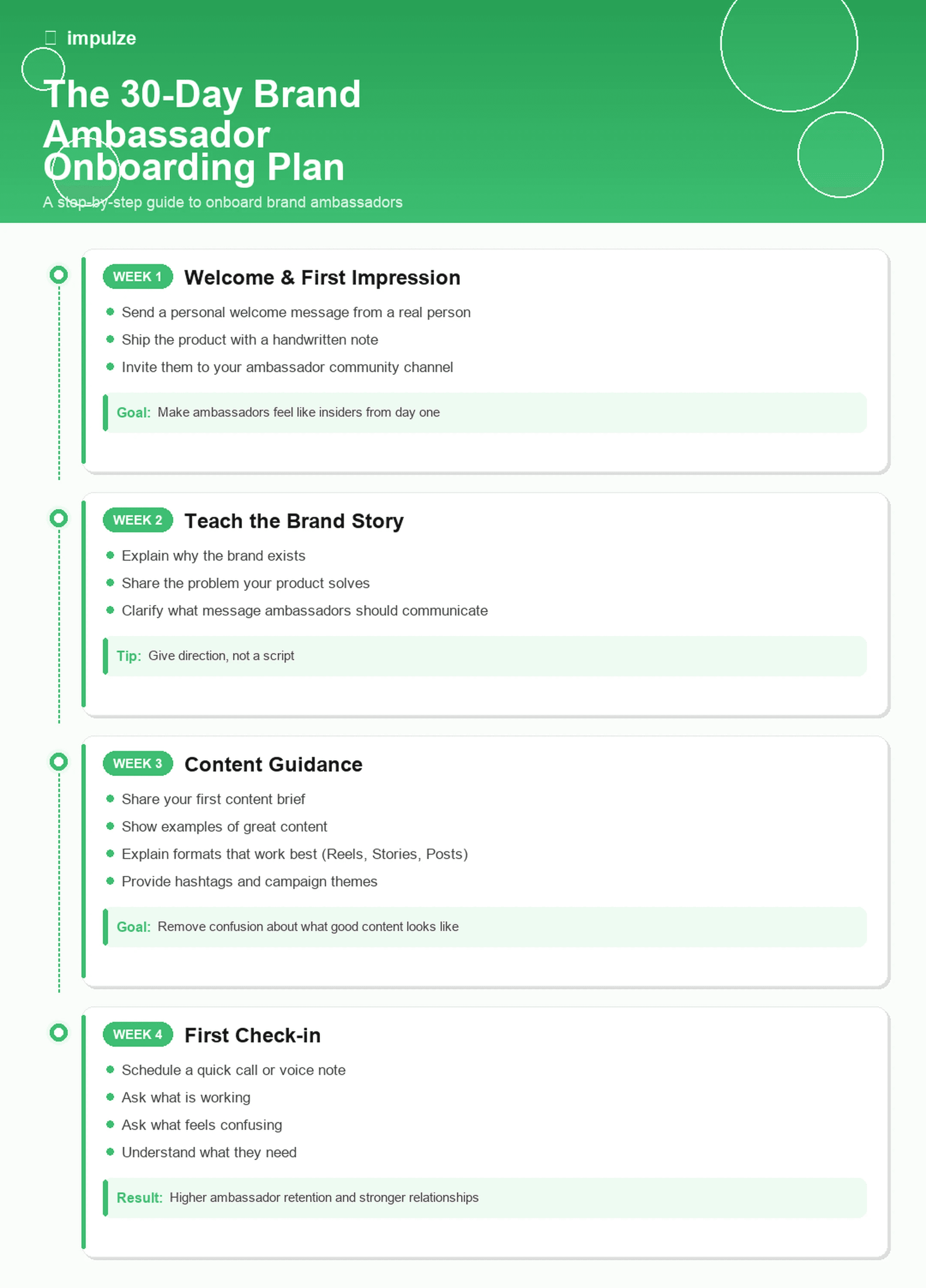
Week 1: Welcome message from a real person (not a template), product shipment with a handwritten note, access to the ambassador community channel.
Week 2: Brief on your brand story. Thi is not your boilerplate About page, but the actual reason the product exists and why it matters. What problem does it solve? What does the brand stand for? What do you want ambassadors to communicate? Give them content direction, not a script.
Week 3: First content brief with specific guidance. Share examples of content you love, formats that perform well on each platform, the hashtags you use. Leave room for their voice, but remove the ambiguity about what "good" looks like.
Week 4: First check-in call or voice note. Ask what's working, what feels off, what they need. This single step dramatically increases 90-day retention because it signals that the relationship is real.
The goal of month one isn't content. It's ensuring the ambassador understands the brand deeply enough that the content they create actually sounds like it belongs to your world.
Step 7: Manage Relationships, Not Just Deliverables
This is specifically where programs die at month three.
The launch is exciting. Everyone's posting, engagement is up, the team is happy. Then the novelty wears off, follow-ups get missed, the ambassador doesn't hear from you for six weeks, and the relationship quietly dies, usually without anyone formally ending it. The ambassador just gradually posts less until they stop entirely.
The fix is simple.
Monthly check-in: A short message asking how things are going, sharing what's happening at the brand, and flagging any upcoming campaigns they should know about.
Dedicated communication channel: Not email buried in spam, but a Slack group, WhatsApp channel, or Instagram broadcast, whatever your ambassadors actually use. The channel itself signals commitment.
Regular content from you to them: Preview of upcoming launches, behind-the-scenes content they can share, early access to campaigns before they go public.
The brands with the highest ambassador retention treat their program like a community, not a contractor list. When ambassadors feel connected to the brand and to each other, they stay and they do better work.
Managing 10 ambassadors manually across email and DMs is workable. Managing 40 is chaos.
impulze.ai's influencer management tools let you track every ambassador in one place — outreach history, content posted, relationship status, notes — so nothing slips through the cracks as the program grows.
Step 8: Measure the Right Things
Vanity metrics will lie to you. Impressions look great in a deck and mean very little if no one's converting.
For ambassador programs specifically, the metrics worth tracking quarterly:
Referral conversion rate: How many actual sales or signups came through ambassador links or codes. This is your primary signal of ROI.
Content quality and consistency: Are they posting what was agreed, at the agreed frequency? Drop-off in posting is usually the first sign of a disengaged ambassador — catch it early.
Audience engagement on ambassador posts: Not just reach, but whether their community is responding. Comments that ask questions, tag friends, or share personal experiences are the real indicator of audience trust.
Ambassador retention rate: What percentage of ambassadors are still active at the 90-day mark? At 6 months? If you're losing more than 30% by month three, something in your structure isn't working.
Qualitative signal: Are ambassadors generating genuine product feedback? The best ambassador programs become informal research panels, or you can say a brand's frontline intelligence about what customers actually think. So, don't underestimate this value.
Tools You Need to Run a Brand Ambassador Program
A strong strategy is important, but running a brand ambassador program without the right tools quickly becomes difficult to manage.
Once you move beyond a handful of ambassadors, tracking conversations, content, and performance manually across emails and spreadsheets becomes messy. The right tools help you stay organized and scale your program without losing visibility.
Here are the core tools most brands rely on.
Influencer discovery tools
Before you recruit ambassadors, you need a way to find the right people. Discovery tools help you search creators based on factors like:
• Niche Or Category
• Follower Size
• Engagement Rate
• Audience Demographics
• Location
This allows you to identify micro and nano creators who genuinely fit your brand without manually checking hundreds of profiles.
Outreach and relationship management
Ambassador programs rely heavily on communication. You will need a system to manage:
• Outreach Emails And Dms
• Conversation History
• Notes About Each Ambassador
• Relationship Status
Without a centralized system, conversations quickly get lost across Gmail, Instagram DMs, and spreadsheets.
Campaign and content tracking
Once ambassadors start posting, you need to track their activity. This includes:
• Content Published By Ambassadors
• Campaign Deliverables
• Engagement Metrics
• Posting Frequency
Campaign tracking tools help you monitor content and ensure ambassadors deliver what was agreed.
Referral and affiliate tracking
Most ambassador programs rely on referral links or discount codes. You will need tools that track:
• Referral Sales
• Clicks From Ambassador Links
• Commissions Earned
• Performance Of Individual Ambassadors
This ensures you reward ambassadors based on real results rather than guesswork.
Start Your Brand Ambassador Program Without the Complexity
Managing ambassador discovery, outreach, and relationships manually works when you have five ambassadors. It becomes chaotic once the program starts growing.
Tools like impulze.ai help brands:
• Discover relevant creators across millions of profiles
• Analyze audience quality and engagement
• Manage influencer and ambassador relationships in one place
• Track campaigns and content performance
You can start discovering creators for free, build your ambassador list, and upgrade only when your program begins to scale.
Start creator discovery for free with impulze.ai and upgrade later when you need more features.
Most brands stumble into their first brand ambassador program by accident. A customer posts something glowing, it gets shared, sales tick up, and someone in the room says "we should do more of this."
What follows is usually a loose arrangement, a discount code here, a free product there, that eventually fizzles because nobody owns it.
That's not a program. That's a vibe.
A real brand ambassador program is structured, intentional, and built to compound over time. Done right, it becomes one of the highest-ROI marketing channels you have because you're not renting someone's audience for a week, you're building relationships with people who genuinely believe in what you sell.
Here's how to actually build one.
What Makes a Brand Ambassador Program Different From Influencer Marketing
The line can get blurry, so let's draw it clearly before we move ahead.
An influencer campaign is transactional. You find someone with an audience, agree on a deliverable, pay them, and move on. It can be incredibly effective for awareness, but there's no continuity. The moment the contract ends, so does the relationship.
A brand ambassador is someone who represents you consistently over time, not just when they're paid to. They show up in comment sections. They recommend you unprompted. They become associated with your brand in their community's mind.
The best example of this done well is Lululemon's early ambassador program.
Before they were a billion-dollar brand, they recruited local yoga instructors and fitness coaches with small but deeply loyal communities. They gave these creators product and a bit of support, and let them carry the brand into spaces Lululemon couldn't reach through ads. Those ambassadors weren't mega-influencers. They were trusted community figures. That's the model worth copying.
Step 1: Define What You Actually Want Before You Recruit Anyone
This sounds obvious. Brands skip it constantly.
Before you approach a single person, you need three things written down:
- What you're asking ambassadors to do:
Not vaguely ("create content and spread the word") but specifically.
How many posts per month?
What format: Reels, Stories, static?
Are they attending events?
Writing reviews?
Referring customers with a unique code?
The more specific you are here, the less you'll argue about expectations in month two.
- What success looks like:
Are you optimizing for UGC volume, referral sales, brand credibility in a specific niche, or event presence?
Each of those requires a different type of ambassador and a different structure. A DTC fitness brand recruiting for UGC needs creators who post consistently. A wellness brand building local community presence needs people with offline influence. These are not the same program, even if they share the same name.
- How you'll measure it
One of the most common mistakes brands make is tracking the wrong metrics. Impressions and total posts might look good in a report, but they rarely show whether your ambassador program is actually driving business results. Instead, focus on metrics that connect directly to growth.
Key metrics to track include:
• Referral conversions
How many sales or signups are coming directly from ambassador links or codes.
• Repeat purchase rate
Whether customers acquired through ambassadors come back and buy again.
• Content reuse rate
How often is the ambassador-created content reused in ads, social media, or email campaigns.
Define these KPIs before the program launches so everyone involved understands what success looks like from the start.
Step 2: Build Your Ambassador Persona Before You Search
Here's something most guides skip: before you go looking for ambassadors, write an internal document that describes your ideal one.
Not just demographics. Go deeper:
What are they already talking about online?
What brands are they already associated with?
What does their engagement look like — are their comments real conversations or generic "🔥🔥" responses?
What's their relationship with your category? Are they a casual user or genuinely embedded in the community?
Would someone in your target audience trust them specifically, or just find them entertaining?
This persona becomes your filter. Not every candidate needs to match perfectly, but they should share the core traits, otherwise you end up with a diverse group of ambassadors sending completely different signals about what your brand stands for.
Also Read: How to Find Your Ideal Influencer Profile (IIP)
Step 3: Find Ambassadors in the Three Places Most Brands Miss
1. Your existing customer base
Your best ambassadors are probably already buying from you. The problem is most brands look at this wrong. They look for customers with big followings rather than customers with genuine enthusiasm.
Look for customers who already show genuine enthusiasm for your brand. For example:
• Customers who tag your brand in posts without being asked
• People who leave detailed reviews instead of short comments like “great product”
• Followers who regularly reply to your Instagram Stories
• Customers who DM you to share feedback or their experience with the product
These are strong signals that the person already believes in what you sell. A brand ambassador program simply formalizes a relationship that is already there.
Practical tip: Search your follower list for micro and nano-creators. Anyone with 1,000+ followers who is already following you is a warm lead.
impulze.ai's discovery tool lets you do this at scale. Filter your existing audience by follower count, engagement rate, and niche, so you're not manually checking profiles one by one.
2. Micro and nano-creators in your exact niche
The data here is clear. Micro-influencers (10K–100K followers) average a 3.9% engagement rate compared to roughly 1.2% for macro-influencers.
For ambassador programs, that gap matters enormously. A creator with 12,000 engaged followers in your exact category will drive more meaningful attention than someone with 300,000 followers and a mixed audience.
The key filter isn't follower count, it's audience fit. Someone with 8,000 deeply engaged followers in UK sustainable skincare is more valuable to a sustainable beauty brand than someone with 80,000 followers in a general lifestyle. Relevance compounds over time in a way that raw reach doesn't.
3. Community spaces your target customer lives in
Reddit, Facebook groups, Substack communities, Discord servers, niche podcasts — wherever your target customer hangs out, there are people with influence who don't think of themselves as influencers yet. These are often your best finds.
For instance, a fitness supplement brand mining r/xxfitness will find women who are trusted voices in that community, who already talk about nutrition and training daily, and whose recommendations feel nothing like advertising.
That kind of trust is almost impossible to buy but it's very possible to build a relationship with.
Also Read: How to Find Brand Ambassadors: A Step-by-Step Playbook for Brands
Step 4: Structure the Program Before the First Outreach Goes Out
This is where most programs fall apart.
Brands recruit before they've built the infrastructure, and then scramble to figure out expectations, payments, and communication rhythms while managing actual ambassadors. That scramble is what creates the month-three drop-off.
Write the program one-pager first
This is the document you'll share with every potential ambassador. It should answer:
What does being an ambassador for us actually involve? (Specific deliverables)
What do you get in return? (Specific compensation, not vague promises)
How long is the initial term? (3 or 6 months is standard)
How do we communicate? (One primary channel, not six)
What happens at the review point?
Keep it to one page.
If it takes three pages to explain, the program is too complicated.
Set up your tracking infrastructure before anyone starts
Every ambassador should have a unique promo code or UTM link from day one. This isn't just for measurement, it's how ambassadors know their work is being attributed to them. Nothing kills ambassador motivation faster than doing the work and feeling invisible.
Step 5: Build a Compensation Structure That Actually Retains People
Free product is a great entry point but it's not a retention strategy.
Here's a realistic compensation framework for DTC and mid-size brands at different stages:
- Starting out (under 20 ambassadors)
Offer product + a percentage commission on referral sales. For most consumer brands, 10–20% commission is a common starting point.
This approach works well early on because it keeps costs performance based while still giving ambassadors a clear financial incentive to promote your brand.
Key advantages of this structure:
• Keeps your program low risk and scalable
• Rewards ambassadors only when results happen
• Helps you quickly identify which ambassadors genuinely drive sales
A useful benchmark: if an ambassador is not generating at least their product value in referral revenue within 60 days, it may be worth reviewing their fit in the program.
- Scaling up (20–100 ambassadors)
Once you identify ambassadors who consistently perform, it makes sense to reward them with more stability.
At this stage, many brands introduce a flat monthly retainer for top performers, while still keeping the commission structure in place.
This hybrid model works well because it:
• Rewards consistent ambassadors who deliver strong content or sales
• Encourages ambassadors to prioritize your brand long term
• Maintains performance incentives through commissions
You can also layer additional perks for your best ambassadors:
• Early access to new product launches
• Higher commission tiers for top performers
• Opportunities to collaborate on campaigns or product feedback
These incentives help turn high performing ambassadors into long term brand advocates rather than one time promoters.
Beyond money, the stuff that actually drives retention:
Early access to new products before launch
Co-creation opportunities (collab products, naming input, campaign involvement)
A private community with other ambassadors — this is underestimated. People stay in programs where they feel like insiders and not contractors.
Public recognition also makes an impact. So feature ambassadors on your main channels, in your email list, in your retail environment.
Step 6: Onboard Properly
Most brands send an onboarding email, ship some product, and wait. That's not onboarding. That's mailing a package and hoping for the best.
A proper 30-day onboarding looks like this:
Week 1: Welcome message from a real person (not a template), product shipment with a handwritten note, access to the ambassador community channel.
Week 2: Brief on your brand story. Thi is not your boilerplate About page, but the actual reason the product exists and why it matters. What problem does it solve? What does the brand stand for? What do you want ambassadors to communicate? Give them content direction, not a script.
Week 3: First content brief with specific guidance. Share examples of content you love, formats that perform well on each platform, the hashtags you use. Leave room for their voice, but remove the ambiguity about what "good" looks like.
Week 4: First check-in call or voice note. Ask what's working, what feels off, what they need. This single step dramatically increases 90-day retention because it signals that the relationship is real.
The goal of month one isn't content. It's ensuring the ambassador understands the brand deeply enough that the content they create actually sounds like it belongs to your world.
Step 7: Manage Relationships, Not Just Deliverables
This is specifically where programs die at month three.
The launch is exciting. Everyone's posting, engagement is up, the team is happy. Then the novelty wears off, follow-ups get missed, the ambassador doesn't hear from you for six weeks, and the relationship quietly dies, usually without anyone formally ending it. The ambassador just gradually posts less until they stop entirely.
The fix is simple.
Monthly check-in: A short message asking how things are going, sharing what's happening at the brand, and flagging any upcoming campaigns they should know about.
Dedicated communication channel: Not email buried in spam, but a Slack group, WhatsApp channel, or Instagram broadcast, whatever your ambassadors actually use. The channel itself signals commitment.
Regular content from you to them: Preview of upcoming launches, behind-the-scenes content they can share, early access to campaigns before they go public.
The brands with the highest ambassador retention treat their program like a community, not a contractor list. When ambassadors feel connected to the brand and to each other, they stay and they do better work.
Managing 10 ambassadors manually across email and DMs is workable. Managing 40 is chaos.
impulze.ai's influencer management tools let you track every ambassador in one place — outreach history, content posted, relationship status, notes — so nothing slips through the cracks as the program grows.
Step 8: Measure the Right Things
Vanity metrics will lie to you. Impressions look great in a deck and mean very little if no one's converting.
For ambassador programs specifically, the metrics worth tracking quarterly:
Referral conversion rate: How many actual sales or signups came through ambassador links or codes. This is your primary signal of ROI.
Content quality and consistency: Are they posting what was agreed, at the agreed frequency? Drop-off in posting is usually the first sign of a disengaged ambassador — catch it early.
Audience engagement on ambassador posts: Not just reach, but whether their community is responding. Comments that ask questions, tag friends, or share personal experiences are the real indicator of audience trust.
Ambassador retention rate: What percentage of ambassadors are still active at the 90-day mark? At 6 months? If you're losing more than 30% by month three, something in your structure isn't working.
Qualitative signal: Are ambassadors generating genuine product feedback? The best ambassador programs become informal research panels, or you can say a brand's frontline intelligence about what customers actually think. So, don't underestimate this value.
Tools You Need to Run a Brand Ambassador Program
A strong strategy is important, but running a brand ambassador program without the right tools quickly becomes difficult to manage.
Once you move beyond a handful of ambassadors, tracking conversations, content, and performance manually across emails and spreadsheets becomes messy. The right tools help you stay organized and scale your program without losing visibility.
Here are the core tools most brands rely on.
Influencer discovery tools
Before you recruit ambassadors, you need a way to find the right people. Discovery tools help you search creators based on factors like:
• Niche Or Category
• Follower Size
• Engagement Rate
• Audience Demographics
• Location
This allows you to identify micro and nano creators who genuinely fit your brand without manually checking hundreds of profiles.
Outreach and relationship management
Ambassador programs rely heavily on communication. You will need a system to manage:
• Outreach Emails And Dms
• Conversation History
• Notes About Each Ambassador
• Relationship Status
Without a centralized system, conversations quickly get lost across Gmail, Instagram DMs, and spreadsheets.
Campaign and content tracking
Once ambassadors start posting, you need to track their activity. This includes:
• Content Published By Ambassadors
• Campaign Deliverables
• Engagement Metrics
• Posting Frequency
Campaign tracking tools help you monitor content and ensure ambassadors deliver what was agreed.
Referral and affiliate tracking
Most ambassador programs rely on referral links or discount codes. You will need tools that track:
• Referral Sales
• Clicks From Ambassador Links
• Commissions Earned
• Performance Of Individual Ambassadors
This ensures you reward ambassadors based on real results rather than guesswork.
Start Your Brand Ambassador Program Without the Complexity
Managing ambassador discovery, outreach, and relationships manually works when you have five ambassadors. It becomes chaotic once the program starts growing.
Tools like impulze.ai help brands:
• Discover relevant creators across millions of profiles
• Analyze audience quality and engagement
• Manage influencer and ambassador relationships in one place
• Track campaigns and content performance
You can start discovering creators for free, build your ambassador list, and upgrade only when your program begins to scale.
Start creator discovery for free with impulze.ai and upgrade later when you need more features.
Frequently Asked Questions
What is a brand ambassador program?

What is a brand ambassador program?
How is a brand ambassador different from an influencer?
How is a brand ambassador different from an influencer?
How many ambassadors should I start with?
How many ambassadors should I start with?
What should I offer brand ambassadors?
What should I offer brand ambassadors?
How do I find the right people for a brand ambassador program?
How do I find the right people for a brand ambassador program?
We Also Recommend To Read