🥳 Skip the subscription. Pay $299 once for lifetime access— See lifetime plans
🥳 Skip the subscription. Pay $299 once for lifetime access—

Jan 28, 2026
7 MIN READ
Data & Insights
Data & Insights
How Deaf Influencer Marketing Works (And What Brands Usually Miss)
How Deaf Influencer Marketing Works (And What Brands Usually Miss)
How Deaf Influencer Marketing Works (And What Brands Usually Miss)
Rashmi Singh
Rashmi Singh
Rashmi Singh
Content Marketer @impulze.ai
Sections
Blog in Short ⏱️
Blog in Short ⏱️
A quick glance at the highlights—perfect for when you're short on time.
A quick glance at the highlights—perfect for when you're short on time.
Most people think deaf influencer marketing is about adding captions at the end. However, that's not the case. It’s about designing campaigns that work visually from the very beginning. When accessibility is treated as a checkbox, content may look inclusive but rarely feels inclusive to Deaf and hard of hearing audiences. The real impact comes when Deaf creators help shape the message, not just translate it.
Key takeaways:
Build campaigns for sound-off viewing using visual clarity, pacing, and context
Don’t rely only on captions. They miss emotion, tone, and cultural meaning
Trust Deaf creators to communicate in their own language and style
Measure success by clarity, understanding, and community response, not just views
Focus on long-term partnerships instead of one-off inclusive moments
When accessibility is intentional, Deaf influencer marketing feels natural, respectful, and genuinely effective.
There are over 430 million deaf and hard-of-hearing people worldwide, yet accessibility in influencer marketing is still often treated as a last step. A caption added late or a small fix, after the campaign is already planned.
Deaf influencer marketing shows why this way of thinking falls short. It highlights a simple truth: when accessibility is treated as an afterthought, the content may look inclusive, but it rarely feels that way to the audience it’s meant for.
This gap is where many well-meaning campaigns lose impact.
So what does it actually look like when Deaf influencer marketing is done right, and where do brands usually miss the mark?
Let’s break it down.
How Deaf Influencer Marketing Actually Works
When Deaf influencer marketing works, it rarely feels like a campaign. Instead, it feels like a creator sharing something useful, familiar, or meaningful with their community.
That’s because these campaigns are designed for visual understanding from the very beginning. Deaf and hard-of-hearing audiences don’t rely on sound to make sense of content. They rely on facial expressions, pacing, clarity, and visual context.
This is why Deaf creators play such an important role. They aren’t brought in to translate a brand’s message after the fact. They help shape how the message is told in the first place.
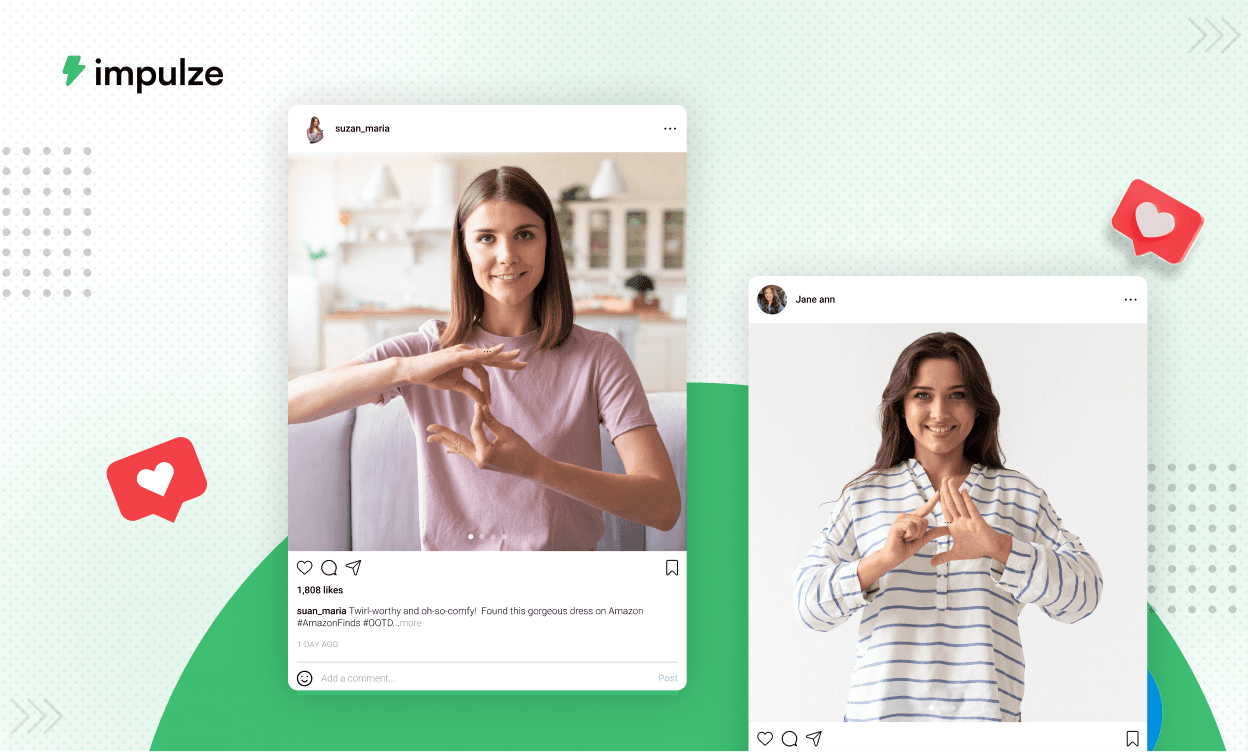
Moreover, deaf influencers understand that sign language isn’t a word-for-word version of spoken language. It has its own rhythm, emotional depth, and cultural meaning. Here’s an example:
You can clearly see that in the deaf creator’s video, nothing feels rushed. She is not conveying the words but the emotions of the song. Even hearing viewers often find this type of content easier to understand because it is so visually intentional.
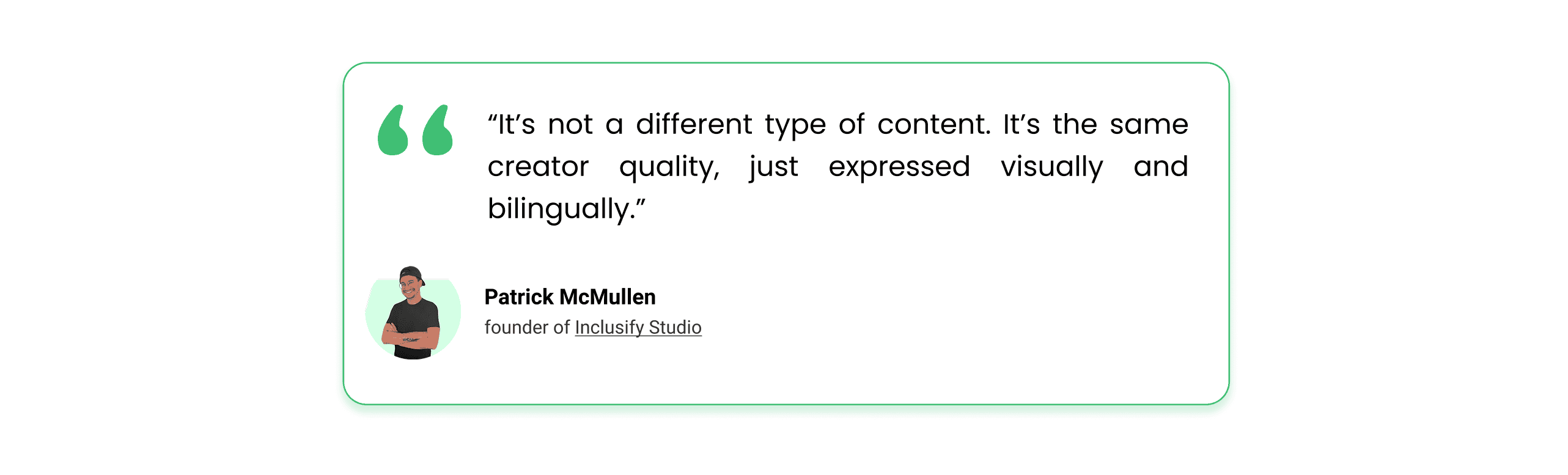
As Patrick McMullen, founder of Inclusify Studio (the first Deaf influencer marketing agency), puts it:
Context also plays a big role.
Many Deaf influencer campaigns spend more time explaining why something matters before promoting it. Creators talk about how a product fits into their daily life or why it’s personally useful to them. That extra context makes the content feel informative rather than sales-driven, and that’s what builds real trust.
The Checkbox Problem: Where Brands Usually Miss the Mark
Most brands do not fail at deaf influencer marketing because they lack good intentions. They fail because either they are not aware of how to approach it, or they treat it as a task to complete. This often results in campaigns that look inclusive on the surface but feel disconnected in practice.
Accessibility shows up too late
One of the most common issues is timing.
Accessibility usually enters the conversation after the campaign idea is already locked. The visuals are approved, the script is final, and then someone asks if captions can be added.
At that point, accessibility ends up being a patch and not a foundation. The content may technically exist for Deaf audiences, but it is still built for hearing-first consumption.
Read More: Guidelines to Make Influencer Content Accessible
Captions are treated as the solution
Relying solely on captions is a common trap. Many campaigns assume that adding text at the bottom of a video checks the accessibility box.
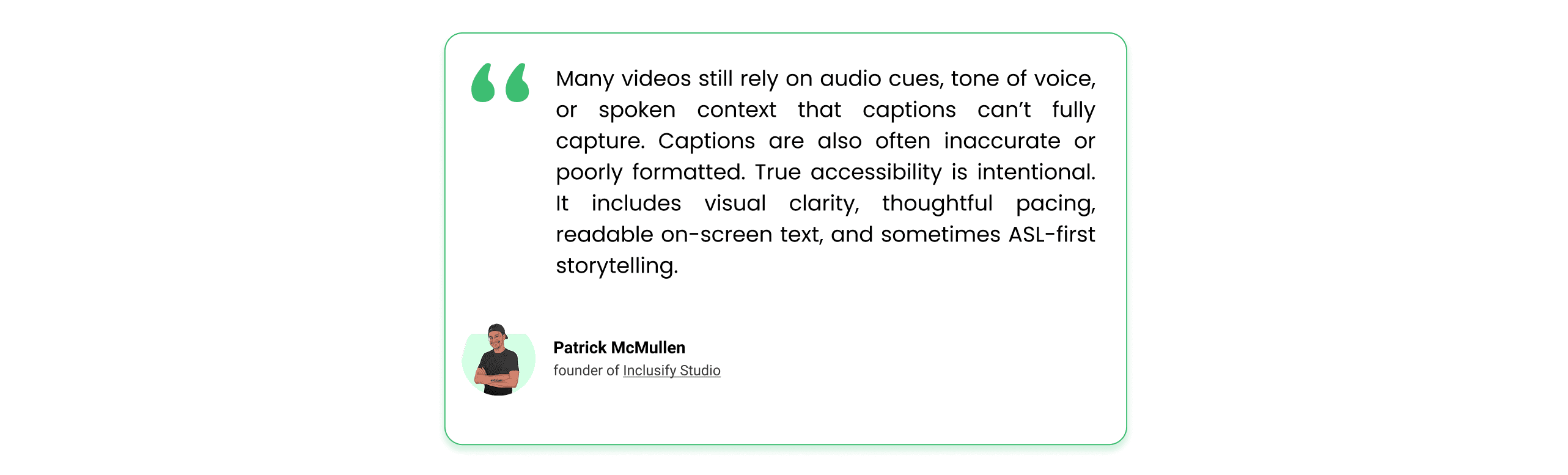
In reality, captions often miss nuances like tone, emotion, or spoken context, that that are crucial for understanding.
Patrick McMullen explains this:
Controlling the message instead of trusting the creator
Another frequent misstep is over-controlling how Deaf creators communicate. The message is already defined, the format is fixed, and the creator is expected to fit their language and expression into a pre-approved mold.
This approach often feels inauthentic. Creators can immediately tell when they are being asked to perform a version of accessibility that serves the brand more than the audience. As Patrick points out, this is a common red flag and one of the main reasons creators turn down collaborations.
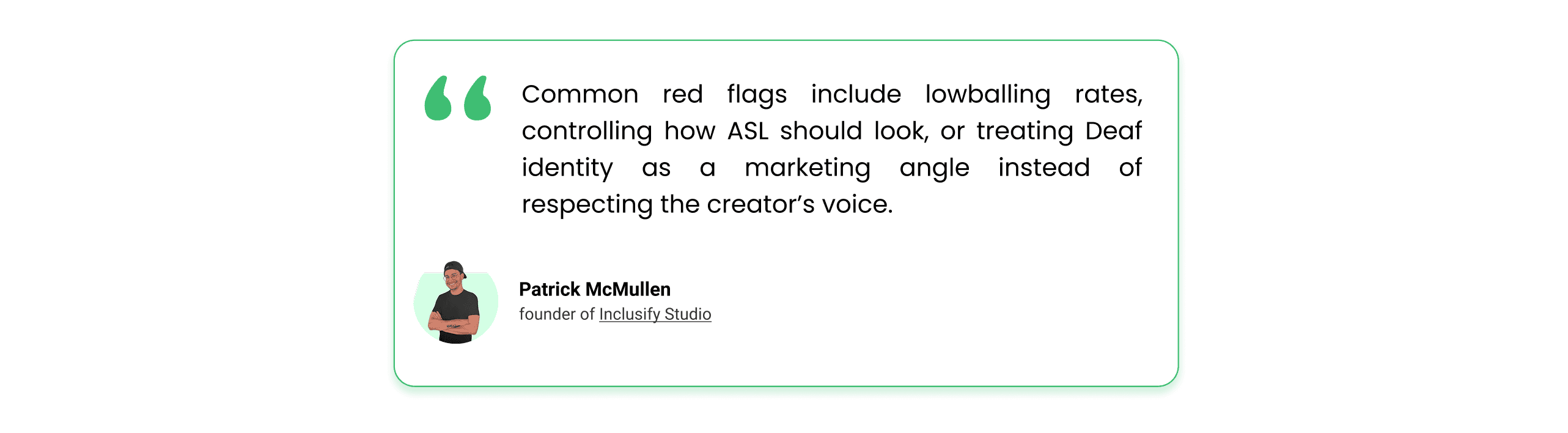
When brands try to control the message instead of trusting the creator, the content often feels forced or overly instructional. In contrast, giving creators the space to communicate in their own way leads to content that feels natural and genuinely connects with the community.
Brands look at the wrong success signals
Finally, many brands evaluate deaf influencer campaigns using the same metrics they apply everywhere else. Views increase, reach looks healthy, and the campaign is quickly labeled a success.
But surface-level numbers don’t tell the full story. If the comments show confusion, lack context, or meaningful engagement is missing altogether, something didn’t land.
When brands ignore signals like clarity, understanding, and community response, they miss what actually defines success in Deaf influencer marketing.
What Brands Should Do Differently
The fix is not complicated, but it does require a shift in how brands think about creators, accessibility, and collaboration.
1. Start with intent, not optics
The first shift brands need to make is internal.
Deaf influencer marketing works best when it is driven by intent, not appearance. If the goal is to look inclusive, the campaign usually feels surface-level. If the goal is to connect with a real audience, the decisions that follow are very different.
Brands that get this right spend time listening before launching. They ask creators what works, what does not, and what the community cares about. That curiosity shows up in the final content.
2. Design campaigns to work without sound
Instead of asking how to “add accessibility,” brands should ask one simple question: Would this campaign still make sense if someone watched it with the sound off?
When the answer is yes, the campaign is already on the right track.
Messaging becomes clearer, visuals become more intentional, and nothing important is hidden in voice-overs or music. This approach does not just benefit Deaf audiences. It often improves performance for hearing audiences who scroll with sound muted as well.
3. Invest in a long-term partnership, not a one-time show-off
One-off collaborations rarely build trust, especially in closely connected communities. Deaf influencer marketing works better when brands commit to ongoing partnerships.
Working with the same creators over time helps brands understand how the content works, what feels authentic, and what resonates with the audience. It also creates stronger relationships with creators, which leads to better content and more honest feedback.
Take Starbucks as an example. Instead of a one-off campaign, they’ve made accessibility part of their ongoing presence. Through Signing Stores and regular content featuring Deaf baristas and creators, sign language and Deaf culture show up naturally in their brand story.
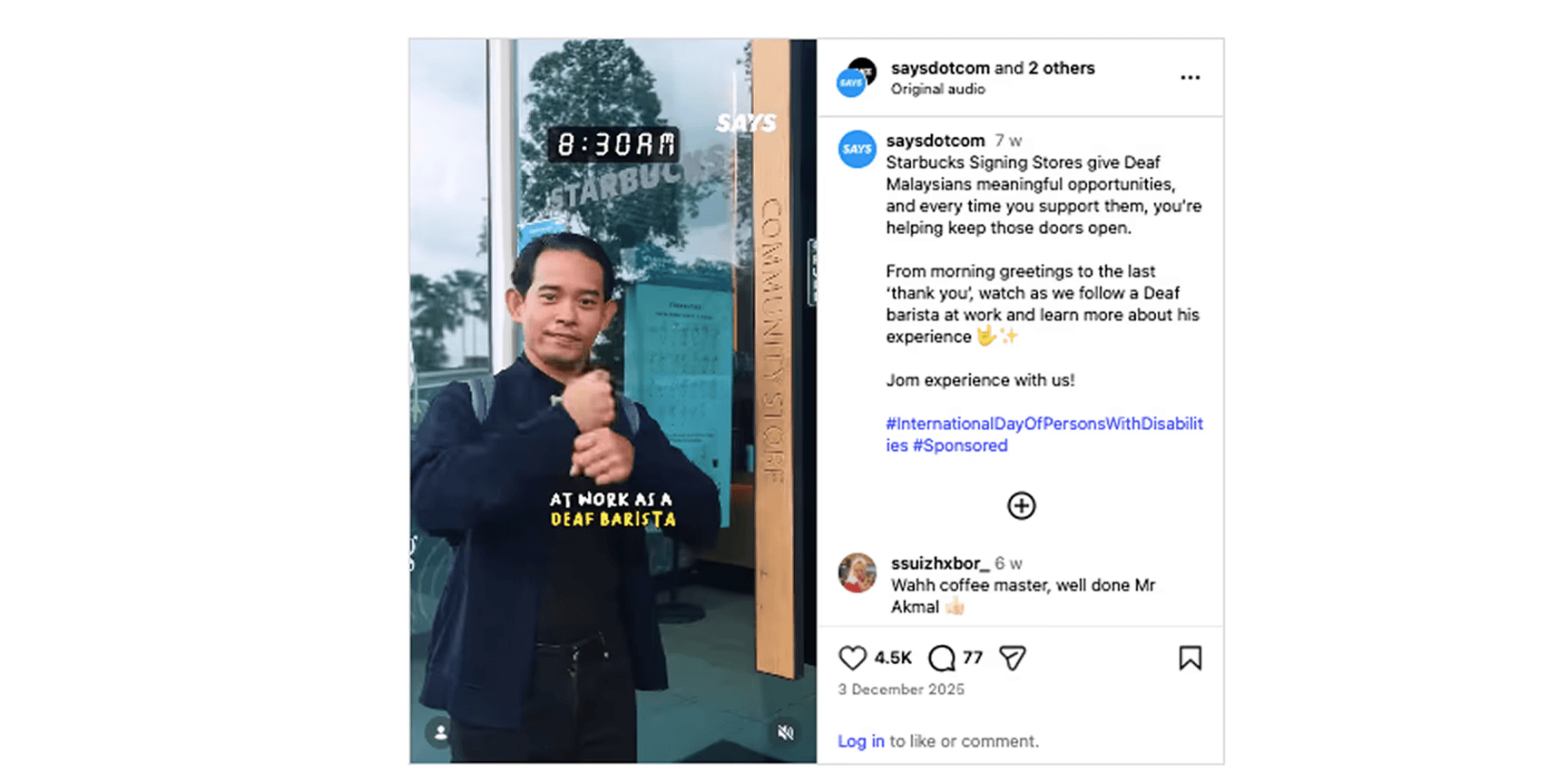
That consistency has helped build real trust over time, with the biggest impact often coming years into the relationship,
4. Treat Deaf creators like any other professional creator
Deaf creators should not be treated as a “special category” or a learning exercise. They are professional creators with their own style, audience, and expertise.
Brands should pay them fairly, respect timelines, and involve them in creative discussions just like they would with any other influencer. When creators are treated as equals, the content naturally feels more confident and authentic.
5. Work with people who know how to do it
Finally, brands do not need to figure everything out on their own. Working with agencies or experts who understand Deaf creator communities can make a huge difference.
For example, brands that partner with Deaf-led agencies or consultants avoid many common missteps. They get better briefs, smoother collaboration, and content that actually connects. This guidance often saves time, budget, and credibility in the long run.
Where to Start: The 48-Hour Cultural Audit
If you’re ready to move into Deaf influencer marketing, don’t start with a campaign brief. Start with a 48-hour immersion. Before you spend a dollar, you need to understand the visual "grammar" of the community you’re trying to enter.
1. Audit for Visual Pacing
Spend time watching creators like Woldy Kusina or Cheyenna Clearbrook Flink. Notice how they use the space around them. Unlike hearing creators who might rely on fast-cut jump edits synced to audio, Deaf creators often use wider frames and deliberate pacing to ensure their signs and facial expressions are fully captured.
Ask yourself: Does our current brand aesthetic allow for this kind of "breathing room" in a frame?
2. Check the "Safe Zones"
Go through your last three social campaigns with the sound off. Are your captions being cut off by the TikTok "Like" button? Is your most important visual information happening in the "dead zones" of the app’s interface?
Deaf-first creators are masters of the Visual Safe Zone. They know exactly where to place text so it’s never obscured.
3. Leverage Creator Intelligence
You don’t have to guess who is "authentic." Use a tool like impulze.ai to run an audit.
Search & Filter: Use the search tab to find creators within the DHoH community.
The "Authenticity Check": Look at their profile reports to see which brands they’ve worked with in the past and if they have any fake followers.
The Engagement Deep-Dive: Don’t just look at the "Like" count. Use the tool to see the quality of the discussions in their comments. Are people asking about the product, or are they complaining about the accessibility?
Editor’s Pro Tip: The best creators aren't just the ones with the most followers; they’re the ones whose audiences feel "seen" by the brands they choose to represent.
You can create a free account on impulze.ai right now to start exploring creator profiles, auditing their past work, and building a shortlist of partners who will help you design your message from the ground up, not just add it at the end.
There are over 430 million deaf and hard-of-hearing people worldwide, yet accessibility in influencer marketing is still often treated as a last step. A caption added late or a small fix, after the campaign is already planned.
Deaf influencer marketing shows why this way of thinking falls short. It highlights a simple truth: when accessibility is treated as an afterthought, the content may look inclusive, but it rarely feels that way to the audience it’s meant for.
This gap is where many well-meaning campaigns lose impact.
So what does it actually look like when Deaf influencer marketing is done right, and where do brands usually miss the mark?
Let’s break it down.
How Deaf Influencer Marketing Actually Works
When Deaf influencer marketing works, it rarely feels like a campaign. Instead, it feels like a creator sharing something useful, familiar, or meaningful with their community.
That’s because these campaigns are designed for visual understanding from the very beginning. Deaf and hard-of-hearing audiences don’t rely on sound to make sense of content. They rely on facial expressions, pacing, clarity, and visual context.
This is why Deaf creators play such an important role. They aren’t brought in to translate a brand’s message after the fact. They help shape how the message is told in the first place.
Moreover, deaf influencers understand that sign language isn’t a word-for-word version of spoken language. It has its own rhythm, emotional depth, and cultural meaning. Here’s an example:
You can clearly see that in the deaf creator’s video, nothing feels rushed. She is not conveying the words but the emotions of the song. Even hearing viewers often find this type of content easier to understand because it is so visually intentional.
As Patrick McMullen, founder of Inclusify Studio (the first Deaf influencer marketing agency), puts it:
Context also plays a big role.
Many Deaf influencer campaigns spend more time explaining why something matters before promoting it. Creators talk about how a product fits into their daily life or why it’s personally useful to them. That extra context makes the content feel informative rather than sales-driven, and that’s what builds real trust.
The Checkbox Problem: Where Brands Usually Miss the Mark
Most brands do not fail at deaf influencer marketing because they lack good intentions. They fail because either they are not aware of how to approach it, or they treat it as a task to complete. This often results in campaigns that look inclusive on the surface but feel disconnected in practice.
Accessibility shows up too late
One of the most common issues is timing.
Accessibility usually enters the conversation after the campaign idea is already locked. The visuals are approved, the script is final, and then someone asks if captions can be added.
At that point, accessibility ends up being a patch and not a foundation. The content may technically exist for Deaf audiences, but it is still built for hearing-first consumption.
Read More: Guidelines to Make Influencer Content Accessible
Captions are treated as the solution
Relying solely on captions is a common trap. Many campaigns assume that adding text at the bottom of a video checks the accessibility box.
In reality, captions often miss nuances like tone, emotion, or spoken context, that that are crucial for understanding.
Patrick McMullen explains this:
Controlling the message instead of trusting the creator
Another frequent misstep is over-controlling how Deaf creators communicate. The message is already defined, the format is fixed, and the creator is expected to fit their language and expression into a pre-approved mold.
This approach often feels inauthentic. Creators can immediately tell when they are being asked to perform a version of accessibility that serves the brand more than the audience. As Patrick points out, this is a common red flag and one of the main reasons creators turn down collaborations.
When brands try to control the message instead of trusting the creator, the content often feels forced or overly instructional. In contrast, giving creators the space to communicate in their own way leads to content that feels natural and genuinely connects with the community.
Brands look at the wrong success signals
Finally, many brands evaluate deaf influencer campaigns using the same metrics they apply everywhere else. Views increase, reach looks healthy, and the campaign is quickly labeled a success.
But surface-level numbers don’t tell the full story. If the comments show confusion, lack context, or meaningful engagement is missing altogether, something didn’t land.
When brands ignore signals like clarity, understanding, and community response, they miss what actually defines success in Deaf influencer marketing.
What Brands Should Do Differently
The fix is not complicated, but it does require a shift in how brands think about creators, accessibility, and collaboration.
1. Start with intent, not optics
The first shift brands need to make is internal.
Deaf influencer marketing works best when it is driven by intent, not appearance. If the goal is to look inclusive, the campaign usually feels surface-level. If the goal is to connect with a real audience, the decisions that follow are very different.
Brands that get this right spend time listening before launching. They ask creators what works, what does not, and what the community cares about. That curiosity shows up in the final content.
2. Design campaigns to work without sound
Instead of asking how to “add accessibility,” brands should ask one simple question: Would this campaign still make sense if someone watched it with the sound off?
When the answer is yes, the campaign is already on the right track.
Messaging becomes clearer, visuals become more intentional, and nothing important is hidden in voice-overs or music. This approach does not just benefit Deaf audiences. It often improves performance for hearing audiences who scroll with sound muted as well.
3. Invest in a long-term partnership, not a one-time show-off
One-off collaborations rarely build trust, especially in closely connected communities. Deaf influencer marketing works better when brands commit to ongoing partnerships.
Working with the same creators over time helps brands understand how the content works, what feels authentic, and what resonates with the audience. It also creates stronger relationships with creators, which leads to better content and more honest feedback.
Take Starbucks as an example. Instead of a one-off campaign, they’ve made accessibility part of their ongoing presence. Through Signing Stores and regular content featuring Deaf baristas and creators, sign language and Deaf culture show up naturally in their brand story.
That consistency has helped build real trust over time, with the biggest impact often coming years into the relationship,
4. Treat Deaf creators like any other professional creator
Deaf creators should not be treated as a “special category” or a learning exercise. They are professional creators with their own style, audience, and expertise.
Brands should pay them fairly, respect timelines, and involve them in creative discussions just like they would with any other influencer. When creators are treated as equals, the content naturally feels more confident and authentic.
5. Work with people who know how to do it
Finally, brands do not need to figure everything out on their own. Working with agencies or experts who understand Deaf creator communities can make a huge difference.
For example, brands that partner with Deaf-led agencies or consultants avoid many common missteps. They get better briefs, smoother collaboration, and content that actually connects. This guidance often saves time, budget, and credibility in the long run.
Where to Start: The 48-Hour Cultural Audit
If you’re ready to move into Deaf influencer marketing, don’t start with a campaign brief. Start with a 48-hour immersion. Before you spend a dollar, you need to understand the visual "grammar" of the community you’re trying to enter.
1. Audit for Visual Pacing
Spend time watching creators like Woldy Kusina or Cheyenna Clearbrook Flink. Notice how they use the space around them. Unlike hearing creators who might rely on fast-cut jump edits synced to audio, Deaf creators often use wider frames and deliberate pacing to ensure their signs and facial expressions are fully captured.
Ask yourself: Does our current brand aesthetic allow for this kind of "breathing room" in a frame?
2. Check the "Safe Zones"
Go through your last three social campaigns with the sound off. Are your captions being cut off by the TikTok "Like" button? Is your most important visual information happening in the "dead zones" of the app’s interface?
Deaf-first creators are masters of the Visual Safe Zone. They know exactly where to place text so it’s never obscured.
3. Leverage Creator Intelligence
You don’t have to guess who is "authentic." Use a tool like impulze.ai to run an audit.
Search & Filter: Use the search tab to find creators within the DHoH community.
The "Authenticity Check": Look at their profile reports to see which brands they’ve worked with in the past and if they have any fake followers.
The Engagement Deep-Dive: Don’t just look at the "Like" count. Use the tool to see the quality of the discussions in their comments. Are people asking about the product, or are they complaining about the accessibility?
Editor’s Pro Tip: The best creators aren't just the ones with the most followers; they’re the ones whose audiences feel "seen" by the brands they choose to represent.
You can create a free account on impulze.ai right now to start exploring creator profiles, auditing their past work, and building a shortlist of partners who will help you design your message from the ground up, not just add it at the end.
Frequently Asked Questions
What is Deaf influencer marketing?

What is Deaf influencer marketing?
Does Deaf influencer marketing require a different creative process?
Does Deaf influencer marketing require a different creative process?
How do brands choose the right Deaf influencers?
How do brands choose the right Deaf influencers?
Is Deaf influencer marketing more expensive to execute?
Is Deaf influencer marketing more expensive to execute?
Can Deaf influencer marketing scale across platforms?
Can Deaf influencer marketing scale across platforms?
What role does Deaf culture play in influencer campaigns?
What role does Deaf culture play in influencer campaigns?
How can brands avoid appearing performative in Deaf influencer marketing?
How can brands avoid appearing performative in Deaf influencer marketing?
Author Bio
Author Bio
Rashmi Singh
Rashmi Singh
Rashmi Singh is a writer and strategist with more than 7 years of experience. When not writing, she is either spending time with her friends or planning her next trip. You can learn more about her here.
Rashmi Singh is a writer and strategist with more than 7 years of experience. When not writing, she is either spending time with her friends or planning her next trip. You can learn more about her here.
We Also Recommend To Read