🥳 Skip the subscription. Pay $299 once for lifetime access— See lifetime plans
🥳 Skip the subscription. Pay $299 once for lifetime access—

12 MIN Read
Data & Insights
Data & Insights
Why Influencer Marketing Breaks at Scale and How Top Teams Fix It
Why Influencer Marketing Breaks at Scale and How Top Teams Fix It
Why Influencer Marketing Breaks at Scale and How Top Teams Fix It

Rashmi Singh
Rashmi Singh
Rashmi Singh
Content Marketer @impulze.ai

Sections
Build your first creator list on Solo, $29 a month.

Blog in Short ⏱️
Blog in Short ⏱️
A quick glance at the highlights—perfect for when you're short on time.
A quick glance at the highlights—perfect for when you're short on time.
Scaling influencer marketing sounds exciting until the operational chaos kicks in. Based on insights shared by industry experts, these are the biggest struggles teams face:
• Keeping track of multiple creators and deadlines
• Endless follow-ups and manual coordination
• Scattered data across tools and spreadsheets
• Client feedback loops slowing campaigns
Read the blog till the end to see how top teams beat the scaling ceiling.
If your influencer marketing 'system' is just a Google Sheet and a lot of caffeine, sorry to break it but you’re not scaling; you’re just surviving.
The industry loves to talk about viral hits and 10x ROI, but they rarely talk about the 2:00 PM Wednesday slump, where you realize you've spent three hours copy-pasting engagement rates.
As one expert, Arthur Chen, told us: at a certain point, you’re just 'juggling campaigns in your head' until something inevitably drops.
We surveyed the experts to find the true breaking points of a growing influencer campaign. Here is what’s actually sucking the life out of your team’s productivity.
The Mental Load
When you’re managing five influencers, you’re a marketer. But when you’re managing 50, you’re an air traffic controller. You are supposed to not only do the same tasks (discovery, reach outs, tracking) at a larger scale but also have the mental bandwidth to make sure nothing slips through the cracks — every creator is briefed, every deliverable is on track, every deadline is met, and every campaign keeps moving without chaos.
And this becomes that low-level hum of anxiety that follows you into the weekend:
Did I send the tracking link to Sarah?
Was I supposed to approve that script by EOD?
Which 'Lifestyle Creator' told me they’d be offline for a week?
Arthur Chen, an Influencer Marketing Specialist, nails the feeling of the "Scaling Ceiling":
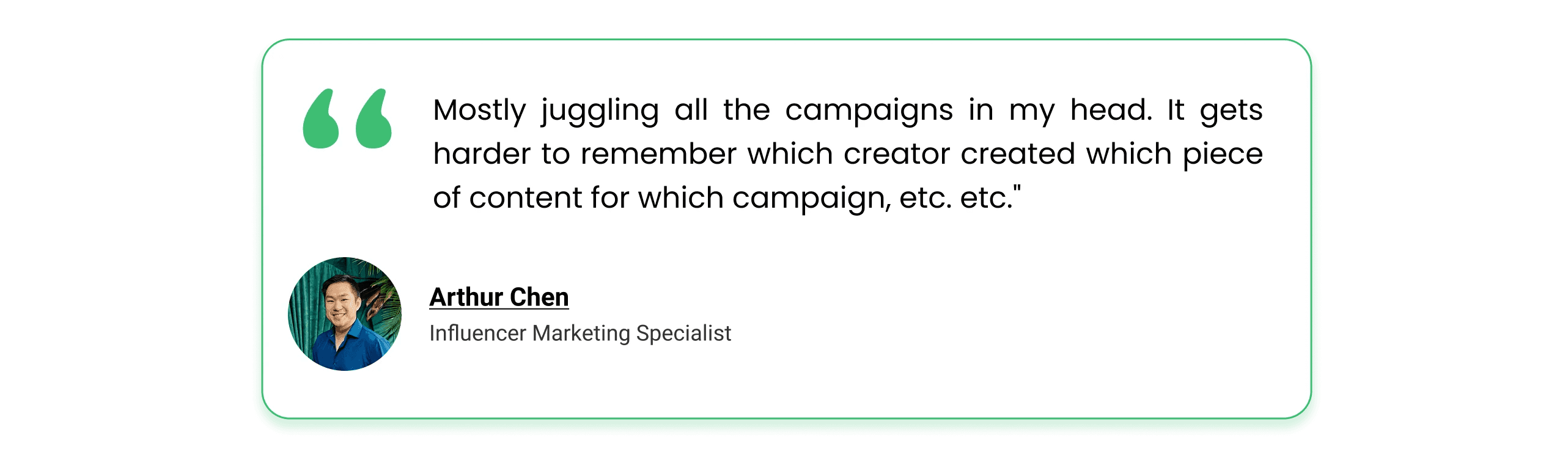
When your strategy relies on your brain being a human hard drive, you’re one missed coffee away from a total meltdown. One morning you’ll wake up to a "live" post with a broken link, and it won't be because you're lazy, it’s because your brain literally ran out of RAM.
The Data Drudgery
Scaling should mean your brand is getting bigger, but usually, it just means you have fifty more tabs open in Chrome.
There is a very specific, soul-crushing boredom that comes from manual tracking. You didn't get into this industry to be a data entry clerk, but that’s exactly what happens when your "system" is just a Google Sheet and a lot of copy-pasting.
Sindhu Bala, Influencer Marketing Strategist @ upliance.ai, talks about this manual grind:
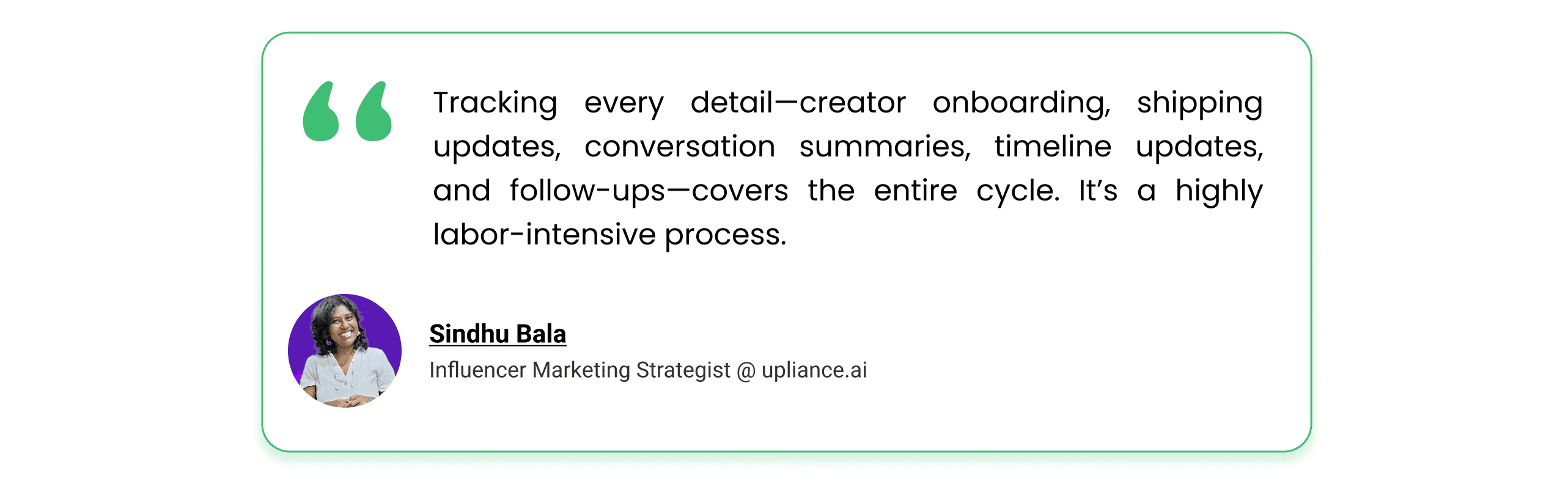
Think about that. If you’re tracking 50 creators at those intervals, you’re doing over 1,000 manual check-ins a year.
Every hour you spend staring at a spreadsheet is an hour you aren't spending finding the next creator who’s going to actually make you money.
Read more: How to Scale Influencer Marketing
The Follow-up Fatigue
If you’ve ever felt like your entire job description has shifted from "Marketing Strategist" to "Professional Nagger," you’re not alone.
Scaling multiplies the number of "nudges" required to keep a campaign alive. When you have dozens of creators in play, it’s so easy to feel trapped in the never-ending loop of "Hey, just checking in!"
The friction is real. You're chasing a contract, then a script, then a shipping confirmation, then the actual live link. It’s a game of digital whack-a-mole that never ends.
Aleksandra Jovanović calls out the biggest time-sink:
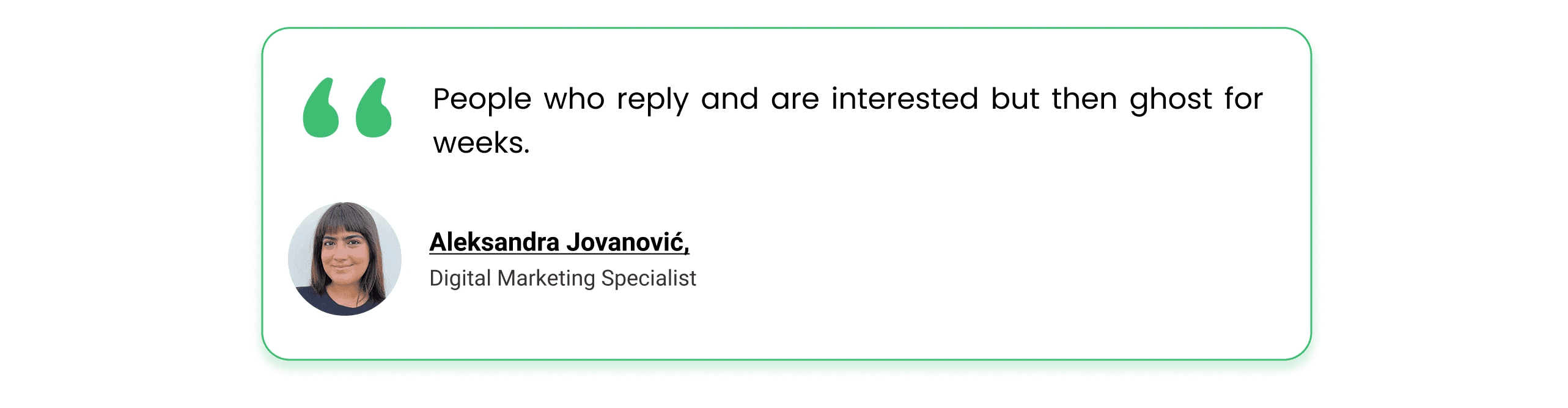
Eunice Ikem adds that this constant back-and-forth for approvals and deliverables "feels unnecessary" and should be automated so you can actually spend time on strategy.
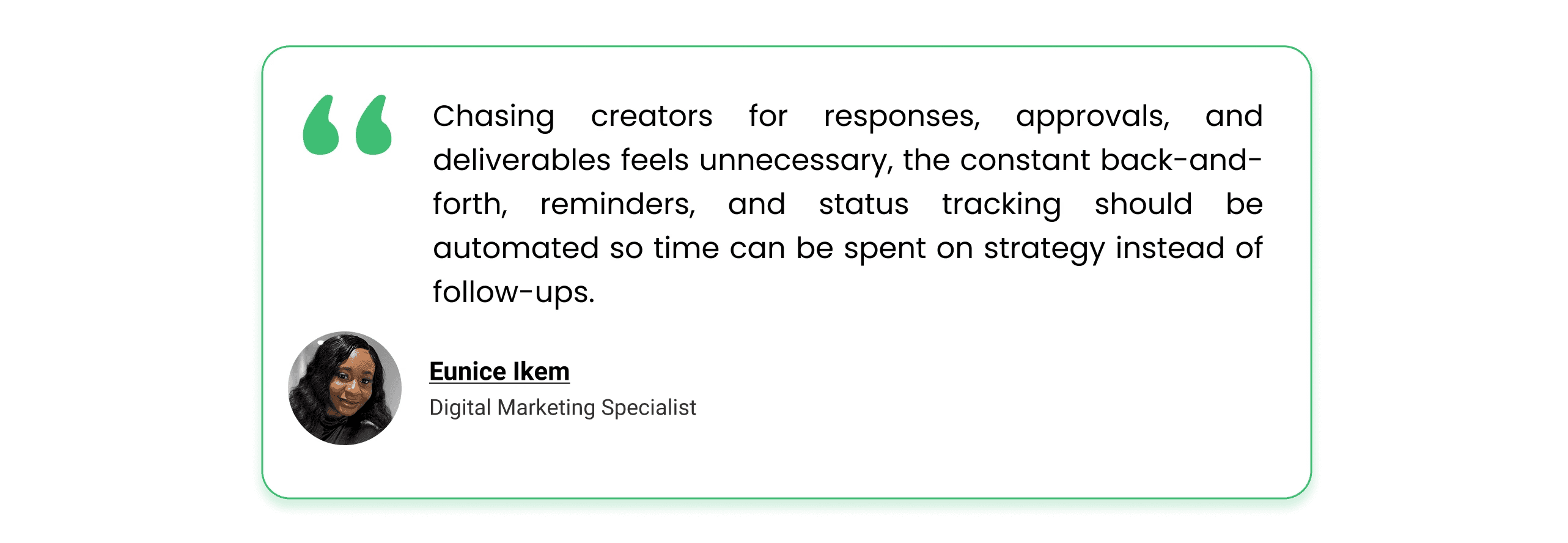
To really drive home how much of a "time-thief" this is, let’s look at the actual math of being a human alarm clock.
The "Nudge" Math
If we assume a standard campaign cycle for 30 creators:
5 Follow-ups per creator (Contract > Shipping > Script >Approval > Live Link).
10 Minutes per "nudge" (Finding the thread, checking the status, typing the "friendly" reminder, and updating your sheet).
30 creators X 5 nudges = 150 unusual messages
150 messages X 10 minutes = 1,500 minutes
That is 25 hours of pure, unadulterated "checking in" per campaign.
Think about that.
You are losing three full workdays just to play digital whack-a-mole.
By the time the content actually goes live, you’ve spent 90% of your creative energy on logistics. You’re too burnt out to even look at the data, let alone think about the next big strategy.
The Client Friction
This is something agencies or freelance influencer marketers would relate the most, even though they won’t share this publicly.
As campaigns get bigger and budgets get heavier, people get nervous. That nervousness usually manifests as a desire for "control," which is almost always code for "making the content feel like a late-night infomercial."
It usually plays out like this:
You spend weeks sourcing a creator who has spent five years building a loyal, niche community. They know exactly how to talk to their audience. They send back a script that’s funny, relatable, and perfectly fits their vibe.
Then, the client (or your boss) comes back with a red pen:
"Can they read these five bullet points exactly? And can they mention our 'Q3 Synergy' slogan?"
At scale, this becomes an absolute nightmare.
You’re stuck in the middle, trying to keep the creator’s soul alive while the client slowly sucks the ROI out of the campaign.
The result? A generic, stiff post that the audience sniffs out in seconds. You haven't just wasted money; you've wasted the creator's trust and your own time.
Gill Attwood, Founder, Influencer School, points out this awkward tug-of-war:
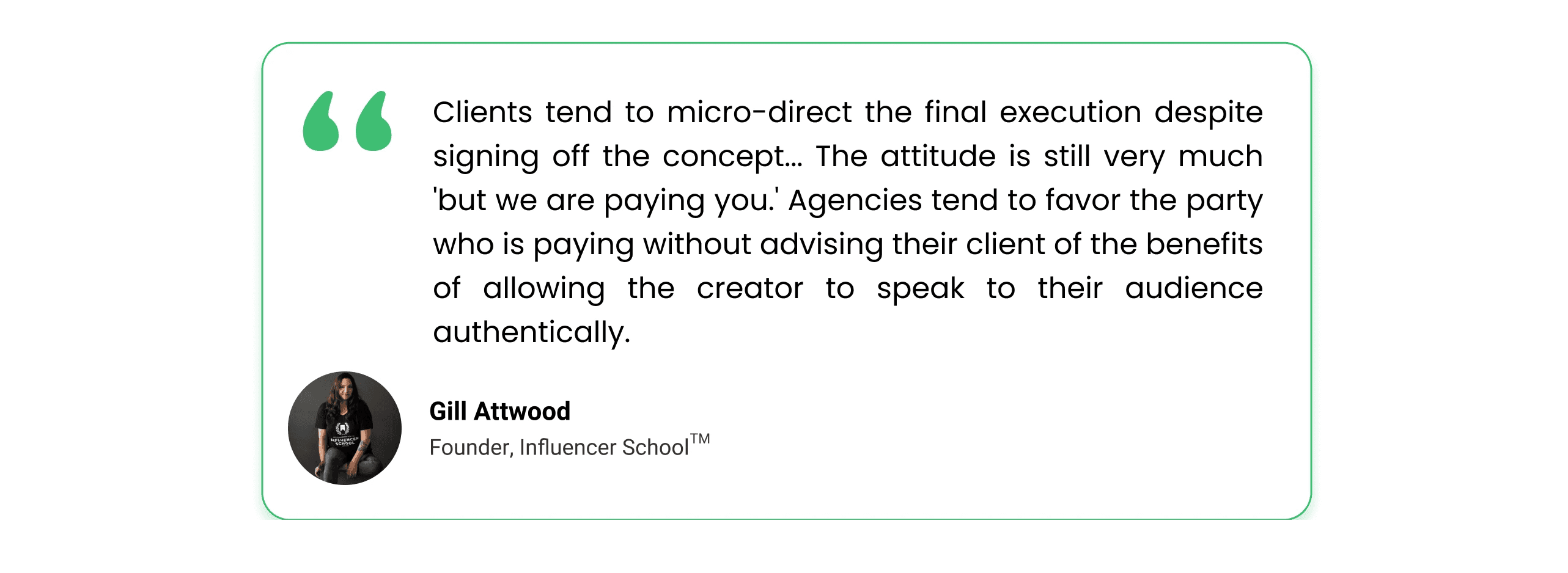
The Growth Paradox
There’s a common lie in this industry that scaling is just "doing more of the same."
In reality, complexity doesn't grow in a straight line but it grows exponentially. What worked perfectly for 10 creators will absolutely shatter at 50 because your "system" (the one currently living in your head or a messy Slack thread) simply doesn't have enough RAM.
Brian Choge sums up this breaking point perfectly:
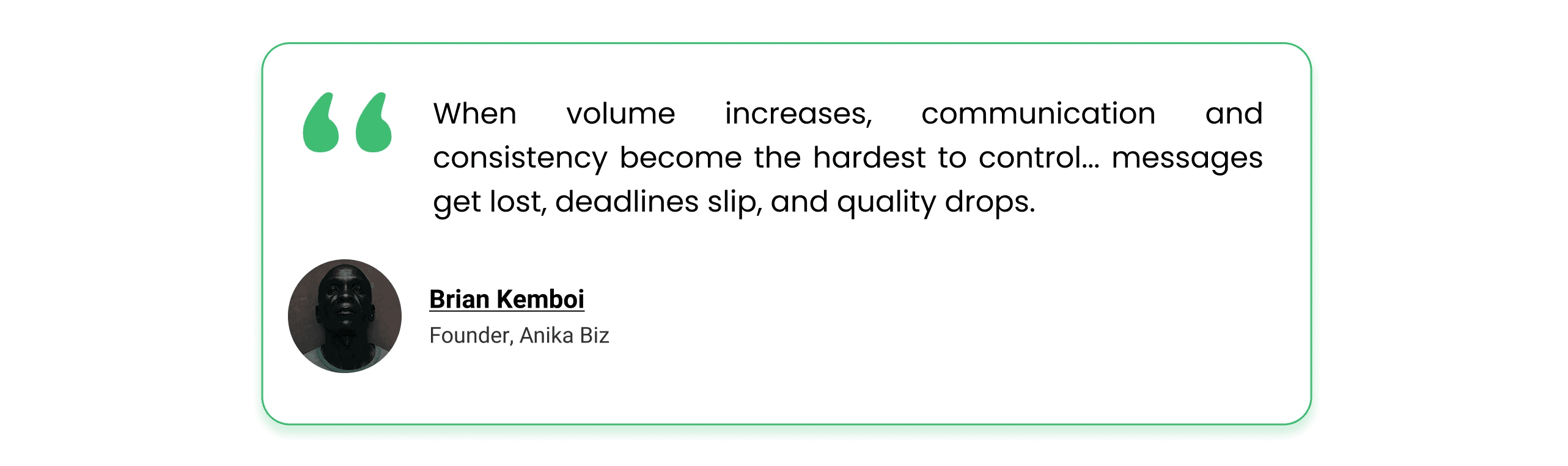
When you scale without a dedicated system, you aren't just growing, you're multiplying your points of failure. Every new creator you add is another chance for a missed deadline, a broken link, or an off-brand caption.
You end up working twice as hard for half the quality.
Read More: How to Handle Influencers Who Miss Deadlines
How Teams Actually Scale Influencer Marketing
So if scaling breaks systems, not strategies, what are the teams that scale successfully doing differently? Let’s take a look:
Replace memory with systems
The Shift: High-performing teams stop keeping campaigns in their heads. They move from "I think we’re on track" to "I can see exactly where we stand." This ends the "mental tab switching" that drains your battery by noon.
How to do it (Practical Steps):
Audit your "Human RAM": List every task you currently do by memory (e.g., remembering to check a Story link or which creator is traveling).
Map Your Stages: Define a clear pipeline: Discovery > Outreach > Negotiation > Product Sent > Content Pending > Live > Paid.
Create "Transition Triggers: Ensure every stage has a required action before moving to the next (e.g., "Cannot move to 'Product Sent' until 'Contract Signed' is checked").
The Impulze.ai Edge
With impulze, you can centralize every creator’s history, contract status, and content deliverables in one live dashboard using the CRM.
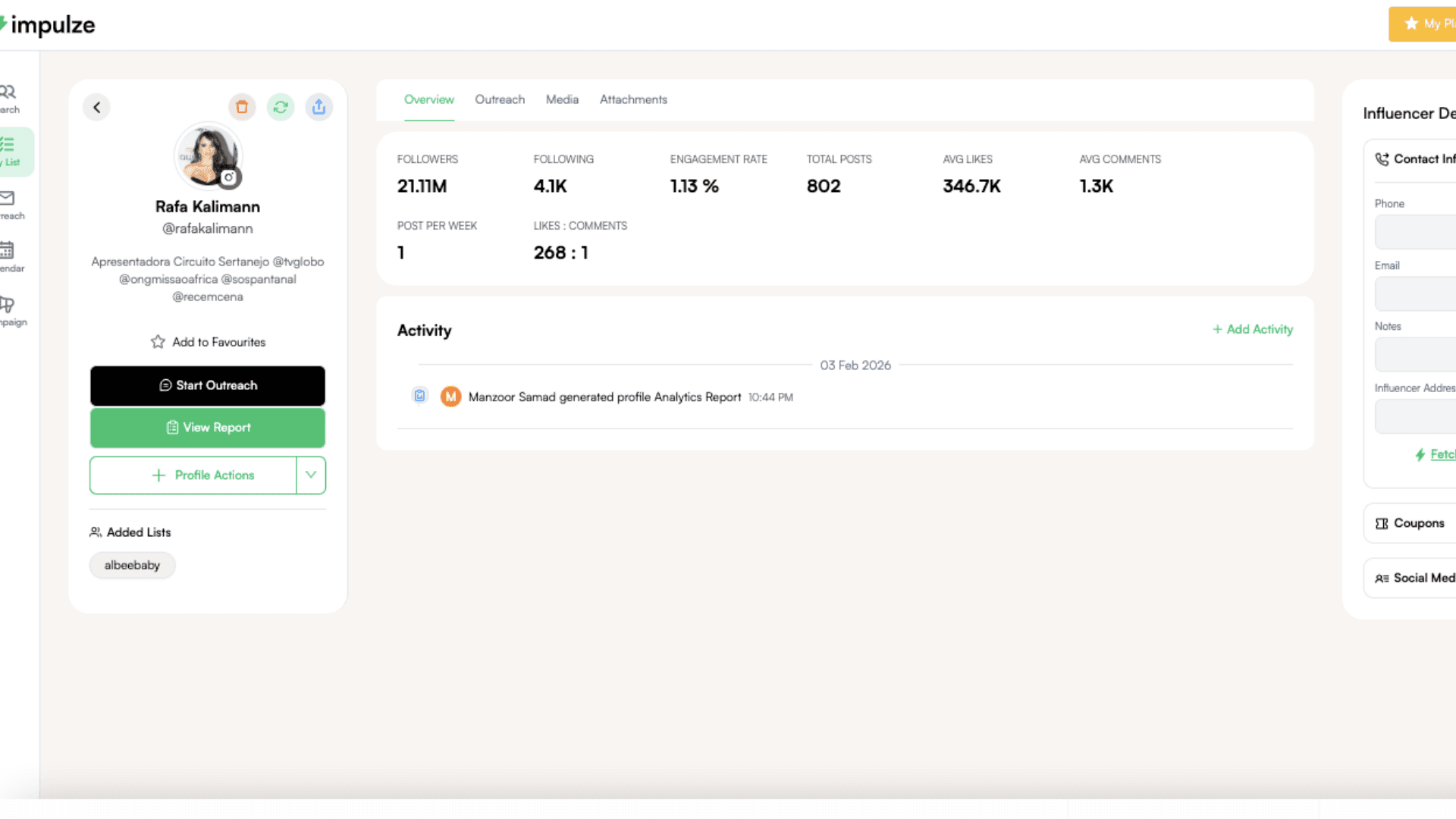
Plus, we also have a content calendar where you can get a 360-degree view of all the posts across months, across creators, and across platforms. It also gives you alerts before a content goes live so you never miss a deadline.
This way, you never have to "recall" a conversation or content plan; you just look at the dashboards.
2. Automate Coordination, Not Connection
The Shift: Automation often gets a bad rap for being "impersonal." But the best teams automate the logistics, not the relationship. Follow-ups and reminders become a predictable workflow rather than a manual chase.
How to do it (Practical Steps):
Standardize "The Boring Stuff": Create templates for non-creative emails: shipping confirmations, 24-hour reminders, and "live link" requests.
Batch Your Outreach: Set aside specific "outreach hours" using bulk-sending tools that still allow for a 10% personalization window at the top of the email.
Set "Safety Nets": Use automated alerts for missed deadlines so you only intervene when something actually goes wrong.
The Impulze.ai Edge
When it comes to automating pitches, impulze.ai’s automated outreach feature is there to help.
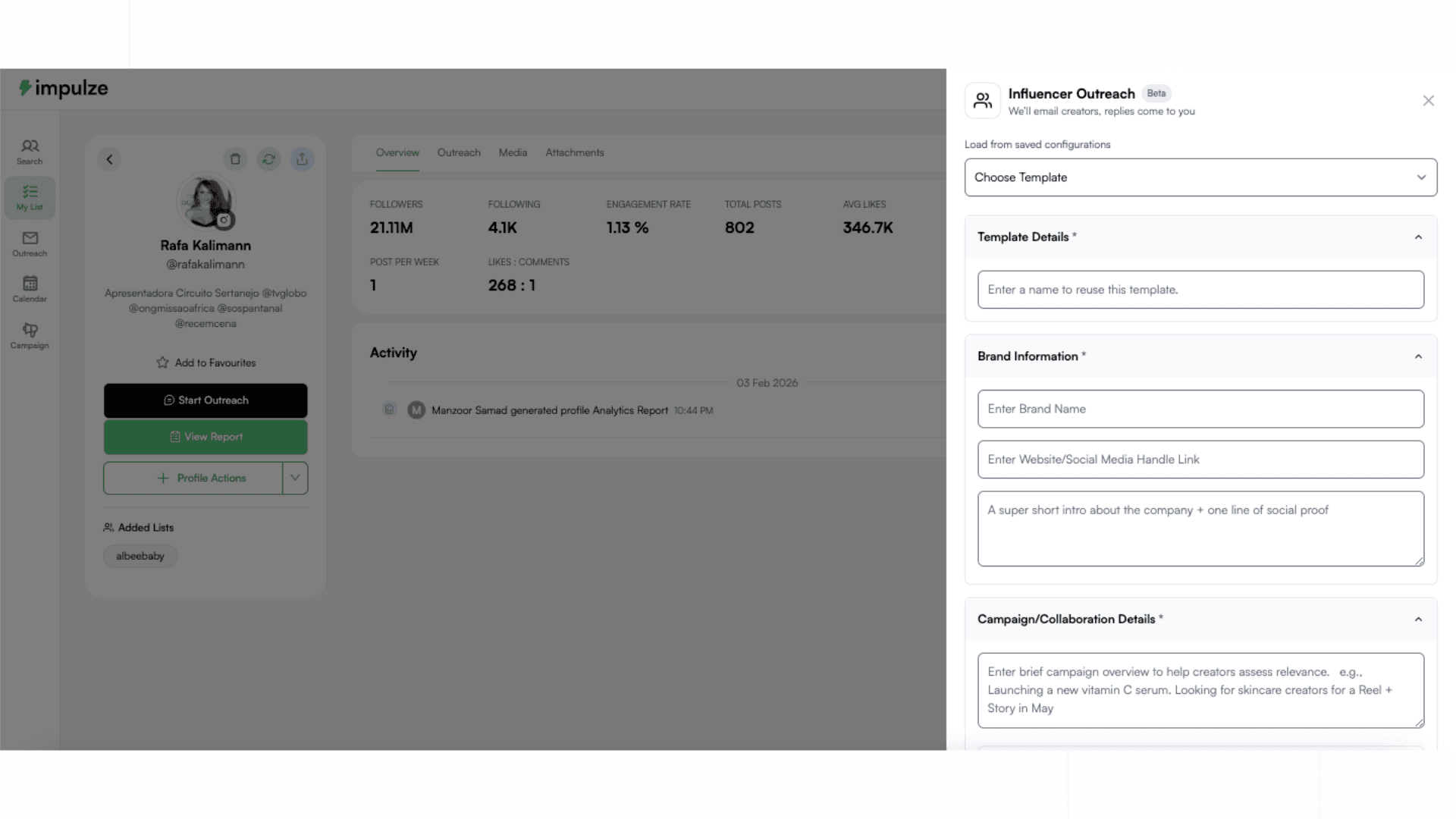
This feature sends emails to creators using a template with details personalized to your needs. It also has an automated follow-up sequences that stop the moment a creator replies. This saves you roughly 30 hours a week on manual typing while keeping your relationships feeling "high-touch." Plus, you can also save templates to use in the future.
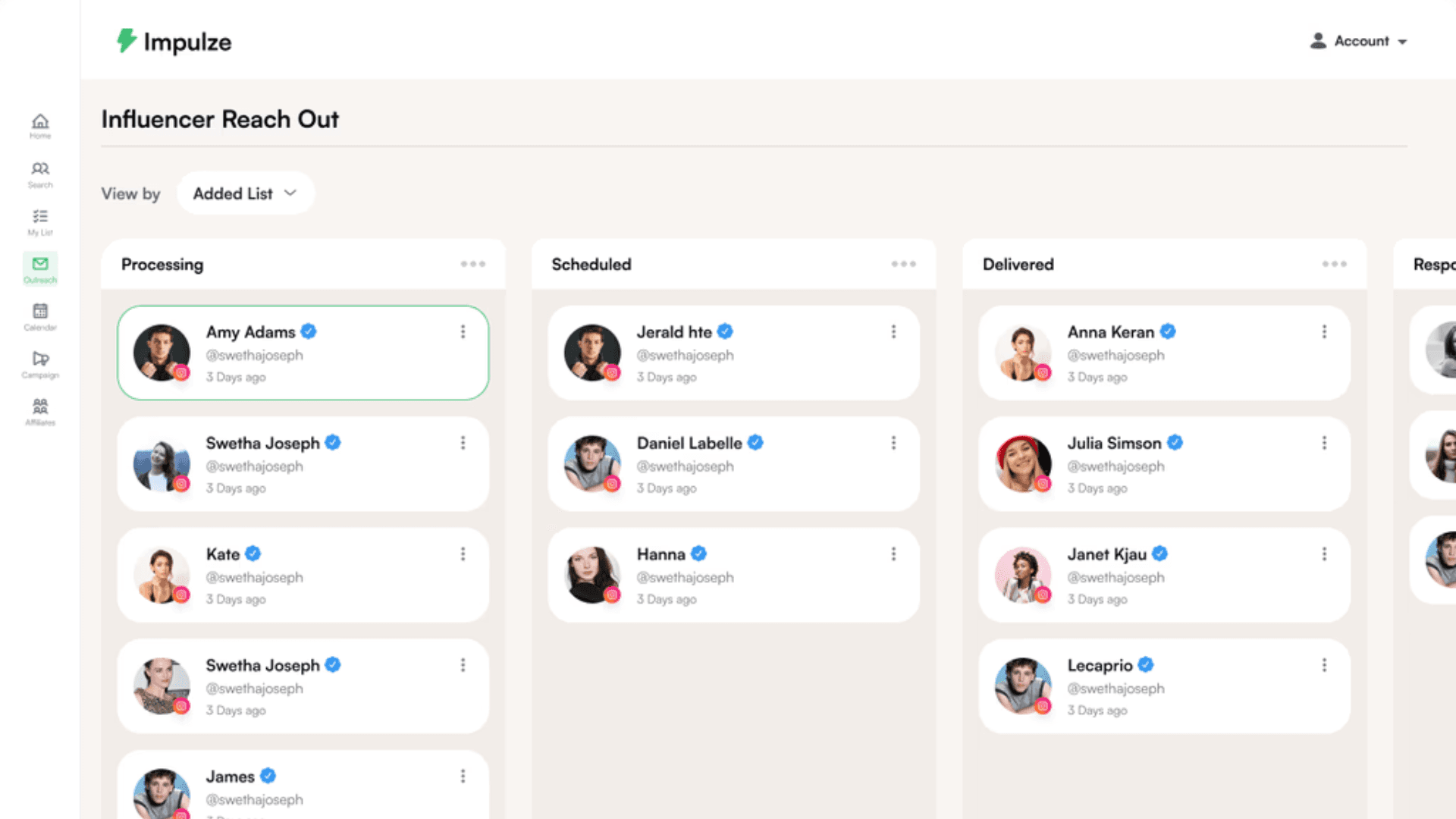
You also get a Kanban board to track the progress of the pitches in just one screen which again helps you decide your next tasks without switching between sheets.
3. Centralize Campaign Visibility
The Shift: One of the biggest breaking points is scattered info. When details live in Slack, email, and Excel, every update requires "detective work." Moving to a single source of truth makes alignment automatic.
How to do it (Practical Steps):
Kill Status Meetings: Transition to an "Asynchronous Update" model. If the dashboard is live, no one needs to ask, "Where are we with Sarah?"
Standardize Naming Conventions: Ensure every file, link, and creator profile follows the same format so anyone on the team can find it in 5 seconds.
Integrate Your Tech: Connect your email and your tracking tools so "Email Sent" automatically updates your campaign status.
The Impulze.ai Edge
Impulze.ai acts as your all-in-one command center, eliminating the need for fragmented Google Docs or "lost" attachments.
From a single dashboard, you can access a creator’s full profile: their audience analysis, contact details, communication history, signed contracts, and creative briefs. Even payments and real-time performance metrics are baked right in.
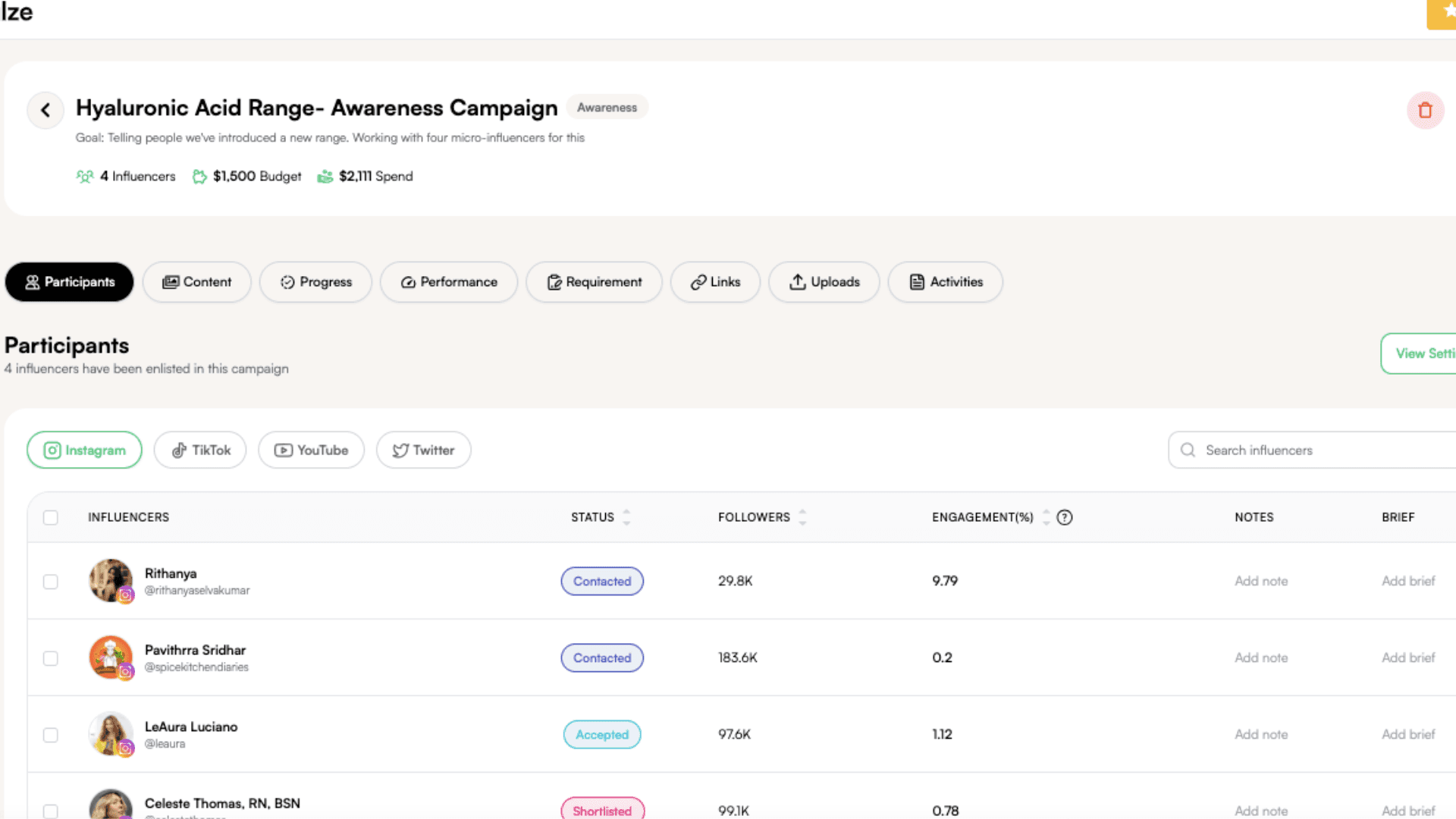
You simply upload a document once, and it’s tethered to that creator forever. No more hunting through folders to find a PDF from six months ago.
4. Shift from Execution to Strategy
The Shift: In the early stages of a brand, you are an operator, sending the emails and checking the links. But at scale, you must become a strategist. Success happens when you stop managing individual tasks and start asking high-leverage questions about incremental revenue, creative fatigue, and long-term ROI.
How to do it (Practical Steps):
Schedule "Deep Work" Strategy Blocks: Block 2 hours a week where you only look at data patterns, not emails.
Analyze the "Top 5%": Look at your best performers. Are they all in the same niche? Do they use the same hook? Use these insights to refine your next batch of discovery.
Develop Creative Briefs, Not Scripts: Give creators "guardrails" (brand values, CTAs) but let them own the "creative vehicle" to reduce back-and-forth friction.
The Impulze.ai Edge
Impulze.ai transforms you from a data entry clerk into a high-level strategist by providing an instant, bird’s-eye view of both individual creator performance and overall campaign health.
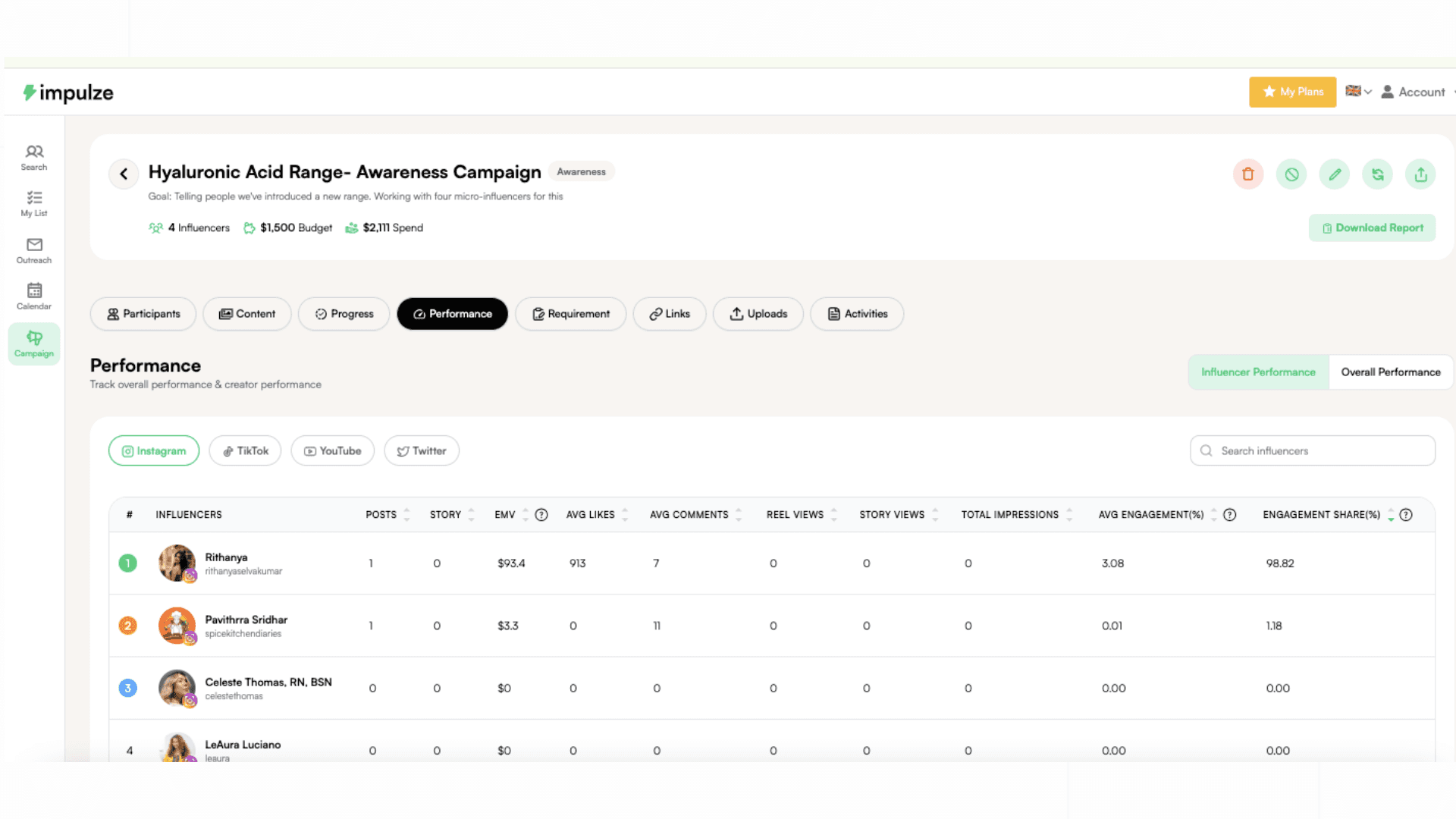
Instead of spending your Sunday night copy-pasting metrics into a slide deck, you can generate and download comprehensive reports with a single click. This automation ensures you spend your time deciding on the "next steps" based on real-time data, rather than just trying to find the data in the first place.
Ready to Scale?
You’ve seen the breaking points and now you also have the blueprint to beat them. So don’t wait for a campaign to drop before you fix your workflow.
Preparation is the ultimate competitive advantage. You can move from "manual tracking" to "strategic insight" in a single afternoon.
Take the first step toward a friction-free campaign:
Create a Free Account: Sign up for Impulze.ai today.
Explore the Features: Run a few searches, test the audience authenticity filters, and see what "all-in-one visibility" actually feels like.
Launch Your Next Campaign: Experience the shift from execution to strategy firsthand.
The "Scaling Ceiling" is only there if you choose to hit it. It’s time to move your campaigns out of your head and into a system built for growth.
Create a free account now and start scaling.
If your influencer marketing 'system' is just a Google Sheet and a lot of caffeine, sorry to break it but you’re not scaling; you’re just surviving.
The industry loves to talk about viral hits and 10x ROI, but they rarely talk about the 2:00 PM Wednesday slump, where you realize you've spent three hours copy-pasting engagement rates.
As one expert, Arthur Chen, told us: at a certain point, you’re just 'juggling campaigns in your head' until something inevitably drops.
We surveyed the experts to find the true breaking points of a growing influencer campaign. Here is what’s actually sucking the life out of your team’s productivity.
The Mental Load
When you’re managing five influencers, you’re a marketer. But when you’re managing 50, you’re an air traffic controller. You are supposed to not only do the same tasks (discovery, reach outs, tracking) at a larger scale but also have the mental bandwidth to make sure nothing slips through the cracks — every creator is briefed, every deliverable is on track, every deadline is met, and every campaign keeps moving without chaos.
And this becomes that low-level hum of anxiety that follows you into the weekend:
Did I send the tracking link to Sarah?
Was I supposed to approve that script by EOD?
Which 'Lifestyle Creator' told me they’d be offline for a week?
Arthur Chen, an Influencer Marketing Specialist, nails the feeling of the "Scaling Ceiling":
When your strategy relies on your brain being a human hard drive, you’re one missed coffee away from a total meltdown. One morning you’ll wake up to a "live" post with a broken link, and it won't be because you're lazy, it’s because your brain literally ran out of RAM.
The Data Drudgery
Scaling should mean your brand is getting bigger, but usually, it just means you have fifty more tabs open in Chrome.
There is a very specific, soul-crushing boredom that comes from manual tracking. You didn't get into this industry to be a data entry clerk, but that’s exactly what happens when your "system" is just a Google Sheet and a lot of copy-pasting.
Sindhu Bala, Influencer Marketing Strategist @ upliance.ai, talks about this manual grind:
Think about that. If you’re tracking 50 creators at those intervals, you’re doing over 1,000 manual check-ins a year.
Every hour you spend staring at a spreadsheet is an hour you aren't spending finding the next creator who’s going to actually make you money.
Read more: How to Scale Influencer Marketing
The Follow-up Fatigue
If you’ve ever felt like your entire job description has shifted from "Marketing Strategist" to "Professional Nagger," you’re not alone.
Scaling multiplies the number of "nudges" required to keep a campaign alive. When you have dozens of creators in play, it’s so easy to feel trapped in the never-ending loop of "Hey, just checking in!"
The friction is real. You're chasing a contract, then a script, then a shipping confirmation, then the actual live link. It’s a game of digital whack-a-mole that never ends.
Aleksandra Jovanović calls out the biggest time-sink:
Eunice Ikem adds that this constant back-and-forth for approvals and deliverables "feels unnecessary" and should be automated so you can actually spend time on strategy.
To really drive home how much of a "time-thief" this is, let’s look at the actual math of being a human alarm clock.
The "Nudge" Math
If we assume a standard campaign cycle for 30 creators:
5 Follow-ups per creator (Contract > Shipping > Script >Approval > Live Link).
10 Minutes per "nudge" (Finding the thread, checking the status, typing the "friendly" reminder, and updating your sheet).
30 creators X 5 nudges = 150 unusual messages
150 messages X 10 minutes = 1,500 minutes
That is 25 hours of pure, unadulterated "checking in" per campaign.
Think about that.
You are losing three full workdays just to play digital whack-a-mole.
By the time the content actually goes live, you’ve spent 90% of your creative energy on logistics. You’re too burnt out to even look at the data, let alone think about the next big strategy.
The Client Friction
This is something agencies or freelance influencer marketers would relate the most, even though they won’t share this publicly.
As campaigns get bigger and budgets get heavier, people get nervous. That nervousness usually manifests as a desire for "control," which is almost always code for "making the content feel like a late-night infomercial."
It usually plays out like this:
You spend weeks sourcing a creator who has spent five years building a loyal, niche community. They know exactly how to talk to their audience. They send back a script that’s funny, relatable, and perfectly fits their vibe.
Then, the client (or your boss) comes back with a red pen:
"Can they read these five bullet points exactly? And can they mention our 'Q3 Synergy' slogan?"
At scale, this becomes an absolute nightmare.
You’re stuck in the middle, trying to keep the creator’s soul alive while the client slowly sucks the ROI out of the campaign.
The result? A generic, stiff post that the audience sniffs out in seconds. You haven't just wasted money; you've wasted the creator's trust and your own time.
Gill Attwood, Founder, Influencer School, points out this awkward tug-of-war:
The Growth Paradox
There’s a common lie in this industry that scaling is just "doing more of the same."
In reality, complexity doesn't grow in a straight line but it grows exponentially. What worked perfectly for 10 creators will absolutely shatter at 50 because your "system" (the one currently living in your head or a messy Slack thread) simply doesn't have enough RAM.
Brian Choge sums up this breaking point perfectly:
When you scale without a dedicated system, you aren't just growing, you're multiplying your points of failure. Every new creator you add is another chance for a missed deadline, a broken link, or an off-brand caption.
You end up working twice as hard for half the quality.
Read More: How to Handle Influencers Who Miss Deadlines
How Teams Actually Scale Influencer Marketing
So if scaling breaks systems, not strategies, what are the teams that scale successfully doing differently? Let’s take a look:
Replace memory with systems
The Shift: High-performing teams stop keeping campaigns in their heads. They move from "I think we’re on track" to "I can see exactly where we stand." This ends the "mental tab switching" that drains your battery by noon.
How to do it (Practical Steps):
Audit your "Human RAM": List every task you currently do by memory (e.g., remembering to check a Story link or which creator is traveling).
Map Your Stages: Define a clear pipeline: Discovery > Outreach > Negotiation > Product Sent > Content Pending > Live > Paid.
Create "Transition Triggers: Ensure every stage has a required action before moving to the next (e.g., "Cannot move to 'Product Sent' until 'Contract Signed' is checked").
The Impulze.ai Edge
With impulze, you can centralize every creator’s history, contract status, and content deliverables in one live dashboard using the CRM.
Plus, we also have a content calendar where you can get a 360-degree view of all the posts across months, across creators, and across platforms. It also gives you alerts before a content goes live so you never miss a deadline.
This way, you never have to "recall" a conversation or content plan; you just look at the dashboards.
2. Automate Coordination, Not Connection
The Shift: Automation often gets a bad rap for being "impersonal." But the best teams automate the logistics, not the relationship. Follow-ups and reminders become a predictable workflow rather than a manual chase.
How to do it (Practical Steps):
Standardize "The Boring Stuff": Create templates for non-creative emails: shipping confirmations, 24-hour reminders, and "live link" requests.
Batch Your Outreach: Set aside specific "outreach hours" using bulk-sending tools that still allow for a 10% personalization window at the top of the email.
Set "Safety Nets": Use automated alerts for missed deadlines so you only intervene when something actually goes wrong.
The Impulze.ai Edge
When it comes to automating pitches, impulze.ai’s automated outreach feature is there to help.
This feature sends emails to creators using a template with details personalized to your needs. It also has an automated follow-up sequences that stop the moment a creator replies. This saves you roughly 30 hours a week on manual typing while keeping your relationships feeling "high-touch." Plus, you can also save templates to use in the future.
You also get a Kanban board to track the progress of the pitches in just one screen which again helps you decide your next tasks without switching between sheets.
3. Centralize Campaign Visibility
The Shift: One of the biggest breaking points is scattered info. When details live in Slack, email, and Excel, every update requires "detective work." Moving to a single source of truth makes alignment automatic.
How to do it (Practical Steps):
Kill Status Meetings: Transition to an "Asynchronous Update" model. If the dashboard is live, no one needs to ask, "Where are we with Sarah?"
Standardize Naming Conventions: Ensure every file, link, and creator profile follows the same format so anyone on the team can find it in 5 seconds.
Integrate Your Tech: Connect your email and your tracking tools so "Email Sent" automatically updates your campaign status.
The Impulze.ai Edge
Impulze.ai acts as your all-in-one command center, eliminating the need for fragmented Google Docs or "lost" attachments.
From a single dashboard, you can access a creator’s full profile: their audience analysis, contact details, communication history, signed contracts, and creative briefs. Even payments and real-time performance metrics are baked right in.
You simply upload a document once, and it’s tethered to that creator forever. No more hunting through folders to find a PDF from six months ago.
4. Shift from Execution to Strategy
The Shift: In the early stages of a brand, you are an operator, sending the emails and checking the links. But at scale, you must become a strategist. Success happens when you stop managing individual tasks and start asking high-leverage questions about incremental revenue, creative fatigue, and long-term ROI.
How to do it (Practical Steps):
Schedule "Deep Work" Strategy Blocks: Block 2 hours a week where you only look at data patterns, not emails.
Analyze the "Top 5%": Look at your best performers. Are they all in the same niche? Do they use the same hook? Use these insights to refine your next batch of discovery.
Develop Creative Briefs, Not Scripts: Give creators "guardrails" (brand values, CTAs) but let them own the "creative vehicle" to reduce back-and-forth friction.
The Impulze.ai Edge
Impulze.ai transforms you from a data entry clerk into a high-level strategist by providing an instant, bird’s-eye view of both individual creator performance and overall campaign health.
Instead of spending your Sunday night copy-pasting metrics into a slide deck, you can generate and download comprehensive reports with a single click. This automation ensures you spend your time deciding on the "next steps" based on real-time data, rather than just trying to find the data in the first place.
Ready to Scale?
You’ve seen the breaking points and now you also have the blueprint to beat them. So don’t wait for a campaign to drop before you fix your workflow.
Preparation is the ultimate competitive advantage. You can move from "manual tracking" to "strategic insight" in a single afternoon.
Take the first step toward a friction-free campaign:
Create a Free Account: Sign up for Impulze.ai today.
Explore the Features: Run a few searches, test the audience authenticity filters, and see what "all-in-one visibility" actually feels like.
Launch Your Next Campaign: Experience the shift from execution to strategy firsthand.
The "Scaling Ceiling" is only there if you choose to hit it. It’s time to move your campaigns out of your head and into a system built for growth.
Create a free account now and start scaling.
Frequently Asked Questions
What is the biggest challenge when scaling influencer marketing?

What is the biggest challenge when scaling influencer marketing?
Why does influencer marketing become harder at scale?
Why does influencer marketing become harder at scale?
How can brands manage multiple influencers efficiently?
How can brands manage multiple influencers efficiently?
How do you automate influencer marketing workflows?
How do you automate influencer marketing workflows?
What systems are needed to scale influencer campaigns successfully?
What systems are needed to scale influencer campaigns successfully?
How does centralized data improve influencer campaign performance?
How does centralized data improve influencer campaign performance?
What tools help brands scale influencer marketing without chaos?
What tools help brands scale influencer marketing without chaos?
Author Bio
Author Bio
Rashmi Singh
Rashmi Singh
Rashmi Singh is a writer and strategist with more than 7 years of experience. When not writing, she is either spending time with her friends or planning her next trip. You can learn more about her here.
Rashmi Singh is a writer and strategist with more than 7 years of experience. When not writing, she is either spending time with her friends or planning her next trip. You can learn more about her here.
We Also Recommend To Read