🥳 Skip the subscription. Pay $299 once for lifetime access— See lifetime plans
🥳 Skip the subscription. Pay $299 once for lifetime access—

5 MIN READ
Ideas & Examples
Ideas & Examples
Throwback 2025: Influencer Marketing Moments We Saw
Throwback 2025: Influencer Marketing Moments We Saw
Throwback 2025: Influencer Marketing Moments We Saw

Rashmi Singh
Rashmi Singh
Rashmi Singh
Content Marketer @impulze.ai

Sections
Try Influencer marketing tools for free

Blog in Short ⏱️
Blog in Short ⏱️
A quick glance at the highlights—perfect for when you're short on time.
A quick glance at the highlights—perfect for when you're short on time.
Here’s what stood out in influencer marketing in 2025:
Netflix Shows: Wednesday, Stranger Things, and Money Heist became cultural references through dances, fashion, and public experiences.
Cannes: Influencers collaborated with designers, turning red carpets into long-lasting fashion moments.
Labubu Dolls: Went viral through organic creator use and blind-box unboxings, not paid promotions.
Heaven Mayhem: Jewelry seeding led to repeated, natural visibility across creator content.
Britannia & Swiggy: Rode the “Prashant croissant” meme with fast, native humor.
If you think influencer marketing in 2025 was only about reels, reach, and hashtags — you probably missed the real story.
Because the biggest wins this year didn’t feel like campaigns. They felt like moments.
Moments you overheard in cafés. Saw at events. Noticed in what people wore, shared, joked about, or casually bought.
Here’s a throwback to the influencer marketing moments of 2025 that went beyond feeds and quietly became part of culture.
Netflix Shows: When Content Became the Influencer
Let’s start with the most obvious one: Netflix.
Who thought shows from an OTT platform could create such iconic moments that they would become lessons for influencer marketing? And the credit goes to their unique and experiential approach to storytelling — one that invites people to participate, recreate, and carry the story beyond the screen.
Take Wednesday as an example.

The dance wasn’t pushed through paid collaborations. Creators chased it. From recreations to parodies, the trend took on a life of its own.
Plus, Netflix amplified the moment with smart offline activations too — like Wednesday’s Doom Tour, where they invited influencers from all over the world. There were also public performances and city pop-ups that made the show feel unavoidable, even beyond screens.

Stranger Things followed a similar playbook. Netflix leaned into nostalgia with mall activations, themed installations, and pop culture crossovers. Suddenly, 80s music, oversized jackets, and retro posters were everywhere — not just on Instagram, but in real-world spaces people walked through.
And Money Heist? The red jumpsuits and masks didn’t stay fictional. They showed up at college fests, protests, and parties, becoming symbols people borrowed for their own stories.

Influencers didn’t “collaborate” here. They participated.
Netflix understood one thing clearly:
When the story is strong, influencers don’t need briefs; they need permission to play and that’s what worked for them.
Cannes & Designers: When Events Became Distribution Channels
Cannes 2025 made one thing very clear: influencers weren’t just attending the festival. They were woven into how fashion and luxury brands showed up there.
Indian creators like Masoom Minawala, Sejal Kumar, Sakshi Sindwani, Parul Gulati, and Nitibha Kaul appeared in custom designer looks that carried clear narratives — Indian craftsmanship, inclusivity, experimentation, and personal style. Each look wasn’t just worn for photos; it travelled across feeds, fashion pages, and conversations long after the carpet was rolled up.
Then there was Nancy Tyagi, who shifted the conversation entirely.
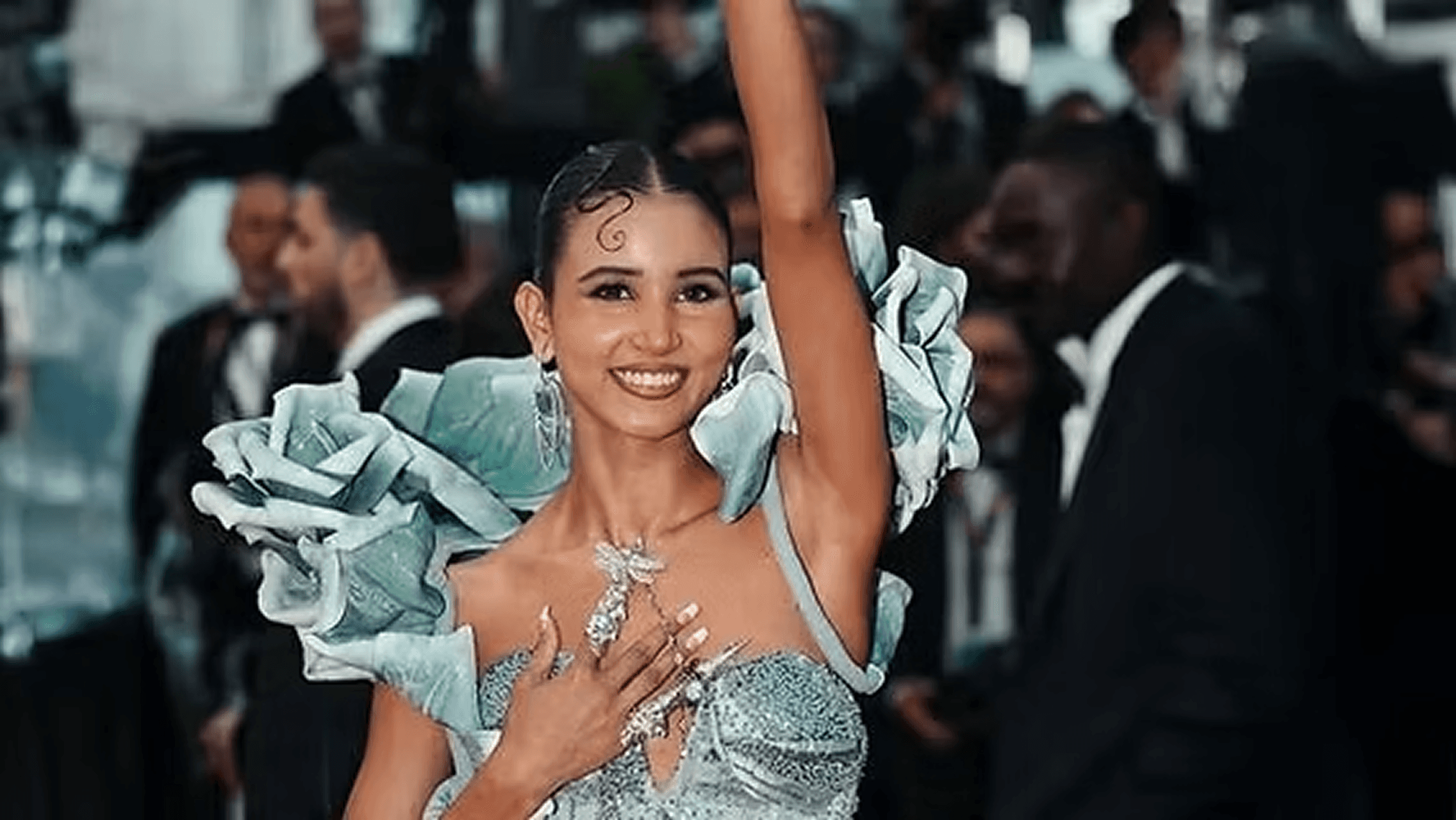
By wearing self-designed couture, she blurred the line between creator and designer. That moment alone showed how influence at Cannes is no longer limited to established luxury houses.
Global influencers like Rebecca Patricia Armstrong, backed by luxury and beauty brands, also demonstrated how creators are now integrated into brand storytelling at an international level as strategic partners.

What stood out was this: Cannes became a live distribution channel.
Designers didn’t just dress influencers for visibility. They collaborated with them to let fashion move from the red carpet into culture.
The event ended. The influence kept circulating.
Labubu Dolls: Viral With Almost Nothing
Now let’s talk about one of 2025’s weirdest, most fascinating viral hits — Labubu dolls.

At first glance, Labubu looks like a quirky collectible toy: a slightly creepy, pointy-eared plush figure with a mischievous grin. But in 2025, it became everywhere — on desks, in unboxing videos, and clipped to bag charms.
And it wasn’t only online micro content. Celebrities and creators helped propel the craze.

BLACKPINK’s Lisa was seen with Labubu dangling from her handbag — which ignited massive fan interest across Asia and globally. Pop stars like Rihanna, Dua Lipa, and Kim Kardashian were spotted with Labubu accessories, pushing it into lifestyle and luxury feeds. Indian creators and influencers also showed off Labubu in fashion and travel content, blending it into their visual aesthetics.
Why? The blind-box model made every purchase feel like a mini thrill, and creators naturally gravitated toward showing off rare finds and unboxing clips. Social content acted as free marketing, drawing more collectors into the loop.
Here’s the business side:
The Labubu franchise generated roughly $670 million in revenue in the first half of 2025 alone — a huge jump from the previous year.
Pop Mart, the company behind Labubu, saw revenues jump over 200% and net profit up nearly 400 %, with Labubu products driving a big part of that growth.
By some estimates, annual revenue could approach or exceed billions of dollars by year-end, with rare pieces selling for extraordinary amounts in secondary markets.
What’s notable here is how organic visibility and collector psychology created real commercial success.
And that’s exactly what it got.
By the way, we wrote a detailed blog on how this happened, you can read it here. And if you want to see which all products got viral because of influencers, we have covered that too!
Heaven Mayhem: Jewelry Seeding Done Right
Heaven Mayhem started small in 2022 when founder Pia Mance launched the brand with minimal resources and a DIY spirit. By 2025, it had grown into a multi‑million‑dollar accessories business (reportedly around $10 million in revenue), stocked by major retailers like Selfridges and gaining international traction.
What set Heaven Mayhem apart wasn’t a typical campaign — it was strategic product placement among creators and tastemakers who genuinely loved the pieces. Rather than paying for big campaigns, Pia focused on cultivating organic visibility by gifting products to people whose aesthetic aligned with the brand.
The early break came when earrings were gifted around Coachella 2023, and influencers like Marianna Hewitt shared them casually — generating buzz without scripted content.

After that, the brand built momentum through real usage by creators and celebrities:
Hailey Bieber has been one of the most visible supporters, repeatedly wearing signature knot earrings and other pieces in her outfits.
Emily Ratajkowski featured Heaven Mayhem earrings in commercial settings.
Lori Harvey, Jasmine Tookes, Rosie Huntington‑Whiteley, and Tayshia Adams have all been spotted styling HM jewelry in their content and street style moments.
These “real‑wear” moments didn’t feel like ads. They looked like authentic personal styling, which helped the pieces become visual cues in everyday fashion content.
This approach — giving product without heavy scripting or forced deliverables — turned influencer seeding into a kind of slow, compounding distribution channel rather than a one‑off spotlight.
By combining creator visibility with classic aesthetic appeal, Heaven Mayhem didn’t just trend — it built a sustainable cultural footprint in fashion and accessories in 2025.
Swiggy & Britannia: Meme Moments That Rode the Wave
Some brands create moments. Some brands catch them. In 2025, Britannia and Swiggy mastered the second one — and it all started with a meme.

It began with a young creator named Ayush Hu Mai, who posted a playful video trying to name desserts and hilariously mispronounced “croissant” as “Prashant.” That one moment instantly turned into a meme, racking up millions of views as people recreated it, shared variations, and laughed at the relatability of the moment.
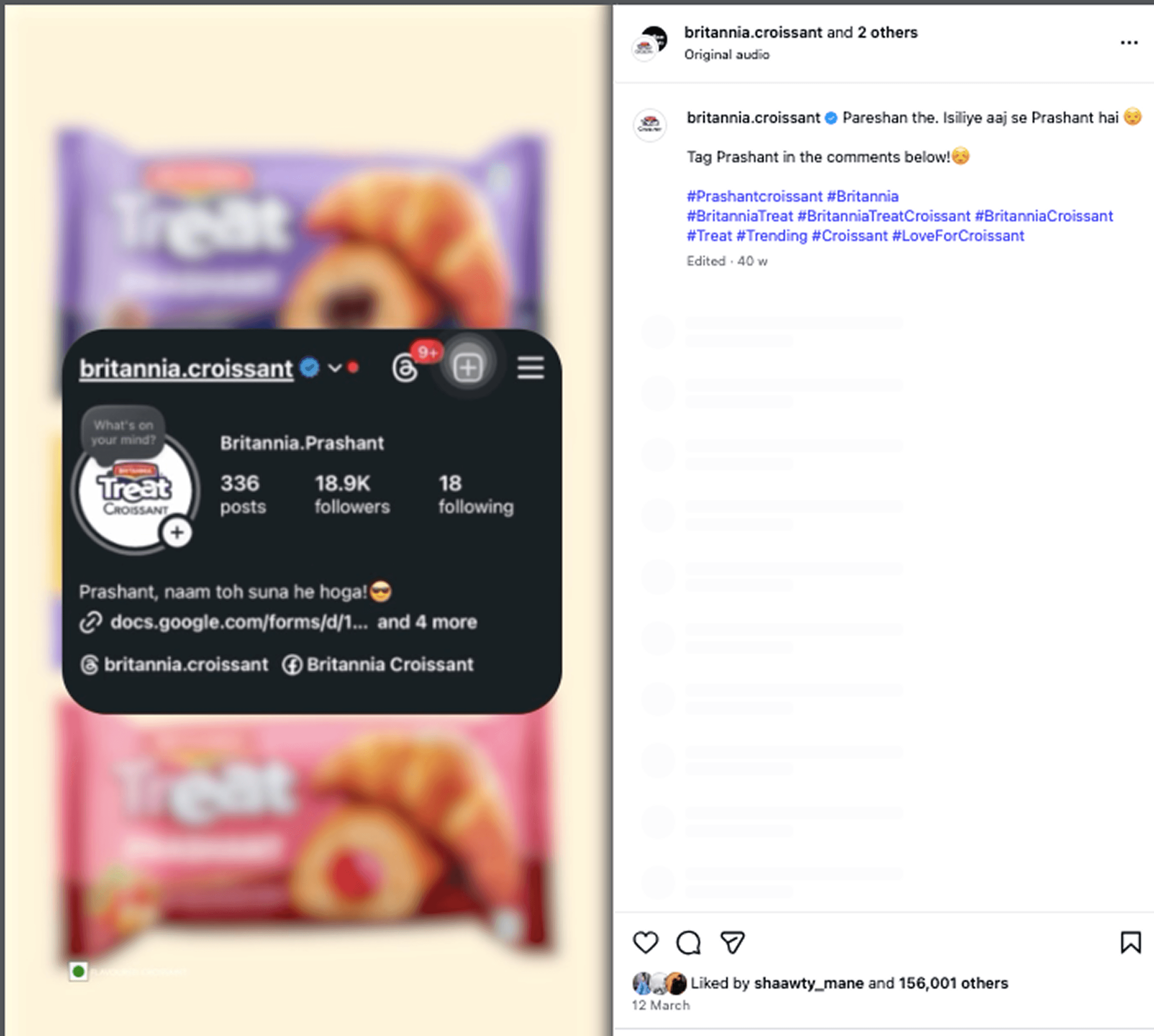
Britannia saw an opportunity and didn’t wait. They temporarily rebranded their croissant Instagram page to “Britannia Prashant,” updated their bio to lean into the joke — “Prashant, naam to suna hi hoga” — and even tweaked product packaging around the trend.
Swiggy Instamart jumped in too, posting a witty message like “tum Prashant bologe, hum croissant samajh lenge” and even using search behavior so that typing “Prashant” would show croissant results on the app.
The meme spread beyond just brands:
Bollywood actress Diana Penty joined in with her own reel, playing on the trend.
Other platforms, celebrities, and meme pages amplified it further, making Prashant one of 2025’s most recognizable meme cues.
What made this moment stick wasn’t strategic ad spend or slick production. It was timely, humorous participation in a trend people were already engaged with — adding to the joke instead of trying to own it.
In 2025, that quick, native humour was how brands stayed relevant without feeling cringey.
The Real Influencer Marketing Lesson From 2025
Looking back, the best influencer marketing moments of 2025 had one thing in common:
They didn’t feel like marketing.
They felt like:
Culture
Conversations
Everyday behavior
Brands stopped asking, “How do we go viral?” And started asking, “How do we belong?”
That’s the shift. Make sure your plans adjust accordingly.
If you think influencer marketing in 2025 was only about reels, reach, and hashtags — you probably missed the real story.
Because the biggest wins this year didn’t feel like campaigns. They felt like moments.
Moments you overheard in cafés. Saw at events. Noticed in what people wore, shared, joked about, or casually bought.
Here’s a throwback to the influencer marketing moments of 2025 that went beyond feeds and quietly became part of culture.
Netflix Shows: When Content Became the Influencer
Let’s start with the most obvious one: Netflix.
Who thought shows from an OTT platform could create such iconic moments that they would become lessons for influencer marketing? And the credit goes to their unique and experiential approach to storytelling — one that invites people to participate, recreate, and carry the story beyond the screen.
Take Wednesday as an example.
The dance wasn’t pushed through paid collaborations. Creators chased it. From recreations to parodies, the trend took on a life of its own.
Plus, Netflix amplified the moment with smart offline activations too — like Wednesday’s Doom Tour, where they invited influencers from all over the world. There were also public performances and city pop-ups that made the show feel unavoidable, even beyond screens.
Stranger Things followed a similar playbook. Netflix leaned into nostalgia with mall activations, themed installations, and pop culture crossovers. Suddenly, 80s music, oversized jackets, and retro posters were everywhere — not just on Instagram, but in real-world spaces people walked through.
And Money Heist? The red jumpsuits and masks didn’t stay fictional. They showed up at college fests, protests, and parties, becoming symbols people borrowed for their own stories.
Influencers didn’t “collaborate” here. They participated.
Netflix understood one thing clearly:
When the story is strong, influencers don’t need briefs; they need permission to play and that’s what worked for them.
Cannes & Designers: When Events Became Distribution Channels
Cannes 2025 made one thing very clear: influencers weren’t just attending the festival. They were woven into how fashion and luxury brands showed up there.
Indian creators like Masoom Minawala, Sejal Kumar, Sakshi Sindwani, Parul Gulati, and Nitibha Kaul appeared in custom designer looks that carried clear narratives — Indian craftsmanship, inclusivity, experimentation, and personal style. Each look wasn’t just worn for photos; it travelled across feeds, fashion pages, and conversations long after the carpet was rolled up.
Then there was Nancy Tyagi, who shifted the conversation entirely.
By wearing self-designed couture, she blurred the line between creator and designer. That moment alone showed how influence at Cannes is no longer limited to established luxury houses.
Global influencers like Rebecca Patricia Armstrong, backed by luxury and beauty brands, also demonstrated how creators are now integrated into brand storytelling at an international level as strategic partners.
What stood out was this: Cannes became a live distribution channel.
Designers didn’t just dress influencers for visibility. They collaborated with them to let fashion move from the red carpet into culture.
The event ended. The influence kept circulating.
Labubu Dolls: Viral With Almost Nothing
Now let’s talk about one of 2025’s weirdest, most fascinating viral hits — Labubu dolls.
At first glance, Labubu looks like a quirky collectible toy: a slightly creepy, pointy-eared plush figure with a mischievous grin. But in 2025, it became everywhere — on desks, in unboxing videos, and clipped to bag charms.
And it wasn’t only online micro content. Celebrities and creators helped propel the craze.
BLACKPINK’s Lisa was seen with Labubu dangling from her handbag — which ignited massive fan interest across Asia and globally. Pop stars like Rihanna, Dua Lipa, and Kim Kardashian were spotted with Labubu accessories, pushing it into lifestyle and luxury feeds. Indian creators and influencers also showed off Labubu in fashion and travel content, blending it into their visual aesthetics.
Why? The blind-box model made every purchase feel like a mini thrill, and creators naturally gravitated toward showing off rare finds and unboxing clips. Social content acted as free marketing, drawing more collectors into the loop.
Here’s the business side:
The Labubu franchise generated roughly $670 million in revenue in the first half of 2025 alone — a huge jump from the previous year.
Pop Mart, the company behind Labubu, saw revenues jump over 200% and net profit up nearly 400 %, with Labubu products driving a big part of that growth.
By some estimates, annual revenue could approach or exceed billions of dollars by year-end, with rare pieces selling for extraordinary amounts in secondary markets.
What’s notable here is how organic visibility and collector psychology created real commercial success.
And that’s exactly what it got.
By the way, we wrote a detailed blog on how this happened, you can read it here. And if you want to see which all products got viral because of influencers, we have covered that too!
Heaven Mayhem: Jewelry Seeding Done Right
Heaven Mayhem started small in 2022 when founder Pia Mance launched the brand with minimal resources and a DIY spirit. By 2025, it had grown into a multi‑million‑dollar accessories business (reportedly around $10 million in revenue), stocked by major retailers like Selfridges and gaining international traction.
What set Heaven Mayhem apart wasn’t a typical campaign — it was strategic product placement among creators and tastemakers who genuinely loved the pieces. Rather than paying for big campaigns, Pia focused on cultivating organic visibility by gifting products to people whose aesthetic aligned with the brand.
The early break came when earrings were gifted around Coachella 2023, and influencers like Marianna Hewitt shared them casually — generating buzz without scripted content.
After that, the brand built momentum through real usage by creators and celebrities:
Hailey Bieber has been one of the most visible supporters, repeatedly wearing signature knot earrings and other pieces in her outfits.
Emily Ratajkowski featured Heaven Mayhem earrings in commercial settings.
Lori Harvey, Jasmine Tookes, Rosie Huntington‑Whiteley, and Tayshia Adams have all been spotted styling HM jewelry in their content and street style moments.
These “real‑wear” moments didn’t feel like ads. They looked like authentic personal styling, which helped the pieces become visual cues in everyday fashion content.
This approach — giving product without heavy scripting or forced deliverables — turned influencer seeding into a kind of slow, compounding distribution channel rather than a one‑off spotlight.
By combining creator visibility with classic aesthetic appeal, Heaven Mayhem didn’t just trend — it built a sustainable cultural footprint in fashion and accessories in 2025.
Swiggy & Britannia: Meme Moments That Rode the Wave
Some brands create moments. Some brands catch them. In 2025, Britannia and Swiggy mastered the second one — and it all started with a meme.
It began with a young creator named Ayush Hu Mai, who posted a playful video trying to name desserts and hilariously mispronounced “croissant” as “Prashant.” That one moment instantly turned into a meme, racking up millions of views as people recreated it, shared variations, and laughed at the relatability of the moment.
Britannia saw an opportunity and didn’t wait. They temporarily rebranded their croissant Instagram page to “Britannia Prashant,” updated their bio to lean into the joke — “Prashant, naam to suna hi hoga” — and even tweaked product packaging around the trend.
Swiggy Instamart jumped in too, posting a witty message like “tum Prashant bologe, hum croissant samajh lenge” and even using search behavior so that typing “Prashant” would show croissant results on the app.
The meme spread beyond just brands:
Bollywood actress Diana Penty joined in with her own reel, playing on the trend.
Other platforms, celebrities, and meme pages amplified it further, making Prashant one of 2025’s most recognizable meme cues.
What made this moment stick wasn’t strategic ad spend or slick production. It was timely, humorous participation in a trend people were already engaged with — adding to the joke instead of trying to own it.
In 2025, that quick, native humour was how brands stayed relevant without feeling cringey.
The Real Influencer Marketing Lesson From 2025
Looking back, the best influencer marketing moments of 2025 had one thing in common:
They didn’t feel like marketing.
They felt like:
Culture
Conversations
Everyday behavior
Brands stopped asking, “How do we go viral?” And started asking, “How do we belong?”
That’s the shift. Make sure your plans adjust accordingly.
Frequently Asked Questions
What were the biggest influencer marketing moments of 2025?

What were the biggest influencer marketing moments of 2025?
How did Netflix shows like Wednesday and Stranger Things influence creator culture?
How did Netflix shows like Wednesday and Stranger Things influence creator culture?
Why did Labubu dolls go viral without traditional influencer campaigns?
Why did Labubu dolls go viral without traditional influencer campaigns?
What is influencer seeding and how did Heaven Mayhem succeed with it?
What is influencer seeding and how did Heaven Mayhem succeed with it?
What influencer marketing lessons can brands learn from Cannes 2025?
What influencer marketing lessons can brands learn from Cannes 2025?
Is influencer marketing shifting from campaigns to cultural moments?
Is influencer marketing shifting from campaigns to cultural moments?
Author Bio
Author Bio
Rashmi Singh
Rashmi Singh
Rashmi Singh is a writer and strategist with more than 7 years of experience. When not writing, she is either spending time with her friends or planning her next trip. You can learn more about her here.
Rashmi Singh is a writer and strategist with more than 7 years of experience. When not writing, she is either spending time with her friends or planning her next trip. You can learn more about her here.
We Also Recommend To Read